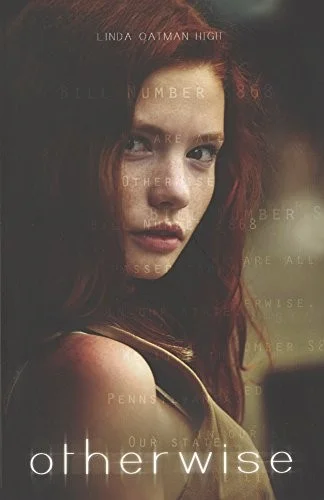
Otherwise
- Publication Date:
- January 1st, 2014
- Publisher:
- Saddleback Educational Publishing, Incorporated
- ISBN-13:
- 9781630786755
- ISBN-10:
- 1630786756
- Pages:
- 160
Why Otherwise Has Been Challenged
Objections to Otherwise center on its handling of gender identity and adolescent romance. See more ↓
Challenged or banned in 1 state across 1 school district.
Overview
Otherwise imagines a society on the verge of legislating gender out of existence. A new law is about to take effect: no more boys, no more girls, only a uniform, androgynous "otherwise" — same haircuts, same clothing, same erasure of difference. Told in verse, the novel follows a teenage girl nicknamed Spark as she counts down the days until the law takes hold, caught between her parents' enthusiastic support for the change and her own unresolved feelings about what she stands to lose.
Before the law's deadline arrives, Spark's parents let her slip away for a solitary camping trip. There she meets Whistler, another young camper whose gender she can't immediately place and who unsettles her expectations from the moment they meet. Their mutual attraction develops alongside Spark's growing uncertainty about categories she'd always taken for granted.
The book uses its spare, verse-driven structure to keep the focus tight on Spark's interior life — her doubts, her attraction, and her attempt to reconcile what she feels with what the world around her is about to declare illegal to feel in the old, gendered way.
A Speculative Frame for a Present-Day Question
By setting its story in a near-future where gender is abolished by statute rather than explored by choice, High's novel inverts the debates that surround it. Instead of asking whether gender should be flexible, the book imagines a government mandating that it disappear altogether — a premise that lets the story interrogate enforced sameness as its own kind of danger, distinct from and in tension with arguments for gender fluidity. Spark's romance with Whistler becomes the mechanism through which the book tests whether attraction and identity can survive a system built to flatten both.
The choice of verse form is notable: novels-in-verse have long been used in YA literature to render emotionally charged, interior experiences — grief, first love, identity confusion — with an intimacy that prose narration can dilute. Here, that form is turned toward a coming-of-age story that treats the mechanics of gender and desire as genuinely open questions rather than settled ones, positioning the book within a broader wave of speculative YA fiction using future-set premises to examine present-day social anxieties about identity and conformity.
Why Otherwise Has Been Challenged
Objections to Otherwise center on its handling of gender identity and adolescent romance. Because the story's premise treats gender as something to be resisted, questioned, or even legislated away, some challenges have framed the book as promoting a viewpoint on gender that critics consider unsuitable for young readers, rather than simply depicting a character's confusion. The developing attraction between Spark and Whistler — whose gender remains deliberately unresolved for much of the story — has also drawn scrutiny from those who object to ambiguous or nontraditional depictions of romance in books aimed at teens. This catalog tracks challenges to the title in 1 state and 1 district, reflecting the narrower, more localized pattern typical of contested verse novels rather than a broad, coordinated campaign.
Where to Buy


Affiliate links may generate a small commission at no extra cost to you, which helps support this site.
Banned in Schools
Banned or challenged in 1 state across 1 school district.
Texas 1 district
- Katy Independent School District Banned by Restriction