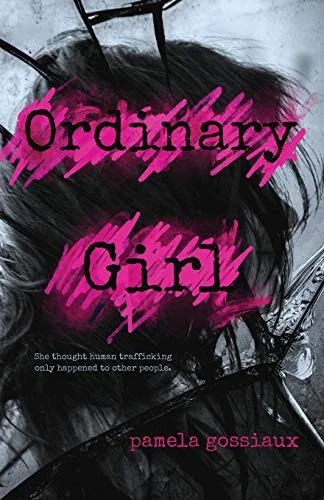
Ordinary Girl
- Publication Date:
- April 30th, 2019
- Publisher:
- Tri-Cat Publishing
- ISBN-13:
- 9780998766973
- ISBN-10:
- 0998766976
- Pages:
- 220
Why Ordinary Girl Has Been Challenged
Critics have taken issue with the book's unfiltered look at a teenage girl's private and physical coming-of-age, arguing it pushes past what's appropriate for young readers. See more ↓
Challenged or banned in 1 state across 1 school district.
Overview
Ordinary Girl follows a teenage narrator whose daily life is defined less by dramatic incident than by the accumulation of small pressures: family expectations, shifting friendships, and the quiet ache of figuring out who she is when nothing about her circumstances feels remarkable. Pamela Gossiaux builds the novel around the gap between how her protagonist sees herself and how much is actually asked of her as she moves through adolescence.
The story leans into interior monologue over plot mechanics, tracking how a young woman processes doubt, desire, and disappointment in real time. Rather than resolving those feelings neatly, the book lets them sit, giving readers a portrait of teenage life that favors honesty over tidy conclusions.
What emerges is less a story of transformation than one of recognition — the protagonist doesn't become extraordinary so much as she comes to terms with the weight ordinary experience can carry.
An Unremarkable Life, Examined Closely
The title itself signals the book's central argument: that "ordinary" is a designation worth interrogating rather than accepting at face value. Coming-of-age fiction often measures its protagonists against exceptional events — tragedy, achievement, upheaval — but Gossiaux's approach suggests that the everyday negotiations of adolescence (over autonomy, belonging, and self-image) are dramatic enough on their own terms.
That choice places the novel within a broader strand of YA writing that resists spectacle in favor of psychological realism, asking readers to sit with a character's uncertainty rather than watch it resolve through external plot devices. It's a mode that tends to divide readers: some find it quietly affecting, others expect more incident from a novel marketed to teens. Read against the shelf of challenged books it now sits on, Ordinary Girl illustrates how unassuming, low-key narratives about growing up can still attract scrutiny simply for depicting adolescence candidly.
Why Ordinary Girl Has Been Challenged
Sexual content and language have been the focus of the objections raised against the book, with critics pointing to scenes and dialogue depicting a teenage character's emerging awareness of her own body and relationships as inappropriate for the age group most likely to pick it up. The concern generally centers less on any single explicit passage than on the frankness with which ordinary teenage experience — including its more private dimensions — is portrayed without editorial distance or moralizing commentary.
Underlying these complaints is a broader disagreement about how much realism young-adult fiction should carry: whether depicting a character's interior life honestly, including its uncomfortable or intimate corners, serves readers or exposes them to material better left for older audiences. That dispute has translated into limited but concrete action, with the novel challenged in one state and one school district within the records tracked by this catalog.
Where to Buy




Affiliate links may generate a small commission at no extra cost to you, which helps support this site.
Banned in Schools
Banned or challenged in 1 state across 1 school district.
Iowa 1 district
- Clear Creek-Amana Community School District Banned pending investigation