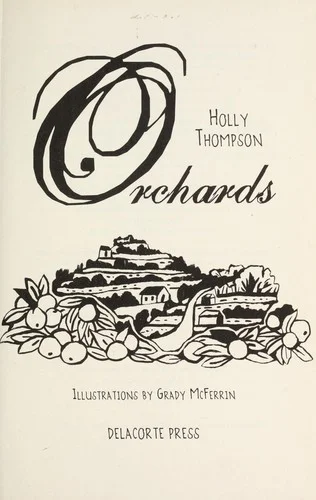
Orchards
- Publication Date:
- January 1st, 2013
- Publisher:
- Perfection Learning Corporation
- ISBN-13:
- 9781627651097
- ISBN-10:
- 1627651098
Why Orchards Has Been Challenged
Some parents and school officials have questioned whether a story built around a teenager's suicide belongs in the hands of adolescent readers, regardless of how sensitively the subject is handled. See more ↓
Challenged or banned in 1 state across 1 school district.
Overview
Told in verse, this novel follows Kana Goldberg, a New York eighth grader with a Japanese mother and a Jewish father, in the weeks after a classmate takes her own life. Kana's parents send her to spend the summer with relatives in rural Japan, hoping distance will help her process what happened. Instead, the trip forces her to sit with feelings she has not been able to name at home.
Much of the story unfolds through Kana's uneasy adjustment to a household and a language that are only half-familiar to her. She is caught between identities — not fully at ease in Japan, not able to leave New York behind either — and that in-between status sharpens rather than resolves her sense of responsibility for what happened to her classmate.
The verse format keeps the narrative spare, letting silences and unfinished thoughts carry as much weight as what Kana actually says. Farm work, extended family, and the rhythms of a Japanese summer form a quiet backdrop against which her grief slowly becomes something she can look at directly rather than avoid.
Displacement, Heritage, and Unspoken Grief
The novel treats suicide not as a single explainable event but as something that ripples outward, unsettling everyone who was nearby, however peripheral their connection. Kana's guilt is less about any specific action she took than about the ordinary cruelties and inattentions of adolescence — the sense that she might have noticed something, said something, been kinder. That ambiguity is central to the book's approach: it resists tidy blame or resolution.
Kana's mixed heritage adds another layer to her displacement. In Japan she is read as an outsider despite her family ties; at home she occupies a similarly split identity between Japanese and Jewish traditions. Sending her abroad to heal is itself a culturally specific response, and the novel uses that setting to examine how grief is processed differently across families and generations, and how a teenager can feel unmoored from both of the cultures she belongs to.
Why Orchards Has Been Challenged
The book has drawn praise for handling a difficult subject with restraint and emotional honesty, using spare verse to avoid sensationalizing its subject even as some reviewers found the therapeutic frame more comforting than the reality it describes. That same directness is what has drawn objections from a small number of reviewers who consider the material unsuitable for younger readers.
The central concern is the book's frank engagement with teen suicide, including a young character's lingering guilt and self-blame, which some worry could be distressing or unsafe for students without adequate context or support. Related objections point to the book's treatment of grief, bullying, and social exclusion among adolescents as too heavy for a middle-grade or early-high-school audience. The novel has been challenged or restricted in one state and one school district tracked in this catalog, generally as part of broader concerns about how younger readers might process depictions of suicide rather than any single explicit passage.
Where to Buy




Affiliate links may generate a small commission at no extra cost to you, which helps support this site.
Banned in Schools
Banned or challenged in 1 state across 1 school district.