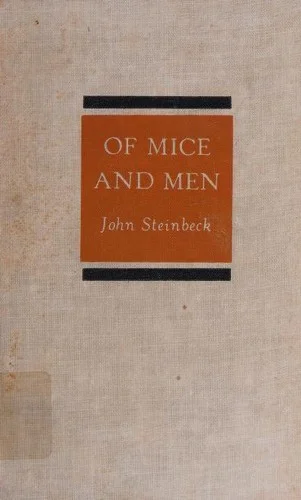
Of Mice and Men
- Publication Date:
- January 1st, 1995
- Publisher:
- Gallimard
- ISBN-13:
- 9782070393626
- ISBN-10:
- 2070393623
- Pages:
- 219
Why Of Mice and Men Has Been Challenged
Critics of the novel have most often pointed to its blunt period dialogue and its violent, morally unresolved ending as reasons it doesn't belong on required reading lists. See more ↓
Challenged or banned in 2 states across 2 school districts.
Overview
Of Mice and Men follows George Milton and Lennie Small, two itinerant ranch workers moving from job to job in California's Salinas Valley during the Depression. What sets them apart from the other solitary men they work alongside is their bond: George looks after Lennie, who is immensely strong but intellectually limited, and together they hold onto a shared vision of someday owning a small patch of land they can call their own.
That vision becomes the engine of the story once the pair settles in at a ranch near Soledad. Steinbeck builds the novel around the fragile hope that steady work and careful saving might actually deliver George and Lennie out of the itinerant laborer's life and into something stable and self-determined.
The hope collapses when circumstances beyond either man's control intervene, and George is left to confront what loyalty to his friend actually requires of him. The ending is abrupt and unsentimental, in keeping with Steinbeck's method throughout: short, scene-driven chapters that read almost like stage directions.
A Small Novel With Large Ambitions
Steinbeck wrote Of Mice and Men as the middle work in an informal trilogy about California laborers, and its scale is deliberately modest — a handful of characters, a few days' time, one bunkhouse and barn. That compression is part of its design: Steinbeck treats the lives of migrant workers, who rarely appeared as protagonists in American literature before this period, as material worthy of serious literary attention rather than as background color. The ranch hands here are drawn with the same moral weight typically reserved for more prominent figures, and their isolation, economic precarity, and longing for connection carry the emotional force of the book.
The novel has endured in classrooms and on stage largely because its central relationship resists easy categorization. George's responsibility for Lennie is neither purely burden nor purely affection, and Steinbeck declines to resolve that tension for the reader. This ambiguity, paired with the book's unflinching look at vulnerability, prejudice, and the limits of companionship in a harsh economic landscape, has kept it a fixture of American literary study even as it has made the book a repeated target for removal from school settings.
Why Of Mice and Men Has Been Challenged
A recurring complaint centers on the novel's language, with parents and school board members arguing that racial slurs and other coarse dialogue spoken by characters on the ranch have no place in required reading, regardless of the era the book depicts or the author's intent. Other objections focus on the violence in the story's climax, contending that the subject matter is too bleak or disturbing for the age group typically assigned the book. Some challenges have also pointed to the novel's treatment of disability and its portrayal of a mercy killing as material that could be misread or mishandled without careful classroom guidance. Taken together, these concerns reflect discomfort less with the book's literary aims than with specific passages read in isolation from their context. In the catalog tracked here, Of Mice and Men has drawn 2 state-level and 2 district-level challenges.
Where to Buy




Affiliate links may generate a small commission at no extra cost to you, which helps support this site.
Also by John Steinbeck

Banned in Schools
Banned or challenged in 2 states across 2 school districts.
Iowa 1 district
- Spencer Community School District Banned pending investigation
Tennessee 1 district
- Monroe County Schools Banned