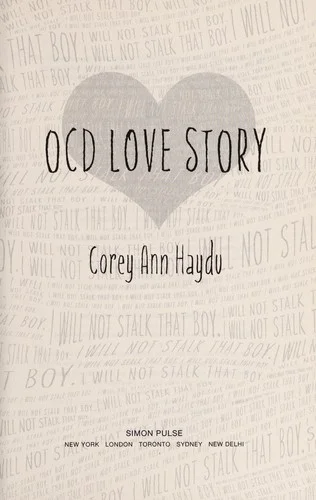
OCD love story
- Publication Date:
- January 1st, 2013
- Publisher:
- Simon & Schuster, Limited
- ISBN-13:
- 9781442457348
- ISBN-10:
- 1442457341
- Pages:
- 352
Why OCD love story Has Been Challenged
Critics of this novel have taken issue with how closely it tracks the emotional fallout of an unhealthy teen relationship alongside frank depictions of obsessive-compulsive symptoms, arguing the combination is too heavy for young readers. See more ↓
Challenged or banned in 1 state across 1 school district.
Overview
Corey Ann Haydu's novel follows Bea, a teenager whose therapist has been helping her untangle the wreckage of a previous relationship. The sessions are meant to be a private reckoning, a space to understand what went wrong and why it still hurts. That privacy dissolves when her therapist assigns her to a peer support group for teens living with obsessive-compulsive disorder.
Complicating matters further is Beck, a member of that same group who Bea recognizes from her past. His presence reawakens a familiarity that feels like the beginning of something good, even as it threatens to blur the lines between her therapy and her personal life. The story turns on this collision: the pull toward intimacy and the discipline required to understand her own compulsions and patterns before repeating them.
Haydu uses the structure of group therapy, with its rituals of disclosure and listening, to frame a coming-of-age story about vulnerability. Bea's attraction to Beck becomes a test of whether she can separate genuine connection from the old habits that led her into an unhealthy relationship in the first place.
Themes and Context
The novel sits within a wave of young adult fiction that treats mental health not as a plot device but as lived, daily experience. Rather than offering OCD as shorthand for quirkiness or as a hurdle to be cleared on the way to romance, Haydu builds a group of characters whose compulsions, intrusive thoughts, and coping mechanisms are rendered with specificity and empathy. The therapy group setting allows multiple teens' experiences with OCD to surface alongside Bea's, resisting the idea that any single story could represent the condition.
At the same time, the book is interested in the blurry ethics of desire and recovery: what does it mean to want someone while you are still learning to trust your own mind? Bea's arc asks readers to sit with uncertainty rather than resolve it neatly, treating healing as a process rather than a destination reached by the final page.
Why OCD Love Story Has Been Challenged
The novel's unflinching attention to the mechanics of a prior unhealthy relationship, including how it shaped Bea's sense of what intimacy and control look like, has drawn objections from readers who consider that material too mature or too specific for a teen audience. Because the story doesn't shy away from depicting the emotional and psychological toll of that relationship, some have argued it risks normalizing or dwelling on harmful relationship dynamics rather than simply warning against them.
The book's candid treatment of obsessive-compulsive disorder, including intrusive thoughts and compulsive behaviors described from the inside, has also been a point of concern for some challengers, who worry that detailed portrayals of mental illness symptoms could be confusing or distressing for younger readers. Others have objected more broadly to the romantic and emotional content involving teenage characters. According to records maintained in this catalog, the title has been formally challenged in one state and one district.
Where to Buy




Affiliate links may generate a small commission at no extra cost to you, which helps support this site.
Banned in Schools
Banned or challenged in 1 state across 1 school district.
Florida 1 district
- Escambia County Public Schools Banned pending investigation