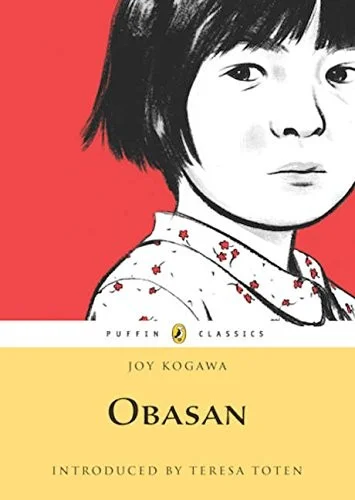
Obasan
by Joy Kogawa
- Publication Date:
- November 4th, 2014
- Publisher:
- Puffin Canada
- ISBN-13:
- 9780143192343
- ISBN-10:
- 0143192345
- Pages:
- 384
Why Obasan Has Been Challenged
A brief, elliptically narrated scene of childhood abuse, paired with the book's unsparing portrait of state-sanctioned racial persecution, has made some schools hesitant to keep it on required reading lists. See more ↓
Challenged or banned in 1 state across 1 school district.
Overview
Told through the eyes of Naomi Nakane, a Japanese Canadian woman piecing together her family's fractured history, Obasan moves between a present-day reckoning and the buried years of her childhood during the Second World War. When a telegram brings news of an aunt's death, Naomi is drawn back into memories she and her relatives have spent decades not discussing: forced removal from the coast, dispossession, and relocation to internment camps and labor settlements across the Canadian interior.
Kogawa builds the novel out of fragments — letters, documents, half-remembered conversations, and the silences between them — reflecting how trauma is often carried rather than spoken. The adult Naomi's narration circles back repeatedly to a childhood she can only partly reconstruct, mirroring the incomplete and guarded way her family has processed what happened to them.
The result is less a conventional historical narrative than a meditation on memory itself: what gets preserved, what gets suppressed, and how the people around a child absorb and transmit loss long after the events that caused it.
A Story of Silence and Inheritance
Since its publication, Obasan has been widely credited with bringing the internment and dispossession of Japanese Canadians into broader literary and public awareness, a chapter of wartime history that had received comparatively little attention outside the communities directly affected. Kogawa's own family lived through similar displacement, and the novel draws on that experience to render a history that was, for many Canadians, largely absent from textbooks and public memory at the time of its release.
The book is as much about the mechanics of forgetting as it is about the internment itself. Naomi's aunt, the "Obasan" of the title, represents a generational response built around endurance and quiet rather than confrontation, while another relative pushes toward documentation and open reckoning. Kogawa holds both responses in tension rather than resolving them, treating silence not as mere absence but as its own form of testimony. That ambivalence has made the novel a touchstone in discussions of how communities carry historical injury forward, and it remains one of the most frequently cited works of Japanese Canadian literature taught in Canadian and American classrooms.
Why Obasan Has Been Challenged
Objections to Obasan have generally centered on its treatment of wartime trauma and a passage depicting childhood sexual abuse, which some parents and reviewers have considered too disturbing or mature for the age groups to which it is sometimes assigned. Because the scene is rendered through a child narrator's fragmented, uncomprehending perspective rather than explicit description, critics of the challenges argue that removing it from curricula misreads the literary technique Kogawa uses to convey how trauma is experienced and withheld.
Other concerns raised have involved the novel's unflinching account of government-sanctioned racial discrimination, arguing that its depiction of internment and forced relocation casts an uncomfortable light on historical policy. In this catalog's records, the book has been the subject of challenge or removal efforts in 1 state and 1 school district, reflecting a narrower but recurring pattern seen with other works that pair difficult historical subject matter with mature content involving a child protagonist.
Where to Buy




Affiliate links may generate a small commission at no extra cost to you, which helps support this site.
Banned in Schools
Banned or challenged in 1 state across 1 school district.
Florida 1 district
- Escambia County Public Schools Banned pending investigation