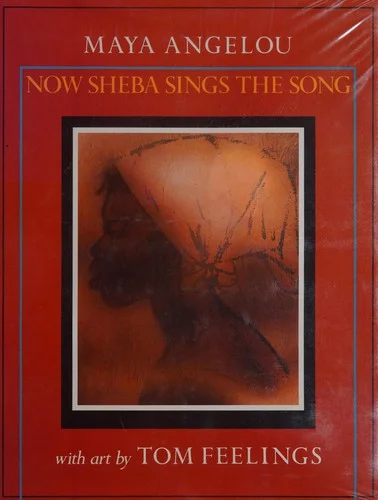
Now Sheba Sings the Song
by Maya Angelou
- Publication Date:
- January 1st, 1987
- Publisher:
- Virago
- ISBN-13:
- 9780860689249
- ISBN-10:
- 0860689239
- Pages:
- 54
Why Now Sheba Sings the Song Has Been Challenged
Critics have questioned whether a collection built around candid, physical imagery of women belongs in a format so closely tied to early childhood reading. See more ↓
Challenged or banned in 1 state across 1 school district.
Overview
Maya Angelou, known widely for her landmark memoir chronicling her early life, turned here to verse and collaborated with a visual artist to produce a slim volume centered on Black womanhood. Rather than following a single narrative thread, the book moves through a sequence of poems that each take a woman as their subject, finding significance in gestures and routines that might otherwise go unremarked.
The pairing of poem and image is central to the book's design. Illustrations accompany the verse throughout, giving each woman a face and a setting, so that the collection reads as much through its pictures as through its language.
The effect is cumulative: individual portraits build into a broader statement about resilience, labor, and grace carried quietly across generations.
Context and Reception
The book arrived at a point in Angelou's career when her reputation as a poet of public occasion was firmly established, and it extends concerns present throughout her work: the dignity of lives lived outside the spotlight, and the particular endurance required of Black women navigating a society that often renders them invisible. Where her prose explored her own coming-of-age in detail, this collection turns outward, offering composite and imagined figures rather than autobiography.
Picture-book poetry collections aimed at younger readers occupy an unusual space in publishing, often shelved and marketed as children's literature even when their themes and vocabulary reach toward an older audience. That dual address — a format associated with early readers carrying content meant to resonate with adults as well — has shaped how the book has been received and where it has been placed in schools and libraries.
Why Now Sheba Sings the Song Has Been Challenged
The poems dwell on the female body in frank, sensory terms, describing physical experience as part of honoring the women they portray. For some readers, that candor about the body sits uneasily with the book's picture-book format, since the illustrations and verse are being presented to audiences whose age is typically associated with much simpler, less embodied content. The objection is less about any single line than about the mismatch some perceive between form and content: material they consider suited to older readers delivered in a package that looks, on the shelf, like it belongs to young children.
Underlying these concerns is a broader discomfort with poetry that treats the Black female body as worthy of direct, unflinching attention rather than euphemism. Records in this catalog show the book has drawn a challenge in 1 state and 1 district, reflecting a narrow but notable instance of this friction between the collection's literary aims and expectations about age-appropriate framing.
Where to Buy




Affiliate links may generate a small commission at no extra cost to you, which helps support this site.
About Maya Angelou
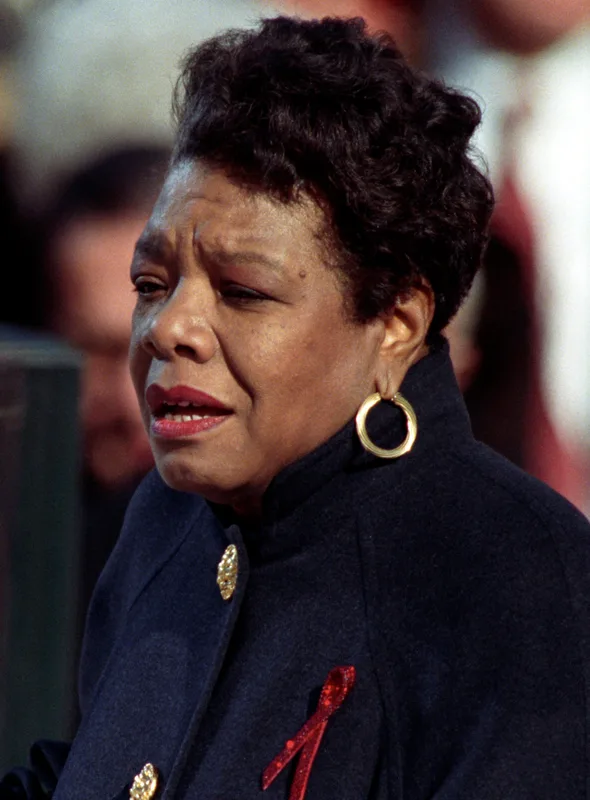
Maya Angelou (1928–2014) was an American memoirist, poet, and civil rights activist whose 1969 debut, I Know Why the Caged Bird Sings, became one of the most celebrated and most challenged books in American literature. She received the Presidential Medal of Freedom, three Grammy Awards, and more than fifty honorary degrees. She was the first Black woman depicted on a U.S. quarter.
Also by Maya Angelou
Banned in Schools
Banned or challenged in 1 state across 1 school district.
Florida 1 district
- Escambia County Public Schools Banned pending investigation