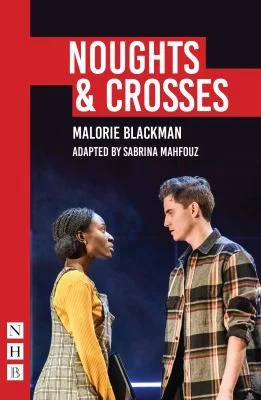
Noughts and Crosses
- Publication Date:
- January 1st, 2008
- Publisher:
- Oxford University Press
- ISBN-13:
- 9780198328490
- ISBN-10:
- 0198328494
Why Noughts and Crosses Has Been Challenged
Some readers have pushed back on the book's unflinching depictions of racially motivated violence and its frank handling of a cross-caste teenage romance, arguing the material is too intense for the age group typically assigned it. See more ↓
Challenged or banned in 1 state across 1 school district.
Overview
Malorie Blackman's Noughts and Crosses is set in a society built on an inverted racial order: the Crosses, a dark-skinned ruling class, hold political and economic power, while the Noughts, a pale-skinned underclass, are confined to inferior schools, menial work, and second-tier citizenship. The arrangement is never explained as novel or strange within the story — it is simply how this world has always worked, which is precisely the point.
At the center of the novel are Sephy, the daughter of a prominent Cross politician, and Callum, a Nought boy she has known since childhood. As they grow older, their friendship deepens into something the people around them are determined to prevent, and the widening gap between their social standings begins to press on every part of their lives — family loyalty, political unrest, and the violence simmering underneath their segregated world.
The book is the first installment in a series Blackman continued over several subsequent novels, and it remains the entry point most readers encounter first, establishing both the central relationship and the fractured society around it.
A Mirror Turned Around
The premise of Noughts and Crosses does its work through inversion rather than invention: by handing political dominance to Black characters and subordination to white ones, Blackman strips away the familiarity that can let readers of a traditional segregation narrative keep history at arm's length. The device borrows its emotional architecture from star-crossed romance, but its real subject is how a society manufactures and sustains division — through law, through language, through small daily humiliations — and how quickly that machinery can turn lethal.
Blackman, who has spoken about writing the book partly out of her own experience of racism growing up in Britain, built a story that has since become a mainstay of secondary-school reading lists and was adapted for both stage and television. Its lasting resonance comes less from the speculative setup itself than from how recognizable the underlying patterns remain once the races are swapped — a structure that invites readers to notice what they might otherwise take for granted.
Why Noughts and Crosses Has Been Challenged
At least one formal objection raised against the novel has centered on a late scene involving a public execution carried out along racial lines, with the complaint arguing that its graphic intensity goes further than what is appropriate for the age group to which the book is typically assigned. Related concerns raised elsewhere have focused on the book's racially charged language — including invented slurs the story uses to depict prejudice from both directions — and on scenes of mob and state violence that readers have described as disturbing without the softening that often accompanies school-assigned fiction.
A second recurring thread of concern involves the romantic relationship between Sephy and Callum, which some parents and reviewers have felt includes content too mature for younger teen readers, given the physical and emotional stakes the characters face as their relationship crosses forbidden lines. Taken together, these objections reflect discomfort less with the book's premise than with how directly it renders the cruelty that premise is built to expose; the novel has, as a result, drawn a formal challenge tracked in this catalog across one state and one school district.
Where to Buy




Affiliate links may generate a small commission at no extra cost to you, which helps support this site.
Banned in Schools
Banned or challenged in 1 state across 1 school district.
Florida 1 district
- Escambia County Public Schools Banned pending investigation