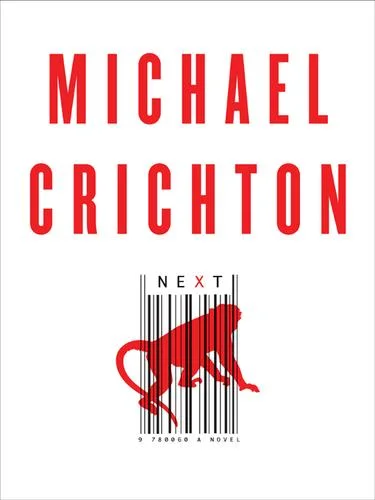
Next
- Publication Date:
- January 1st, 2006
- Publisher:
- HarperCollins
- ISBN-13:
- 9780061290411
- ISBN-10:
- 0061290416
Why Next Has Been Challenged
Critics who have sought to restrict this novel point mainly to its coarse language and explicit sexual material as unsuited to teenage readers, rather than to its arguments about genetic science or corporate ethics. See more ↓
Challenged or banned in 1 state across 2 school districts.
Overview
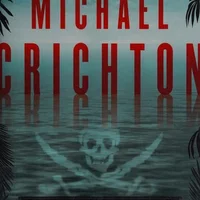
Next arrived in 2006 as Michael Crichton's sprawling, multi-threaded take on the genetic engineering industry, following a wide ensemble of scientists, venture capitalists, lawyers, and law enforcement officials whose lives intersect around the commercial exploitation of human and animal genes. Rather than following a single protagonist, the novel cuts between storylines that include a biotech firm aggressively asserting patent rights over a man's own cells, a transgenic chimpanzee raised as part of a human family, and a parrot whose capacity for language becomes central to a custody-style dispute.
The novel was the last Crichton published while he was still alive, closing out a career built on blending speculative science with the pacing of a thriller. Where earlier books like Jurassic Park used dinosaurs to dramatize the dangers of scientific overreach, Next turns that same scrutiny toward a subtler, more immediate frontier: the laboratories, courtrooms, and boardrooms already shaping how genetic material is owned and traded.
Crichton structured the book almost as a mosaic, using short, rapidly shifting chapters and a degree of dark comedy to cover an unusually wide cast of characters and institutions. The result reads less like a conventional narrative and more like an argument illustrated through fiction, a structure the author used deliberately to make a case about where genetic science was heading.
Science, Satire, and the Business of the Genome
Throughout his career, Crichton returned repeatedly to the premise that scientific capability tends to outrun the ethical and legal frameworks meant to contain it. Next extends that preoccupation from the speculative realm of cloned dinosaurs into something closer to contemporary reality, imagining a near future where genes can be patented, cell lines can be bought and sold, and the line between human and animal traits grows porous through laboratory intervention. The satire is pointed at specific targets: biotech firms chasing profit, universities entangled with corporate funding, and a media culture that Crichton portrays as either credulous or sensationalist when reporting on genetic science.
Critics at the time noted that the novel functions less as a tightly plotted thriller and more as a polemic, with Crichton appending a closing set of policy recommendations urging reform of gene-patent law. That choice reflects the book's place in his body of work as his most explicitly activist novel, less interested in suspense for its own sake than in using fiction to argue for specific legislative change. Reception was mixed, with some reviewers praising the ambition of its ensemble structure and others finding its many threads diffuse and its characters thin compared to Crichton's earlier, more focused techno-thrillers.
Why Next Has Been Challenged
Most objections to Next center on its suitability for high school readers, with critics arguing that the novel's blunt language, drug references, and sexually explicit passages go beyond what is appropriate for a school library or classroom shelf. Particular attention has focused on scenes involving a genetically altered, part-human chimpanzee character navigating adolescence, which some challengers describe as uncomfortable or inappropriate given the character's hybrid nature and age. Coarse language recurring throughout the book's many storylines has drawn similar complaints. The novel has been formally challenged or restricted in 1 state and 2 school districts tracked in this catalog, with objections generally framed around content concerns rather than the book's scientific or political arguments.
Where to Buy




Affiliate links may generate a small commission at no extra cost to you, which helps support this site.
About Michael Crichton
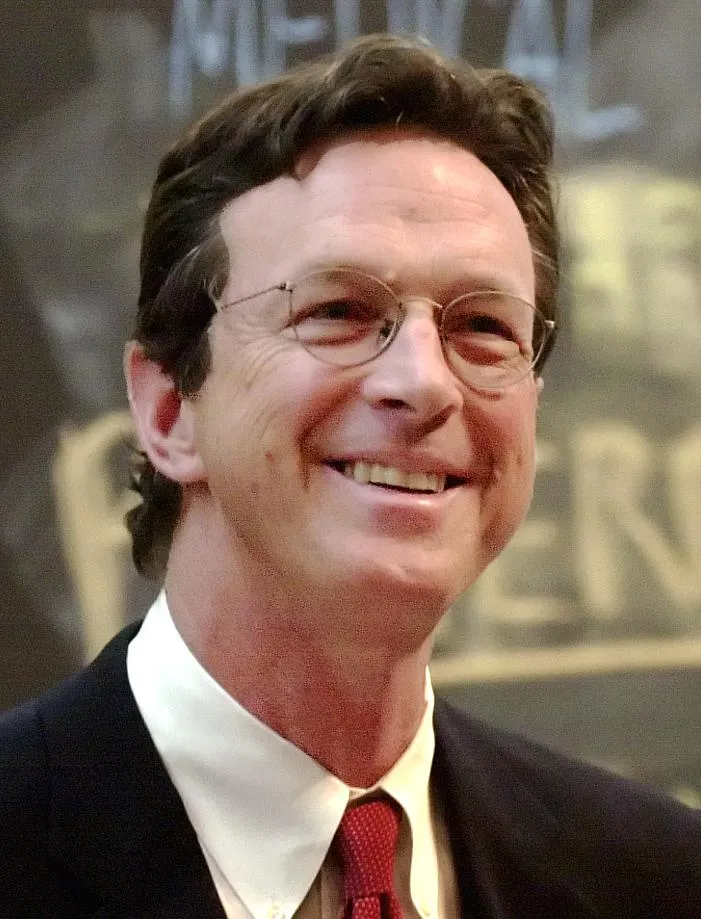
Michael Crichton (1942-2008) was an American author and filmmaker whose techno-thrillers have sold over 200 million copies worldwide. He earned an MD from Harvard Medical School but chose writing over medicine. Six of his novels appear in this database of banned and challenged books.
Also by Michael Crichton
Banned in Schools
Banned or challenged in 1 state across 2 school districts.
Florida 2 districts
- Clay County School District Banned
- Escambia County Public Schools Banned pending investigation