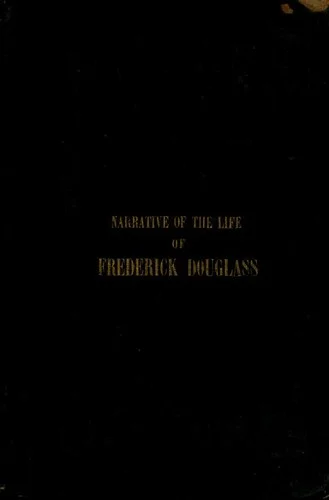
Narrative of the life of Frederick Douglass
- Publication Date:
- January 1st, 2016
- Publisher:
- CreateSpace Independent Publishing Platform
- ISBN-13:
- 9781537328348
- ISBN-10:
- 1537328344
Why Narrative of the life of Frederick Douglass Has Been Challenged
Douglass's refusal to soften the physical cruelty he witnessed and endured is what has repeatedly put this book in the path of challenges meant to shield younger readers from such material. See more ↓
Challenged or banned in 1 state across 1 school district.
Overview
Frederick Douglass wrote this narrative to set down, in his own words, what it meant to live as property. He begins with the conditions of his birth and early childhood, separated from his mother and given only a hazy sense of his own age, and moves through a series of placements under different enslavers in Maryland, each revealing another facet of how the system operated in practice.
The book is especially attentive to the mechanics of control: the withholding of literacy, the manipulation of food and rest, and the calculated cruelty of men like the overseer Edward Covey, whom Douglass eventually resists in a turning point he treats as the moment he reclaimed a sense of manhood. The narrative closes with his escape to the North and his first steps into a life as a free man and public speaker.
Throughout, Douglass writes with a controlled, documentary precision rather than melodrama, letting specific incidents carry the argument. The effect is less a chronicle of victimhood than a sustained demonstration of how slavery required the deliberate stunting of enslaved people's minds and the moral corrosion of those who held power over them.
A Founding Text of American Testimony
Published in 1845, the narrative arrived as both personal history and political intervention, offered as evidence in the ongoing national argument over slavery. Douglass includes identifying names and places precisely to forestall skeptics who doubted a formerly enslaved person could have written so capably, and the book's literary control became part of its persuasive power.
It also belongs to a wider tradition of American self-making narratives, tracing a path from deprivation to self-education to independence, while insisting that this was a path slavery was built to foreclose. Douglass's reflections on how bondage degraded enslavers as well as the enslaved gave the book a moral argument beyond sympathy for his own suffering. It remains one of the most widely read firsthand accounts of slavery in American literature and a staple of discussions on autobiography, abolition, and the history of American rhetoric.
Why Narrative of the Life of Frederick Douglass Has Been Challenged
Depictions of violence are the central source of objection to this book, since Douglass describes beatings, forced labor, and other physical abuse inflicted on enslaved people in direct, unflinching terms. Some readers and parents have argued that these passages are too graphic or disturbing for younger students, even though the violence is integral to the book's account of how slavery functioned.
Objections have also centered on the book's unsparing portrayal of American history and institutions, with some challenges framing the material as too harsh an indictment of the past for a school setting. Within this catalog, the book has been challenged or restricted in 1 state and 1 school district, reflecting disagreement over how directly younger readers should encounter primary testimony about slavery's brutality.
Where to Buy




Affiliate links may generate a small commission at no extra cost to you, which helps support this site.
Banned in Schools
Banned or challenged in 1 state across 1 school district.
Georgia 1 district
- Marietta City Schools Banned by Restriction