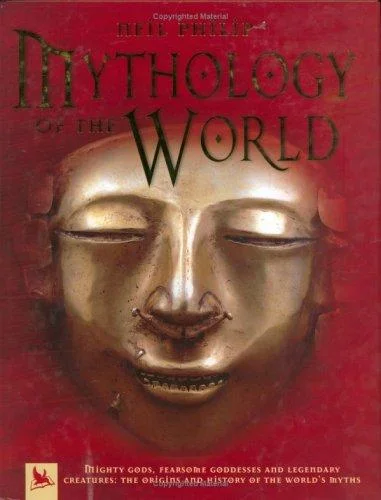
Mythology of the world
by Neil Philip
- Publication Date:
- October 18th, 2004
- Publisher:
- Kingfisher Books Ltd
- ISBN-13:
- 9780753409640
- ISBN-10:
- 075340964X
- Pages:
- 160
Why Mythology of the world Has Been Challenged
Some parents and educators have questioned whether a young reader ought to encounter competing religious and spiritual frameworks presented side by side as equally valid ways of understanding the world. See more ↓
Challenged or banned in 1 state across 1 school district.
Overview
Mythology of the World is a reference work by Neil Philip that moves across continents and centuries to show how different peoples have answered the same handful of enormous questions. Rather than retelling a single culture's stories at length, the book is organized around recurring subjects — divine beings, the sky and heavens, the shaping of the earth, the workings of nature, the fact of death, and the problem of evil — and shows how various traditions have approached each in turn.
The result reads less like a collection of tales and more like a comparative survey, aimed at younger readers encountering mythology as a subject rather than as bedtime story. It is pitched at students from the primary grades through junior secondary school, suggesting a design meant to scaffold understanding as readers mature, with material that can be revisited at increasing depth.
Because its scope is global rather than regional, the book necessarily treats a wide range of belief systems briefly, prioritizing pattern and comparison over the kind of sustained narrative found in single-culture myth collections.
A Comparative Lens on Belief
What distinguishes this kind of survey from a straightforward anthology is its organizing logic: instead of grouping stories by geography, it groups them by the human concern each story addresses. Placing a creation account from one tradition alongside another's treatment of the same theme invites readers to notice both the differences in detail and the shared impulse behind them — the desire to explain where the world came from, why people die, or how wrongdoing entered a seemingly ordered universe.
This approach situates the book within a broader tradition of comparative mythology, a field that treats myth not as discredited pseudo-history but as a lens for understanding how societies construct meaning. For a young audience, that framing can be a useful introduction to the idea that religious and spiritual narratives, however different on the surface, often wrestle with common human anxieties. It also positions the book as an educational tool rather than a devotional or persuasive one, since no single tradition is presented as the correct account.
Why Mythology of the World Has Been Challenged
Much of the friction around this book concerns where it belongs on a shelf and at what age a student should be handed a survey that treats multiple religious traditions as comparable subjects of study. Because the text presents deities, creation stories, and moral frameworks from numerous belief systems without privileging any one of them, some readers have viewed that even-handedness itself as the point of contention, arguing that juxtaposing sacred narratives with folklore risks flattening distinctions that matter to practicing faith communities.
Objections have also centered on content areas within the book that engage directly with death and evil, subjects some parents consider too weighty or unsettling for the youngest end of the book's intended range. Additionally, because certain mythological traditions include violence, deception, or morally ambiguous deities, critics have raised concerns about whether such material is being presented with enough context for a primary-grade reader to process it appropriately.
According to the challenge records in this catalog, the book has drawn a formal challenge in one state and one district, reflecting a narrower but still notable instance of pushback against a text whose comparative treatment of world religions and mythologies some communities have found better suited to older students or a different shelving category altogether.
Where to Buy


Affiliate links may generate a small commission at no extra cost to you, which helps support this site.
Banned in Schools
Banned or challenged in 1 state across 1 school district.
Florida 1 district
- Escambia County Public Schools Banned pending investigation