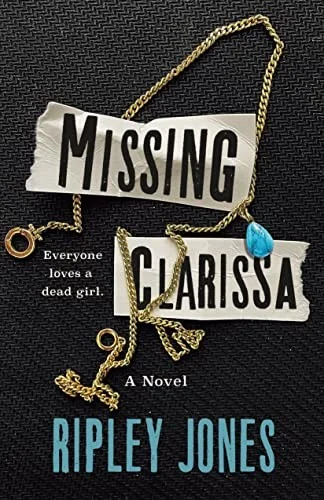
Missing Clarissa
by Ripley Jones
- Publication Date:
- January 1st, 2024
- Publisher:
- St. Martin's Press
- ISBN-13:
- 9781250323385
- ISBN-10:
- 125032338X
Why Missing Clarissa Has Been Challenged
The pushback here centers less on the fact of a disappearance and more on how frankly the book handles the danger surrounding it, leaving some readers unwilling to hand its ambiguity to younger teens. See more ↓
Challenged or banned in 1 state across 1 school district.
Overview
Missing Clarissa, by Ripley Jones, takes its shape from the kind of absence that never quite resolves: a girl named Clarissa is gone, and the people around her are left to sift through what remains — rumor, memory, and the gaps where certainty should be. The novel works in the register of contemporary teen mystery, where the central question is less "what happened" in a procedural sense and more "who gets to say what happened," and who is believed when they try.
Rather than opening on the disappearance itself, the book positions readers alongside those still living with its aftermath, tracking how an unanswered question reshapes ordinary relationships, routines, and the sense of safety a community takes for granted. The tension is sustained less by incident than by accumulation — small revisions to a story that was never fully settled to begin with.
A Story About Whose Version Gets Believed
Beneath its mystery-novel mechanics, Missing Clarissa is preoccupied with a more uncomfortable set of questions: how a missing girl becomes a story before she is treated as a person, and how the adults and institutions around her can fail simply by looking away or looking for the wrong thing. That framing places the book in conversation with a wider run of recent young adult fiction that borrows the momentum of true-crime storytelling while turning a critical eye on the genre's own appetite for spectacle.
The novel's interest in credibility — who is trusted, whose account is dismissed, and why — gives it a thematic weight beyond its plot mechanics, situating it among books that ask teen readers to sit with ambiguity rather than a tidy resolution.
Why Missing Clarissa Has Been Challenged
Much of the friction around Missing Clarissa concerns where a book like this belongs on a shelf, rather than whether it belongs in a library at all — objectors have generally argued it sits closer to adult thriller territory than to typical middle-grade or early teen fare, and that its placement in youth collections deserves a second look. The substance of the concern tends to follow from the mystery's subject matter: a narrative built around a missing girl frequently brushes against depictions of danger, coercion, or sexual violence, and readers who encounter that material without preparation, or without it being clearly labeled, have pushed back on its accessibility to younger patrons.
Some objections extend further, questioning whether a novel that keeps its resolution deliberately unsettled — declining to hand readers a clean moral accounting — is appropriate reading for adolescents still forming their own sense of justice and safety. In the catalog tracked here, that disagreement has produced a single formal challenge, recorded in one state and one district, reflecting a localized rather than widespread objection.
Where to Buy




Affiliate links may generate a small commission at no extra cost to you, which helps support this site.
Banned in Schools
Banned or challenged in 1 state across 1 school district.
Texas 1 district
- Katy Independent School District Banned by Restriction