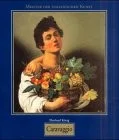
Michelangelo Merisi da Caravaggio 1571-1610
- Publication Date:
- March 8th, 1997
- Publisher:
- Konemann
- ISBN-13:
- 9783829006859
- ISBN-10:
- 3829006853
- Pages:
- 140
Why Michelangelo Merisi da Caravaggio 1571-1610 Has Been Challenged
Some readers have objected not to the scholarship but to the paintings themselves, whose graphic depictions of nudity and violent death Caravaggio rendered with an unsparing physical realism. See more ↓
Challenged or banned in 1 state across 1 school district.
Overview
Eberhard König's study of Michelangelo Merisi da Caravaggio traces the arc of a painter whose brief, turbulent career reshaped European art. Known simply as Caravaggio, Merisi worked at the turn of the seventeenth century, and König's volume follows him from his early years in Lombardy through his rise in Rome and the violent circumstances that eventually drove him into exile.
As an art-historical monograph, the book is built around reproductions of Caravaggio's paintings, paired with commentary on his technique and his place within the broader currents of the Baroque. König gives particular attention to the artist's handling of light and shadow, a signature style that came to be called tenebrism, and to the way Caravaggio drew his religious and mythological subjects from the streets around him rather than from idealized convention.
The book is less a narrative biography than a guided encounter with the paintings themselves, using Caravaggio's life, his patrons, and his repeated brushes with the law as context for understanding why his work looked so different from what came before it.
A Painter Between Sacred and Profane
Caravaggio occupies an unusual place in art history: a figure celebrated for bringing raw, physical realism to religious painting at a moment when the Catholic Church was actively seeking art that could move ordinary worshippers. König's account situates the artist within that tension, showing how commissions meant to inspire devotion were filled with beggars, prostitutes, and laborers standing in for saints and apostles, and how his life outside the studio, marked by brawling and eventually a killing that made him a fugitive, has become almost inseparable from the way his paintings are read.
That entanglement of biography and image is part of what a book like this is grappling with. It asks readers to hold together an artist who could paint moments of extraordinary tenderness and spiritual intensity alongside a man whose documented violence unsettles any tidy account of his genius. König's monograph, like much of the scholarship on Caravaggio, treats this not as contradiction to be resolved but as the very material of his art: bodies rendered with unflinching physical presence, drama staged in near-total darkness, and a refusal to soften what is difficult to look at.
Why This Book Has Been Challenged
Caravaggio's paintings are widely praised by art historians for their honesty about the human body and for the emotional force of their staging, qualities that made him one of the most influential painters in Western art. That same unflinching realism is precisely what has drawn objection when his work appears in a shared or school setting: the reproductions in a monograph of this kind include nudity, physical suffering, and violence rendered with graphic directness, since Caravaggio painted martyrdoms, beheadings, and the human form without idealization or restraint.
Concerns raised about the book have centered on whether such imagery is appropriate for younger or general readers, rather than on any dispute about the art's historical importance. This catalog tracks the book as challenged in 1 state and 1 district, reflecting objections to specific images rather than to the text or scholarship surrounding them.
Where to Buy




Affiliate links may generate a small commission at no extra cost to you, which helps support this site.
Banned in Schools
Banned or challenged in 1 state across 1 school district.