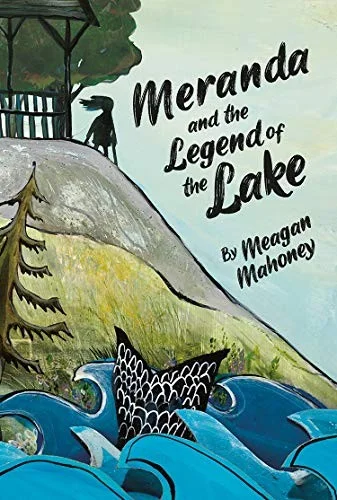
Meranda and the Legend of the Lake
- Publication Date:
- January 1st, 2023
- Publisher:
- Owlkids Books Inc.
- ISBN-13:
- 9781771476218
- ISBN-10:
- 1771476214
- Pages:
- 232
Why Meranda and the Legend of the Lake Has Been Challenged
Critics of this title have focused less on explicit content than on whether its folklore-driven mystery suits the emotional maturity of its intended young readership. See more ↓
Challenged or banned in 1 state across 1 school district.
Overview
Meagan Mahoney's "Meranda and the Legend of the Lake" follows its young protagonist as she navigates a world shaped by a body of water carrying generations of local lore. The title alone signals a story built on the tension between everyday life and inherited legend, suggesting a narrative where folklore is not background color but an active force in Meranda's understanding of her community.
Novels of this kind typically use a central landmark as a hinge between the mundane and the mythic, letting a young character's curiosity pull readers toward older stories that adults in the town would rather leave undisturbed. The lake becomes both setting and symbol, a place where history, memory, and imagination converge.
Without a publisher's summary to draw from, much about plot specifics remains unconfirmed, but the title and framing point to a coming-of-age structure in which Meranda's investigation of the legend doubles as a journey toward self-understanding, a common architecture in books aimed at young readers navigating questions of identity and belonging.
Context and Themes
Books centered on local legend and water often explore how communities pass down meaning across generations, using the landscape itself as a repository of unresolved history. A lake, in particular, lends itself to themes of what lies beneath the surface, both literally and figuratively, inviting young readers to consider how the stories adults tell shape a child's sense of place.
Within the broader landscape of middle-grade and children's fiction, works that blend folklore with a young protagonist's personal growth tend to function as gentle introductions to larger ideas about legacy, truth-telling, and the gap between official history and the stories that persist informally among a town's residents. Mahoney's novel appears to sit within this tradition, using Meranda's perspective to mediate between childhood wonder and the more complicated realities legends often encode.
Why Meranda and the Legend of the Lake Has Been Challenged
Readers in the elementary and early middle-grade range are most often cited in connection with objections to this title, with critics expressing concern that its handling of legend, mystery, or unresolved danger may be unsettling or confusing for younger children who are still developing the ability to separate folklore from reality. Some challenges of this kind center on tone, arguing that eerie or supernatural elements woven into a story marketed to young readers can produce fear or anxiety disproportionate to the book's intended audience.
Other objections tend to focus on whether the book's presentation of local legend and unexplained phenomena is appropriate for a school or library shelf aimed at children, with some adults preferring that young readers encounter such material with more context or guidance than a stand-alone novel provides. Taken together, the concerns reflect a familiar pattern in challenges to children's fiction: a worry that thematic weight exceeds what the presumed reading level can comfortably hold. The catalog records this title as challenged in 1 state and 1 district.
Where to Buy




Affiliate links may generate a small commission at no extra cost to you, which helps support this site.
Banned in Schools
Banned or challenged in 1 state across 1 school district.