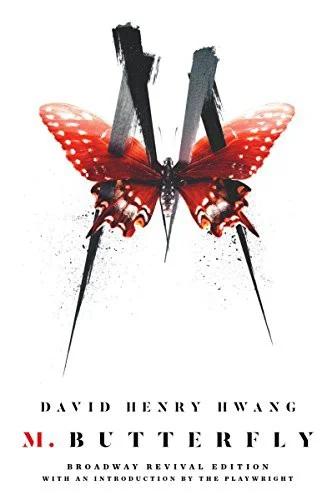
M. Butterfly
- Publication Date:
- November 28th, 2017
- Publisher:
- Plume
- ISBN-13:
- 9780525533719
- ISBN-10:
- 0525533710
- Pages:
- 128
Why M. Butterfly Has Been Challenged
Critics of this play have taken issue with its explicit intimacy and its unflinching depiction of romantic deception built on mistaken gender identity. See more ↓
Challenged or banned in 1 state across 1 school district.
Overview
David Henry Hwang's drama unfolds in China during the mid-1960s, as a French embassy official becomes enthralled with a performer in the Beijing Opera. He believes he has found the submissive, devoted figure of Western fantasy embodied in Puccini's famous opera, and he pursues the relationship for years without ever questioning what he is actually seeing.
The play builds its tension through dramatic irony: the audience is invited to notice what the diplomat cannot, or will not, about the person he desires. Hwang structures the piece as a direct response to "Madama Butterfly," pulling its romantic imagery apart to examine the assumptions embedded within it.
What begins as a story of infatuation becomes one of self-deception, as political upheaval and personal denial intertwine until the diplomat's carefully constructed illusion collapses.
Reframing a Classical Narrative
Hwang's work is less interested in retelling "Madama Butterfly" than in interrogating it. The opera's portrait of an Asian woman devoted to a Western man is treated here as a cultural fiction, one that reveals more about the viewer's desires than about the person being viewed. By placing a male performer at the center of that fiction, the play exposes how thoroughly the diplomat's perception was shaped by expectation rather than reality.
The Cultural Revolution setting places this personal drama against a backdrop of ideological upheaval, suggesting parallels between political self-delusion and the private kind. The work has been recognized as a significant contribution to American theater's engagement with questions of gender, performance, and East-West perception, and it remains closely associated with Hwang's broader exploration of identity and cultural assumption in his writing.
Why M. Butterfly Has Been Challenged
Challenges to this play have most often centered on its appropriateness for high school students, with critics arguing that its sexual content and frank treatment of a deceptive romantic and physical relationship make it unsuitable for classroom use at that age. Reviewers objecting to the work have pointed to scenes depicting intimacy and the gradual unraveling of the central deception as material better suited to mature or college-level audiences.
Beyond concerns about sexual content, some objections have focused on the play's treatment of gender identity and deception, arguing that its central premise could be confusing or troubling for younger readers without adequate context or guidance. Supporters of the play counter that these very elements are what give the work its critical edge, using discomfort to prompt reflection on stereotype and perception rather than for shock value. In the catalog tracked here, the play has drawn a challenge in one state and one school district.
Where to Buy




Affiliate links may generate a small commission at no extra cost to you, which helps support this site.
Banned in Schools
Banned or challenged in 1 state across 1 school district.
Florida 1 district
- Orange County Public Schools Banned by restriction