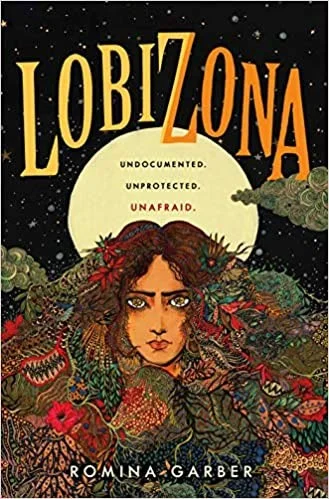
Lobizona
by
Romina Garber
May
Macmillan Audio
- Publication Date:
- May 5th, 2020
- Publisher:
- Macmillan Audio
- ISBN-13:
- 9781250786555
- ISBN-10:
- 125078655X
Why Lobizona Has Been Challenged
At the heart of the pushback is discomfort with a fantasy that treats undocumented status and rigid gender rules as subjects worth questioning rather than settled facts.
See more ↓
Challenged or banned in
1 state
across
1 school district.
<h2>Overview</h2>
<p>Romina Garber's "Lobizona" follows Manu, a teenager raised in near-total hiding in Miami because she lacks the paperwork that would let her exist safely in the eyes of the state. Her mother has kept her off the grid for years, enforcing strict rules about where Manu can go and who can see her. When those precautions fail, Manu is pulled out of the only life she has known and toward a much stranger truth about where she came from.</p>
<p>That truth involves a hidden society built on Argentine folklore, where werewolves and witches live by an unbending law: males become lobizones, females become brujas, and no exceptions are tolerated. Manu doesn't fit either category as she's supposed to, and her arrival forces a world organized around rigid categories to reckon with someone it has no place for.</p>
<p>Garber threads a coming-of-age fantasy adventure through a very grounded account of what it means to live without legal status, letting the two registers comment on each other rather than treating one as mere backdrop for the other.</p>
<h2>A Fantasy Built on Real Borders</h2>
<p>What distinguishes "Lobizona" within its genre is how literally it treats the idea of being undocumented in two senses at once. Manu is undocumented by the state and, once she crosses into the hidden magical world, undocumented by its rulebook too, since her very existence doesn't match any category its laws recognize. Garber, who has spoken about her own family's immigration experience, uses the lobizón legend of Argentine and Latin American folklore not as decoration but as a structural mirror for questions of belonging, classification, and who gets to decide which rules a person must follow.</p>
<p>The novel, the first in a series, also pushes against the gendered symmetry common to werewolf mythology, in which strength and transformation are coded male while intuition and spellcraft are coded female. By making its protagonist someone the system can't classify, the book invites readers to examine the fairness of binary rules more broadly, whether applied to magical creatures or to the people a government decides to recognize or exclude.</p>
<h2>Why Lobizona Has Been Challenged</h2>
<p>Much of the friction around "Lobizona" concerns where it belongs on a shelf and who should be handed it, rather than any single scene in isolation. Reviewers who favor restriction tend to argue that its subject matter calls for more guidance or context than a typical library checkout allows a younger reader. The book has been formally challenged in 1 state and 1 district tracked in this catalog, and the objections raised center on two threads running through the story. One is its sympathetic, humanizing treatment of undocumented immigration, a topic some challengers view as too politically charged to present without counterbalance in a school setting. The other is the book's dismantling of a strict gender binary within its magical system, which some readers interpret as an argument about gender roles more broadly rather than as a feature of its invented folklore. Taken together, these concerns reflect discomfort less with graphic content than with the ideas the novel asks its characters, and by extension its readers, to sit with.</p>
Where to Buy
Affiliate links may generate a small commission at no extra cost to you, which helps support this site.
Banned in Schools
Banned or challenged in
1 state
across
1 school district.