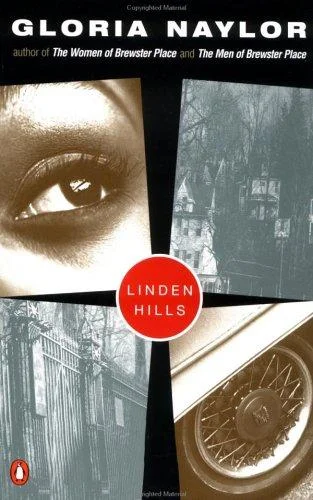
Linden Hills
- Publication Date:
- July 1st, 1992
- Publisher:
- Minerva
- ISBN-13:
- 9780749399399
- ISBN-10:
- 0749399392
- Pages:
- 320
Why Linden Hills Has Been Challenged
Reviewers uneasy with the novel's frank treatment of intimacy and domestic conflict have periodically pushed to limit its place on school reading lists. See more ↓
Challenged or banned in 1 state across 1 school district.
Overview
Linden Hills takes its name from the development at its center: a planned community where Black families have, over generations, built lives of visible prosperity. The most coveted address isn't at the top of the hill but near its base, on Tupelo Drive, where the largest houses sit and where, as the novel's opening quietly notes, turnover is strangely constant and no one asks why.
Naylor follows two young men, Willie and Lester, as they take on odd jobs over the days leading up to Christmas, moving door to door and street to street further into the development. Each household they encounter reveals another resident who has traded something of themselves for a place in Linden Hills, and the two outsiders become witnesses to a community that measures itself by address rather than by what that address has required.
The structure of the novel, a descent rather than an ascent, recasts the climb toward success as something closer to a fall, with the neighborhood's most desirable ground reserved for those who have given up the most to reach it.
A Community Built on What It Costs
Linden Hills belongs to the loosely connected body of fiction Naylor built around interlocking Black communities, and it is often read alongside her better-known debut as a companion study in contrast: where that earlier book examined women locked out of opportunity, this one turns to what happens once opportunity is secured. The neighborhood functions less as a backdrop than as an argument, pressing on the idea that upward mobility, pursued as an end in itself, can hollow out the very identity and community ties it was meant to protect.
Critics have long noted the novel's debt to Dante's Inferno in its geography of descent, with each lower circle of the development corresponding to a deeper compromise. That structure has helped the book endure as a text frequently taught alongside discussions of race, class, and consumerism in American literature, valued for refusing an easy moral about ambition and instead sitting with its contradictions.
Why Linden Hills Has Been Challenged
Sexual content and language are the primary grounds on which the novel has drawn objection, with passages depicting intimacy and the coarser speech of its characters singled out as inappropriate for younger or school-age readers. Scenes of domestic strain and violence within the Linden Hills households have likewise unsettled some reviewing committees, who have questioned whether the novel's unflinching look at what its characters endure belongs in a curriculum.
Underlying many of these objections is a broader discomfort with the book's refusal to soften its portrait of ambition's costs; its candor about marriage, grief, and self-erasure within an ostensibly successful community has made it a recurring subject of review even as it remains assigned in literature courses. In the records tracked by this catalog, that discomfort has translated into a challenge logged in one state and one school district.
Where to Buy




Affiliate links may generate a small commission at no extra cost to you, which helps support this site.
Banned in Schools
Banned or challenged in 1 state across 1 school district.
Florida 1 district
- Orange County Public Schools Banned pending investigation