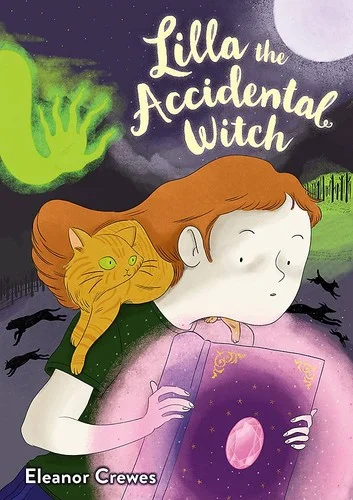
Lilla the Accidental Witch
- Publication Date:
- January 1st, 2021
- Publisher:
- Little, Brown Books for Young Readers
- ISBN-13:
- 9780759555808
- ISBN-10:
- 075955580X
- Pages:
- 304
Why Lilla the Accidental Witch Has Been Challenged
Books featuring witches and magical protagonists have long drawn objections from readers and parents concerned about the depiction of witchcraft or occult themes in material intended for children, particularly when the young audience is presumed impressionable. See more ↓
Challenged or banned in 1 state across 1 school district.
Overview
As its title suggests, Lilla the Accidental Witch centers on a young protagonist who finds herself thrust into a world of magic she did not seek out. The "accidental" framing implies a story less about a chosen destiny and more about the disorientation of discovering unexpected power — a premise familiar to readers of coming-of-age fantasy, but rendered here through Eleanor Crewes' distinctive graphic-novel voice.
Crewes works primarily in illustrated narrative, and the book's visual format is central to how its story unfolds. Rather than relying on dense prose, the story likely leans on sequential art to convey Lilla's emotional shifts as she navigates a life that no longer fits the ordinary rules she once understood.
Without a fuller publisher synopsis to draw from, the particulars of Lilla's world, her companions, and the shape of her journey remain best discovered on the page. What can be said is that the book fits within a broader tradition of witch narratives aimed at younger readers, where magic serves as a vehicle for exploring change, difference, and self-discovery.
Behind the Story
Eleanor Crewes is best known for graphic memoir work exploring identity and self-understanding, and that sensibility — using the comics form to trace a character's internal reckoning with who they are — appears to carry over into this more fantastical, fictional register. Where her earlier work drew directly on lived experience, Lilla the Accidental Witch channels similar concerns about difference and belonging into an invented, magical framework aimed at a younger audience.
This kind of translation — autobiographical insight repurposed into fantasy for children — is a familiar move for authors who cut their teeth on personal narrative. It allows themes of not fitting in, or of discovering a hidden part of oneself, to reach readers through the safer distance of metaphor and magic rather than direct disclosure.
Why Lilla the Accidental Witch Has Been Challenged
Books featuring witches and magical protagonists have long drawn objections from readers and parents concerned about the depiction of witchcraft or occult themes in material intended for children, particularly when the young audience is presumed impressionable. Such challenges typically center on the presence of magic itself, rather than on any explicit content, reflecting broader and long-running disputes over fantasy literature's suitability for school and library shelves. Given the author's body of work exploring identity and difference, challenges to this title may also reflect discomfort with underlying themes of not conforming to expected norms, even when presented through a fantastical lens rather than direct discussion. In the catalog tracked here, this book has been challenged in 1 state and 1 district.
Where to Buy




Affiliate links may generate a small commission at no extra cost to you, which helps support this site.
Banned in Schools
Banned or challenged in 1 state across 1 school district.
Texas 1 district
- Katy Independent School District Banned by Restriction