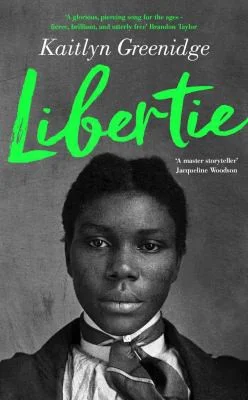
Libertie
- Publication Date:
- January 1st, 2021
- Publisher:
- TBS/GBS/Transworld
- ISBN-13:
- 9781788169011
- ISBN-10:
- 1788169018
- Pages:
- 336
Why Libertie Has Been Challenged
Some parents and reviewers have sought to limit access to this novel over its unflinching treatment of race, sexuality, and marital discord in a story aimed at older teen readers. See more ↓
Challenged or banned in 1 state across 1 school district.
Overview
Set in the years after the Civil War, Libertie follows a young woman growing up in a free Black community in Brooklyn, the daughter of one of the first Black female physicians in the United States. Raised to follow her mother into medicine, Libertie instead finds herself drawn toward music, friendship, and a sense of self that doesn't fit neatly into the role laid out for her.
The novel's second half shifts to Haiti, where Libertie marries a young Haitian doctor and moves across the water, hoping marriage will offer the independence that her mother's household could not. What she finds instead is a different, equally confining set of expectations, forcing her to reckon with what freedom actually means for a woman still defining herself.
Loosely inspired by the life of a real nineteenth-century physician, the book blends historical research with invented interiority, using one young woman's coming-of-age to examine a period more often remembered through its political milestones than its private lives.
Freedom, Inheritance, and the Weight of Expectation
The title itself signals the book's central preoccupation: what does liberty look like for someone who has technically been granted it but still must navigate family duty, colorism within her own community, and the limited roles available to Black women in the nineteenth century? Libertie's mother represents one hard-won version of freedom, built through professional achievement and racial uplift, but the novel is careful to show that her path isn't the only legitimate one, and that Libertie's resistance to it is not failure but self-definition.
Greenidge also uses the move to Haiti to widen the novel's lens beyond the United States, placing Libertie's personal search for autonomy against the backdrop of a nation that had itself won independence through revolution, only to grapple with its own internal hierarchies. The novel has been praised for resisting a tidy resolution, leaving Libertie's marriage and her sense of self unsettled rather than neatly redeemed, which has made it a frequently discussed work in conversations about historical fiction centered on Black women's inner lives.
Why Libertie Has Been Challenged
Most objections to this novel cite its suitability for high-school-age readers, the group most likely to encounter it on classroom or library shelves. Critics who have raised concerns argue that its depictions of a troubled marriage, including scenes of emotional and sexual tension between Libertie and her husband, go beyond what they consider appropriate for teenage readers, and that the book's frank treatment of desire and disappointment within marriage is too mature for a young audience.
Other objections center on the novel's unsparing look at racism and colorism, both in post-Civil War America and in Haiti, including passages that portray prejudice within Black communities as well as from white characters. Some reviewers have also pointed to its handling of mental health and domestic unhappiness as unsettling for younger readers. According to the records tracked in this catalog, the book has drawn a single formal challenge, recorded in one state and one school district.
Where to Buy




Affiliate links may generate a small commission at no extra cost to you, which helps support this site.
Banned in Schools
Banned or challenged in 1 state across 1 school district.
Iowa 1 district
- Council Bluffs Community School District Banned pending investigation