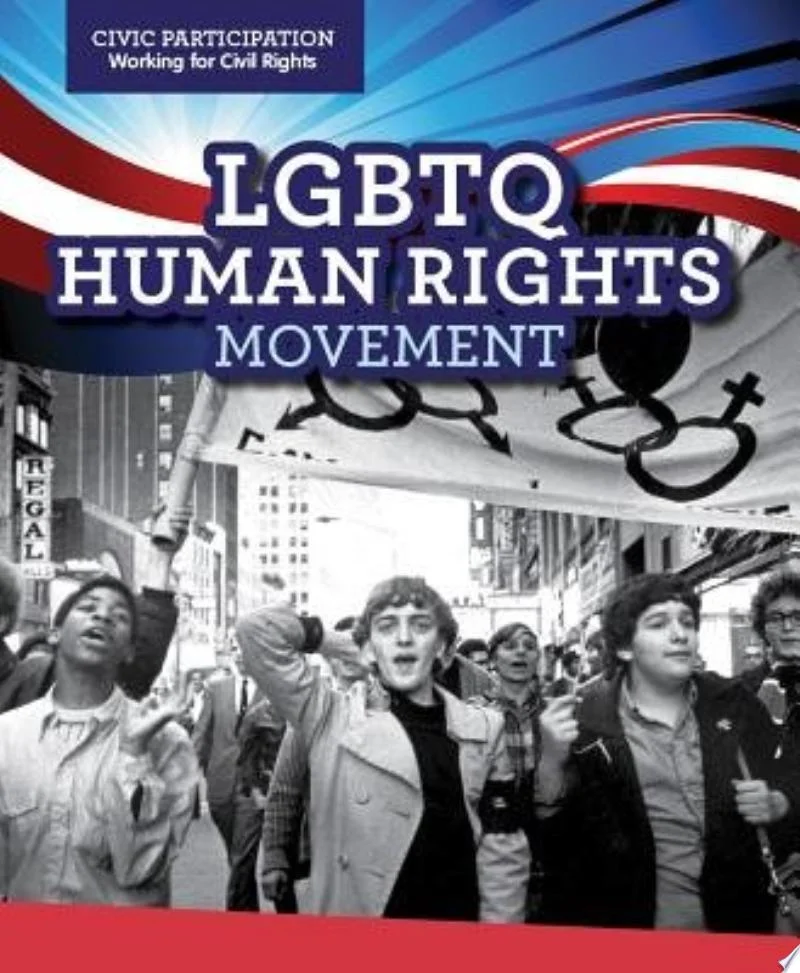
LGBTQ Human Rights Movement
- Publication Date:
- December 15th, 2016
- Publisher:
- The Rosen Publishing Group, Inc
- ISBN-13:
- 9781499426816
- ISBN-10:
- 149942681X
- Pages:
- 34
Why LGBTQ Human Rights Movement Has Been Challenged
Some parents have pushed to remove this title from school shelves, arguing that a young readers' history of LGBTQ activism exposes students to subject matter they believe should be addressed at home rather than in a classroom library. See more ↓
Challenged or banned in 2 states across 2 school districts.
Overview
Theresa Morlock's LGBTQ Human Rights Movement is structured as an entry point for young readers into a long and still-unfolding civil rights struggle. It opens by establishing a baseline most readers will not have fully grasped: that gay, lesbian, bisexual, and transgender people were, within living memory, routinely classified as mentally ill or treated as criminals under the law. From that starting point, the book traces how organized advocacy gradually reshaped public understanding and policy.
The narrative moves chronologically through key moments of organizing and resistance, introducing the individuals and groups who built the modern movement. Rather than presenting these events as settled history, the book frames them as a continuum, connecting early activism to contemporary debates over marriage, employment protections, and anti-discrimination law.
Photographs and archival documents are used throughout to anchor the text in verifiable record rather than abstraction, a common strategy in nonfiction aimed at middle-grade and secondary readers. The book closes by turning toward the present and the future, encouraging readers to think about their own potential role in sustaining the gains the movement has achieved.
A Primer on an Ongoing Struggle
What distinguishes this book from a straightforward timeline is its insistence on connecting past and present. Many nonfiction titles aimed at students treat civil rights history as resolved — a problem identified, confronted, and closed. Morlock's approach instead positions LGBTQ equality as contested and incomplete, asking readers to understand historical discrimination as a lens for evaluating current law and culture.
This framing situates the book within a broader wave of educational publishing that treats identity-based history not as a niche subject but as core civics content, alongside histories of other rights movements. Its use of primary sources reflects a pedagogical emphasis on evidence and documentation over narrative alone, inviting readers to engage critically with source material rather than simply absorb a summary. For readers encountering this history for the first time, the book functions less as a definitive account and more as an orientation — a map of names, dates, and turning points meant to prompt further inquiry.
Why LGBTQ Human Rights Movement Has Been Challenged
Reviewers and educators have generally regarded the book as a useful, fact-grounded introduction to a topic many school libraries had historically avoided, praised for pairing documentary photographs with accessible text. That same subject matter, however, is precisely what has drawn objection from some parents and community members, who argue that LGBTQ identity and history are inappropriate or overly mature topics for the age group the book targets. In the catalog tracked here, it has been challenged in 2 states and 2 districts.
The substance of these objections tends to center less on any single passage than on the book's premise: that LGBTQ rights history belongs in a school library's civics and social-studies collection at all. Critics have characterized the subject matter as ideological or as introducing concepts about gender and sexuality that they believe should be left to parents rather than addressed through school-provided materials. Others have objected on the grounds that the book, by cataloguing historical discrimination, implicitly takes a position on current political debates over LGBTQ rights, which they view as unsuitable for a nonfiction reference title. Supporters of its continued inclusion counter that documenting the legal and social treatment of a minority group is standard historical practice, comparable to similar surveys of other civil rights movements, and that removing it limits students' access to factual information about a documented part of American history.
Where to Buy




Affiliate links may generate a small commission at no extra cost to you, which helps support this site.
Banned in Schools
Banned or challenged in 2 states across 2 school districts.