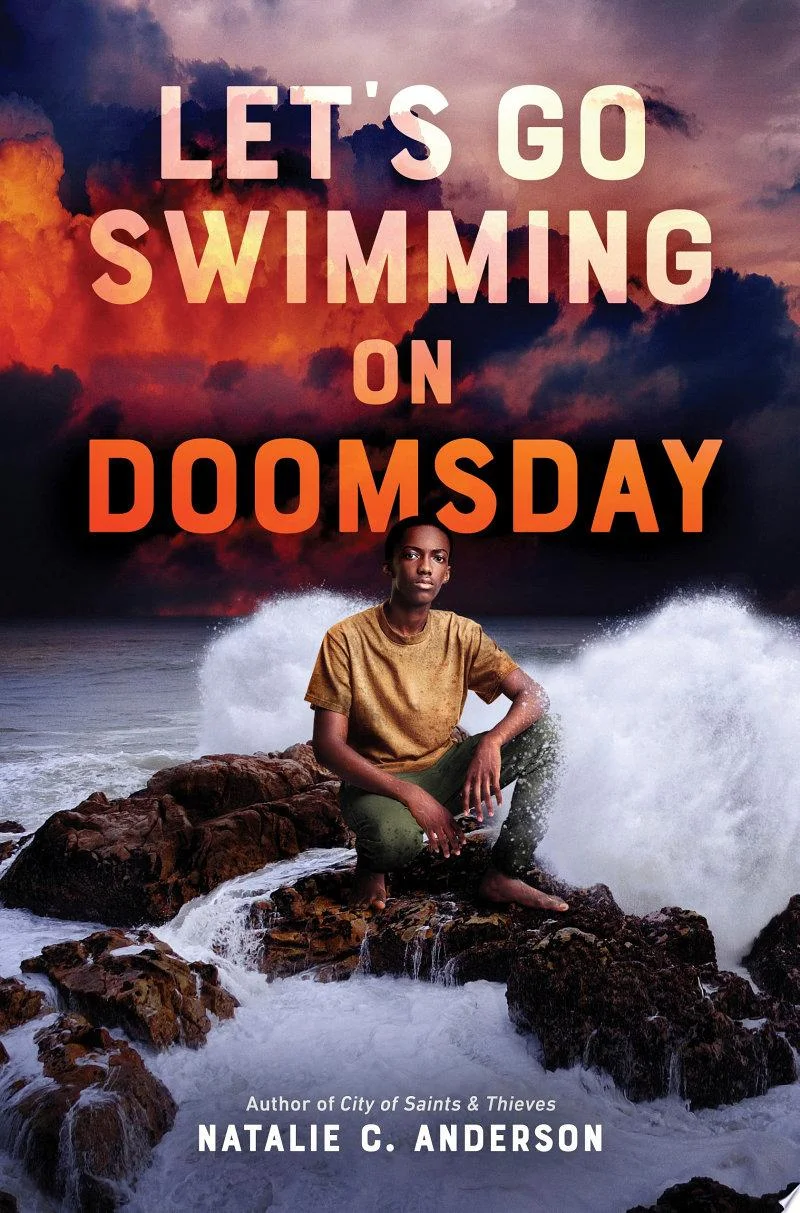
Let's Go Swimming on Doomsday
- Publication Date:
- January 14th, 2020
- Publisher:
- Penguin
- ISBN-13:
- 9780399547621
- ISBN-10:
- 0399547622
- Pages:
- 482
Why Let's Go Swimming on Doomsday Has Been Challenged
Critics have pushed back on the book's close, unsparing look at how a child is pulled into militant violence, arguing the material is too harrowing for the young readers who typically encounter it. See more ↓
Challenged or banned in 1 state across 2 school districts.
Overview
Natalie C. Anderson's novel follows Abdi, a sixteen-year-old whose family is seized by the jihadi group Al Shabaab, leaving him with an impossible bargain: enlist as a fighter or watch his relatives suffer the consequences. To buy their safety, he takes on a second, more dangerous role, secretly relaying what he learns inside the group to American contacts, fully aware that discovery means death.
The story tracks Abdi through weeks of training and exposure to the group's violence, building toward the moment he is strapped into a suicide vest and forced to choose between compliance and escape. He flees to Sangui City, Kenya, arriving with nothing and no one, his composure eroded by what he has witnessed and done.
A minor arrest for theft then pulls Abdi back into contact with the world he tried to outrun, compelling him to face memories and choices he had hoped to leave behind. As a companion piece to Anderson's "City of Saints & Thieves," the book extends her interest in young people navigating the aftermath of violence in East African settings.
Context and Themes
The novel sits within a body of young adult fiction that asks readers to inhabit the perspective of a child soldier rather than observe one from a distance. By making Abdi both coerced recruit and reluctant informant, Anderson complicates easy categories of victim and perpetrator, pressing on questions of complicity under duress, the price of loyalty to family, and what, if anything, a person owes to a self they no longer recognize.
The Kenyan urban setting grounds the book's second half in the practical hazards facing a traumatized, undocumented teenager, housing insecurity, suspicion from authorities, the absence of any institution equipped to help him. This shift from war zone to city street broadens the story's scope beyond combat into the long, unglamorous work of survival and reckoning that follows it. Reviewers have generally placed the novel among serious contemporary YA efforts to render geopolitical conflict through an intimate, character-driven lens rather than as backdrop.
Why Let's Go Swimming on Doomsday Has Been Challenged
Challenges to the book most often cite its suitability for middle and early high school readers, typically ages twelve to fourteen, arguing that its sustained depiction of war violence and radicalization is too intense or disturbing for that age group. Specific objections center on the novel's portrayal of forced recruitment and violent coercion, scenes depicting the mechanics of a suicide bombing plot, and the broader presence of extremist ideology and terrorism as a backdrop to the plot.
Some challengers have also raised concerns about the book's frank treatment of trauma and its psychological aftermath, including Abdi's disorientation and desperation once he reaches Kenya, as material better suited to older or more mature readers. Others have questioned whether a work centered on a real-world militant organization belongs in school libraries at all, regardless of its literary framing or critical reception. In the catalog tracked here, the title has drawn one state-level and two district-level challenges.
Where to Buy




Affiliate links may generate a small commission at no extra cost to you, which helps support this site.
Banned in Schools
Banned or challenged in 1 state across 2 school districts.
Florida 2 districts
- Clay County School District Banned by Restriction
- Escambia County Public Schools Banned pending investigation