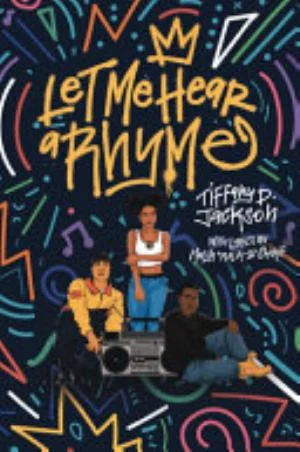
Let Me Hear a Rhyme
- Publication Date:
- January 27th, 2021
- Publisher:
- Thorndike Striving Reader
- ISBN-13:
- 9781432885205
- ISBN-10:
- 1432885200
- Pages:
- 510
Why Let Me Hear a Rhyme Has Been Challenged
Objectors have taken issue less with the novel's message than with its texture, arguing that its street language, drug references, and candid treatment of sex are too mature for the classroom shelves where it has appeared. See more ↓
Challenged or banned in 1 state across 1 school district.
Overview
Tiffany D. Jackson's Let Me Hear a Rhyme opens in the aftermath of a killing: a Brooklyn teenager with a gift for rap is gone, and the people who loved him are left to decide what happens to what he leaves behind. His two closest friends, Quadir and Jarrell, hatch a plan to circulate his unreleased tracks under a new identity, hoping the music will find the audience he never lived to see.
His younger sister Jasmine becomes an unexpected third partner in the scheme, though her motives run deeper than nostalgia. As the songs start to catch on and strangers take notice, she keeps pulling at the unanswered question of who ended her brother's life and why no one seems to be looking very hard for an answer.
The novel follows the three as their small act of tribute grows into something more complicated, forcing each of them to sit with loss, loyalty, and the gap between performing strength and actually feeling it.
A Portrait of Grief Set to a Beat
Jackson has built a body of young adult fiction around teenagers navigating violence, injustice, and the systems that fail them, and this novel fits that pattern while taking a different angle: it uses hip-hop not as backdrop but as the mechanism of the plot itself, letting music stand in for memory, protest, and proof that a life mattered. The late-1990s Brooklyn setting roots the story in a specific moment for the genre, when a demo tape passed hand to hand could still change a neighborhood's sense of who its stars were.
The book has drawn attention for refusing easy categorization as either a grief narrative or a mystery. Quadir and Jarrell's scheme to keep their friend's name alive runs alongside Jasmine's more clear-eyed insistence on accountability, and the tension between those two responses to tragedy, one about legacy, the other about justice, gives the novel much of its emotional weight. Critics have noted Jackson's ear for dialogue and her refusal to tidy up the aftermath of violence into something easily resolved.
Why Let Me Hear a Rhyme Has Been Challenged
Reviewers have generally credited the novel for its unflinching, carefully observed depiction of how young people actually process loss, yet that same candor is precisely what has drawn scrutiny from those who would rather shield younger readers from it. The objections are not about craft but about exposure: a story built around a murder necessarily keeps violence and its aftershocks close to the surface, and the book doesn't soften the language, drug references, or street-level detail that come with its setting.
Some challengers have also pointed to its frank handling of sexuality and the moral ambiguity of its central deception, the forging of a dead boy's identity for his music, as inappropriate for a school setting. Taken together, the concerns reflect a broader discomfort with YA fiction that treats teenage mortality, grief, and the hustle for recognition without a protective filter. The book has been the subject of a single challenge recorded in this catalog, spanning one state and one school district.
Where to Buy




Affiliate links may generate a small commission at no extra cost to you, which helps support this site.
About Tiffany D. Jackson
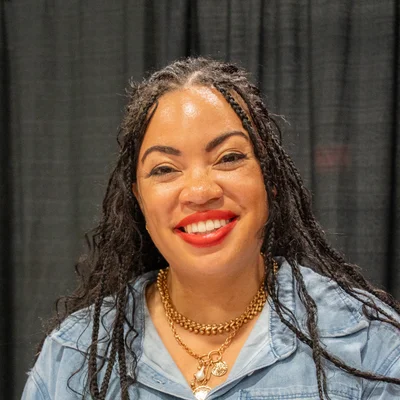
Tiffany D. Jackson is a New York Times bestselling author of young adult fiction known for socially conscious thrillers exploring race, identity, and systemic injustice. Her sophomore novel Monday's Not Coming drew national attention to the epidemic of missing Black girls in America. She is the recipient of the 2019 John Steptoe Award for New Talent and the 2025 Margaret A. Edwards Award.
Also by Tiffany D. Jackson


Banned in Schools
Banned or challenged in 1 state across 1 school district.
Florida 1 district
- Escambia County Public Schools Banned pending investigation