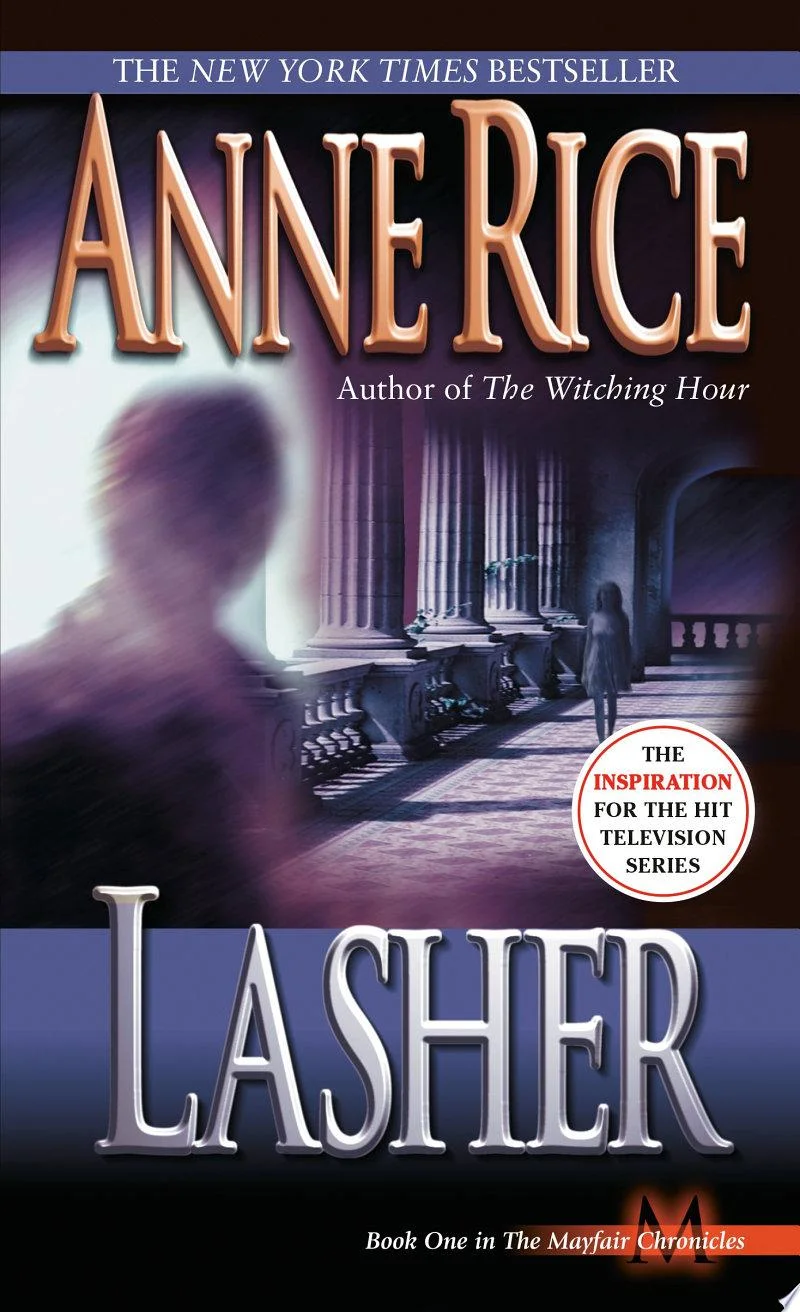
Lasher
by Anne Rice
- Publication Date:
- August 1st, 1995
- Publisher:
- Ballantine Books
- ISBN-13:
- 9780345397812
- ISBN-10:
- 0345397819
- Pages:
- 642
Why Lasher Has Been Challenged
Reviewers who flagged this novel pointed to its frank pairing of occult ritual with scenes of seduction and violence as unsuitable for younger or unprepared readers. See more ↓
Challenged or banned in 1 state across 1 school district.
A Family Bound Across Centuries
Lasher picks up the story Anne Rice began in The Witching Hour, widening its scope to trace the Mayfair family from a conjuring in seventeenth-century Scotland to the present-day coven presiding over New Orleans. At the center of the earlier tale was Suzanne, the family's first witch, whose summoning of a spirit called Lasher set in motion a legacy that would shadow every generation to follow.
The narrative turns on Rowan Mayfair, heir to the family's power and its burdens, who must come to terms with the entity her lineage created and cannot fully control. As Lasher moves from myth into something closer to presence, Rowan finds herself pulled between fascination and the need to escape what her ancestors set loose.
The book is the middle installment of a trilogy that continues with Taltos, extending a saga that pairs supernatural menace with the intimate, generational texture of a family history.
Inheritance, Power, and the Gothic Family Saga
Where Rice's Vampire Chronicles built mythology around solitary immortals, the Mayfair novels root their supernatural elements in bloodline and domestic history—magic here is less a personal gift than an inheritance, passed down alongside property, secrets, and obligation. Lasher functions as both antagonist and inheritance: a force conjured by one woman that becomes the defining, inescapable fact of her descendants' lives.
That structure lets the novel work as family saga as much as horror, using centuries of Mayfair history to ask what a family owes to what earlier generations set in motion, and how much of identity is chosen versus bequeathed. Critics noted the density and ornamentation of Rice's prose in this stretch of her career, a style dense enough to reward slow reading, and the book found its audience among readers who came to her through the Vampire Chronicles and stayed for the different, more domestic register of the Mayfair books—a following broad enough that the series was later adapted for television.
Why Lasher Has Been Challenged
The passages that have drawn objection center on the character of Lasher himself, described as a being who is at once menacing and magnetic, and on the novel's willingness to render both the violence and the seduction that follow from that duality in explicit terms. Combined with the book's occult subject matter—ritual conjuring, generational curses, a family defined by its dealings with a spirit rather than any conventional faith—these elements have led some reviewers to argue the material is better suited to adult readers than to teens who might encounter it on a library shelf. The concern raised is less about the book's literary ambitions than about its graphic treatment of sexuality and violence appearing alongside sympathetic, even seductive, supernatural evil. In this catalog, that objection has resulted in a challenge recorded in 1 state and 1 school district.
Where to Buy




Affiliate links may generate a small commission at no extra cost to you, which helps support this site.
Banned in Schools
Banned or challenged in 1 state across 1 school district.