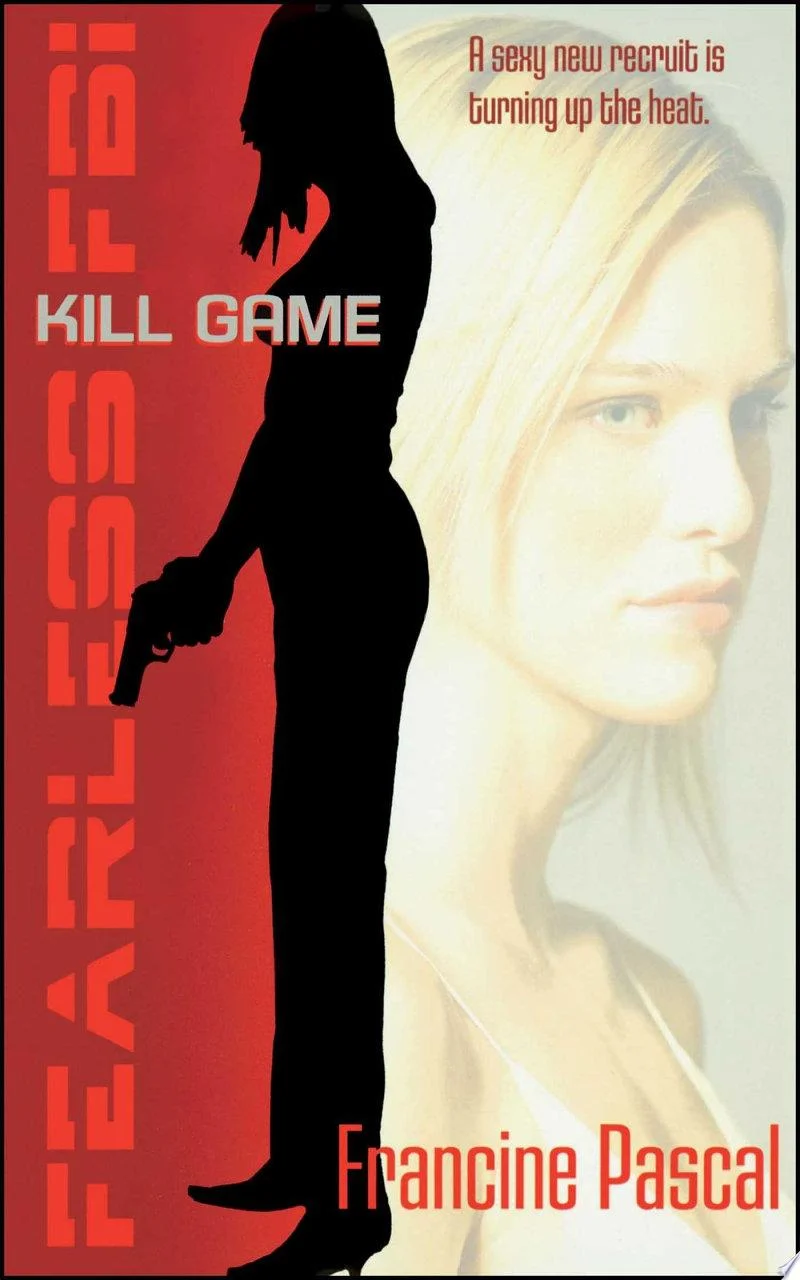
Kill Game
- Publication Date:
- May 11th, 2010
- Publisher:
- Simon and Schuster
- ISBN-13:
- 9781439121061
- ISBN-10:
- 1439121060
- Pages:
- 278
Why Kill Game Has Been Challenged
Critics of this title have focused on how closely a story about hunting serial killers keeps young readers to the details of violent crime. See more ↓
Challenged or banned in 1 state across 1 school district.
Overview
Gaia Moore has spent her adolescence solving problems most people would run from. Fluent in multiple martial arts and possessed of a mind as quick as her temper, she has already made a habit of skipping school to confront the gang members and dealers working New York's streets before the novel even begins. Kill Game picks her up at a turning point: rather than continuing to operate alone and unsanctioned, she is pulled into the orbit of the FBI, the institution best equipped to give her instincts a legitimate outlet.
The bulk of the story follows her induction into the Bureau's training program at Quantico, where raw nerve has to be reshaped into discipline. Gaia is drilled in procedure, chain of command, and the kind of patient, methodical thinking that doesn't come naturally to someone used to acting first. The FBI does not simply want her toughness; it wants to see whether that toughness can be bent into something reliable.
That test arrives in the form of an active serial killer investigation, the case around which the book's tension is built. Gaia's transition from street fighter to federal recruit is measured against her ability to track a killer using the tools of the institution rather than her own improvisation, and the narrative asks whether she can close the case without reverting to the lone-wolf instincts that got her this far in the first place.
Franchise Context and Appeal
Kill Game extends Francine Pascal's Gaia Moore character beyond the original Fearless series into a more procedural, institution-facing chapter of her story. Where the earlier books centered on Gaia's isolation and her uneasy relationship with her own fearlessness, this installment places her inside a formal structure with rules, hierarchy, and a training curriculum, testing the character in a setting she doesn't control.
The shift reflects a broader pattern in young-adult thriller series of this era, which often paired an exceptional teenage protagonist with adult professional systems — law enforcement, intelligence work, elite training programs — as a way of raising the stakes past what a single vigilante could plausibly accomplish alone. For readers who followed Gaia from her earlier appearances, the FBI arc offers a new frame for a familiar figure: the same restless nerve, now measured against protocol instead of instinct.
Why Kill Game Has Been Challenged
Violence is the throughline of the objections raised against this title. A story built around federal training for serial-killer investigations necessarily keeps its characters, and its readers, close to the mechanics of criminal harm, and objectors have pointed to that proximity as inappropriate for the book's intended teenage audience. The concern generally centers less on any single scene than on the book's overall willingness to treat manhunts and violent crime as material for entertainment aimed at younger readers.
A related strand of criticism concerns Gaia's own history of vigilante action prior to joining the Bureau, with some objectors uneasy about a young protagonist who takes on armed adults in unsanctioned street confrontations being held up as an admirable model, regardless of the legitimizing arc that follows. In the catalog tracked here, this combination of concerns has led to Kill Game being challenged in 1 state and 1 school district.
Where to Buy




Affiliate links may generate a small commission at no extra cost to you, which helps support this site.
Banned in Schools
Banned or challenged in 1 state across 1 school district.
Florida 1 district
- Clay County School District Banned pending investigation