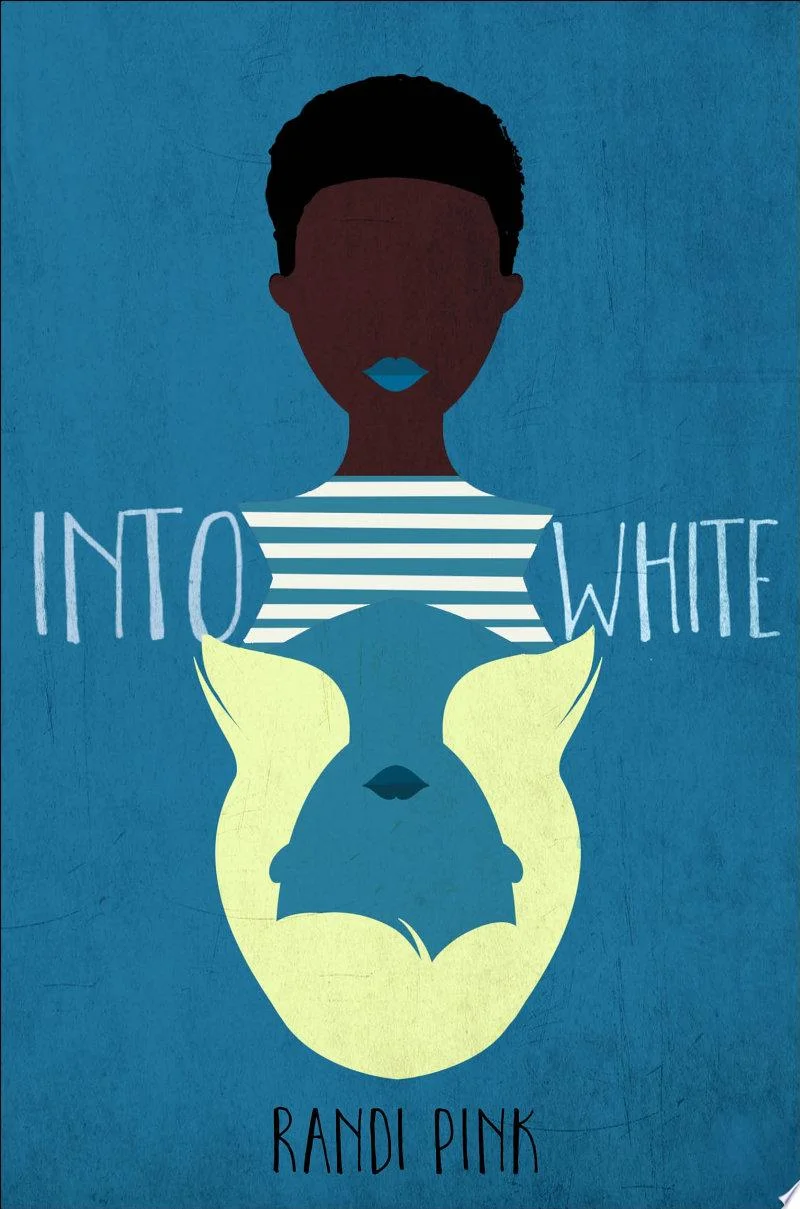
Into White
by Randi Pink
- Publication Date:
- September 13th, 2016
- Publisher:
- Feiwel & Friends
- ISBN-13:
- 9781250086907
- ISBN-10:
- 1250086906
- Pages:
- 289
Why Into White Has Been Challenged
Reviewers have pushed back on the novel less for its craft than for how squarely it puts racism, race-based language, and the idea of racial "escape" in front of teen readers. See more ↓
Challenged or banned in 1 state across 1 school district.
A Wish Made Carelessly
LaToya "Toya" Williams is one of the few Black students at her high school in Montgomery, Alabama, and most days she feels invisible except to her older brother, Alex, who is the closest thing she has to a friend. After a bruising encounter with a classmate leaves her humiliated, Toya finds herself wishing, half in desperation, to be anyone other than who she is — anything, she thinks, but Black.
The wish is answered. Toya wakes up white, blond, and suddenly fluent in a kind of social ease that had always been out of reach. Doors that were closed to her swing open overnight, and popularity arrives as if it were owed to her all along. Randi Pink uses this premise not as a simple transformation fantasy but as a way of exposing exactly how much of Toya's old life — and her new one — was shaped by race before she ever had a say in it.
What follows is less about the mechanics of the change than about what it costs. As Toya moves through a world now willing to embrace her, the novel tracks the friendships, family ties, and sense of self she risks losing in the exchange, complicating any easy read of the transformation as a gift.
A Debut That Turns a Trope Inside Out
Into White marked Randi Pink's first novel, and it arrived as part of a broader push in young adult fiction to confront race directly rather than obliquely. By literalizing the old, uncomfortable idea of "passing," Pink converts a speculative premise into a tool for examining colorism, class assumptions, and the social rewards attached to whiteness — without pretending those rewards are simple or without cost.
The novel sits alongside other contemporary YA work that uses fantasy or magical-realist devices to make systemic dynamics visible to teenage readers, trusting them to sit with discomfort rather than resolving it neatly. Its interest in gender runs alongside its focus on race, as Toya's new body reshapes how she is seen and treated in ways that extend beyond skin color alone. That willingness to let contradiction stand, rather than deliver a tidy moral, is part of what critics singled out as bold for a first novel.
Why Into White Has Been Challenged
Disputes over Into White have tended to center on where, and for whom, the book belongs on a shelf, rather than on any question of literary merit. Some adults reviewing the novel for classrooms and libraries have argued that its subject matter is better suited to older teens than to the younger end of a typical YA readership, given how directly it engages race and racism.
At the core of the objections is discomfort with the novel's candor: its frank depictions of racist treatment, the language characters use in reflecting that reality, and a premise that asks readers to imagine Blackness itself as something a character might wish away. Critics of the book have sometimes framed these elements as too charged or divisive for school settings, even as defenders point to that same candor as the novel's central value. In the catalog tracked here, that disagreement has produced a formal challenge in one state and one school district.
Where to Buy




Affiliate links may generate a small commission at no extra cost to you, which helps support this site.
Banned in Schools
Banned or challenged in 1 state across 1 school district.
Florida 1 district
- Orange County Public Schools Banned pending investigation