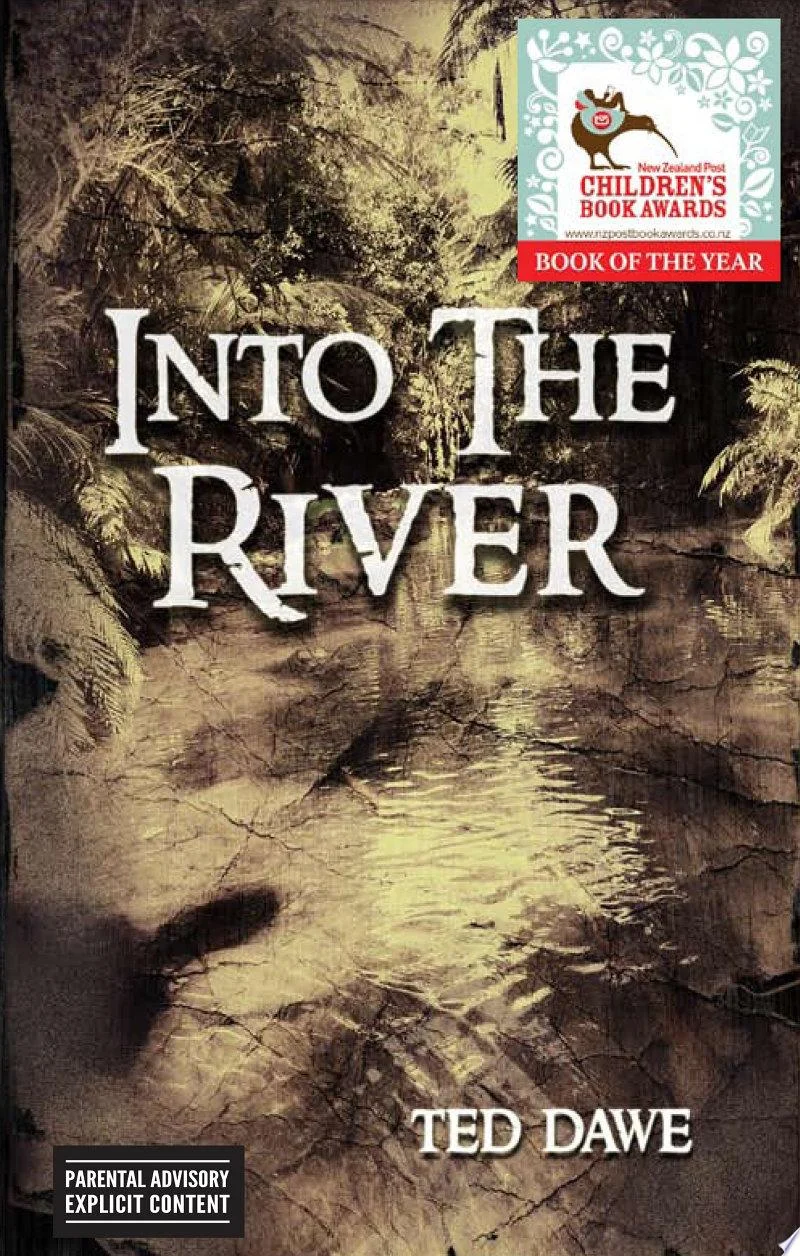
Into the River
by Ted Dawe
- Publication Date:
- October 18th, 2013
- Publisher:
- Penguin Random House New Zealand Limited
- ISBN-13:
- 9781775536031
- ISBN-10:
- 1775536033
- Pages:
- 247
Why Into the River Has Been Challenged
Critics argue the novel's frank treatment of teenage sexuality, drug use, and violence crosses a line that outweighs its literary and cultural context for the age group most likely to encounter it on a school shelf. See more ↓
Challenged or banned in 2 states across 3 school districts.
Overview
Ted Dawe's novel follows Te Arepa Santos, a boy from a small New Zealand farming community, from the afternoon a giant eel drags him into a river and nearly kills him. He emerges from the water changed, carrying a sense that something unseen now has a claim on him, and that a debt remains unpaid.
The story then follows him years later, when he leaves his whānau and the land he knows to attend a prestigious boarding school in Auckland. Stripped of the people and places that once protected him, he has to figure out who he is among strangers, and he finds that the dangers waiting for him there are entirely different from the ones he left behind.
Written as a prequel to Dawe's earlier novel Thunder Road, the book traces a single adolescence under pressure: a boy caught between two worlds, forced again and again to choose between retreating to safety or pushing forward into whatever comes next.
A Boy Between Two Worlds
At its core, Into the River is interested in what happens to identity when its usual supports are removed. Te Arepa's early brush with the eel functions less as a supernatural aside than as a signal that he is marked, that the ordinary rules of safety no longer fully apply to him. When he's later transplanted into an institution built on entirely different codes of belonging, status, and masculinity, that sense of being marked only sharpens.
The novel sits within a small but significant body of young adult fiction written specifically for teenage boys, a readership often underserved by the genre. Its reception reflects that ambition: it was named Margaret Mahy Book of the Year and won the Young Adult Fiction category at the 2013 New Zealand Post Children's Book Awards, recognition that placed it among the most acclaimed New Zealand youth literature of its era. New Zealand's Deputy Chief Censor later reviewed the book directly and found it not objectionable, describing its harder material as well contextualized within a fast-moving, socially realistic narrative centered on a young Māori protagonist navigating an unfamiliar world. That official assessment has shaped much of the public conversation around the book, with defenders pointing to it as evidence that difficult content serves a clear narrative purpose rather than existing for shock value.
Why Into the River Has Been Challenged
Most objections to the novel center on its suitability for readers in early-to-mid high school, with critics arguing that the material is too mature for the general young adult audience the book is shelved among. Specific concerns raised include its depictions of sexual activity between teenage characters, references to possible exploitation of a minor, teenage drug use, criminal behavior, and a scene of violent assault, alongside language some parents and administrators consider excessive for school libraries.
Supporters of the book counter that these elements are not gratuitous but integral to its portrait of a teenager navigating instability without the family and community structures that once protected him, and point to the Deputy Chief Censor's finding that the content is well-contextualized rather than exploitative. In this catalog, the book has drawn formal challenges in 2 states and 3 districts, reflecting a divide between those who read it as an honest reckoning with adolescence and those who view its content as inappropriate for school shelves regardless of context.
Where to Buy




Affiliate links may generate a small commission at no extra cost to you, which helps support this site.
Banned in Schools
Banned or challenged in 2 states across 3 school districts.
Florida 2 districts
- Escambia County Public Schools Banned pending investigation
- St. John's County School District Banned
Tennessee 1 district
- Wilson County Schools Banned