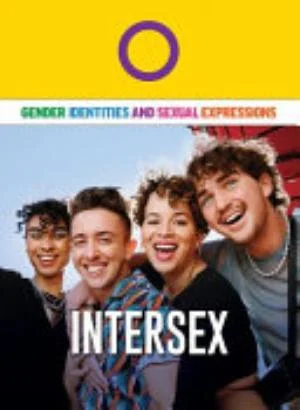
Intersex
by Jeremy Quist
- Publication Date:
- January 1st, 2022
- ISBN-13:
- 9781422246993
- ISBN-10:
- 142224699X
Why Intersex Has Been Challenged
Some parents and administrators have pushed back on introducing variations in human sex characteristics to young readers at all, arguing the topic belongs outside the school or library setting until children are older. See more ↓
Challenged or banned in 1 state across 1 school district.
Overview
Intersex by Jeremy Quist is a nonfiction title aimed at young readers, offering an entry point into a subject rarely addressed in children's and middle-grade collections: the existence of people whose chromosomes, gonads, hormones, or anatomy don't align neatly with typical definitions of male or female. Rather than framing intersex traits as rare or aberrant, the book situates them within the broader, well-documented spectrum of human biological variation.
As an entry in an informational series, the book favors a straightforward, age-appropriate structure over narrative storytelling. It introduces vocabulary, basic biology, and social context in accessible terms, aiming to equip students with a factual vocabulary for a topic they may encounter in health class, in the news, or among their peers.
The book's purpose is educational rather than argumentative: it seeks to describe what intersex means, how common such variations are, and how intersex individuals have historically been treated by medicine and society, without asking readers to adopt a particular position on contested policy debates.
Biology, Visibility, and the Limits of a Binary Model
The book arrives at a moment when school and library collections are increasingly expected to represent the full range of human bodies and identities, not just the most statistically common configurations. Intersex variations have existed throughout recorded history, but they have often been met with medical secrecy, surgical intervention in infancy, and social silence rather than open discussion. A children's book that treats the subject plainly is part of a broader shift toward making once-taboo biological facts part of standard science and health literacy.
Placed alongside other works in its series, the book reflects an approach common to modern informational publishing: taking a topic that was once reserved for specialized medical or advocacy literature and distilling it for a general young audience. Its stance is descriptive, not prescriptive, presenting biological variation as a matter of fact rather than a question of right and wrong. That framing puts it squarely in ongoing conversations about how much, and how early, young people should be taught about human sex characteristics beyond the simplified male/female model many were raised with.
Why Intersex Has Been Challenged
Human sexuality and gender-related content is the recurring flashpoint for objections to this book. Critics argue that introducing intersex biology to a young audience exposes children to material about sex characteristics and reproductive anatomy before they are developmentally ready, and some object to any instructional material that complicates a strictly binary understanding of sex. Others have raised concerns that the book's subject matter belongs in parental or medical conversations rather than a school or public library shelf accessible to children browsing independently.
These objections tend to center on the book's appropriateness for its intended age group rather than on any specific claim of inaccuracy, and they mirror challenges brought against other titles that address gender identity and sexual development for young readers. According to the catalog's tracking, Intersex has been the subject of challenges in 1 state and 1 district, reflecting a narrow but notable instance of the wider debate over how early, and in what terms, children should learn about variation in human bodies.
Where to Buy




Affiliate links may generate a small commission at no extra cost to you, which helps support this site.
Also by Jeremy Quist
Banned in Schools
Banned or challenged in 1 state across 1 school district.
Texas 1 district
- Katy Independent School District Banned by Restriction