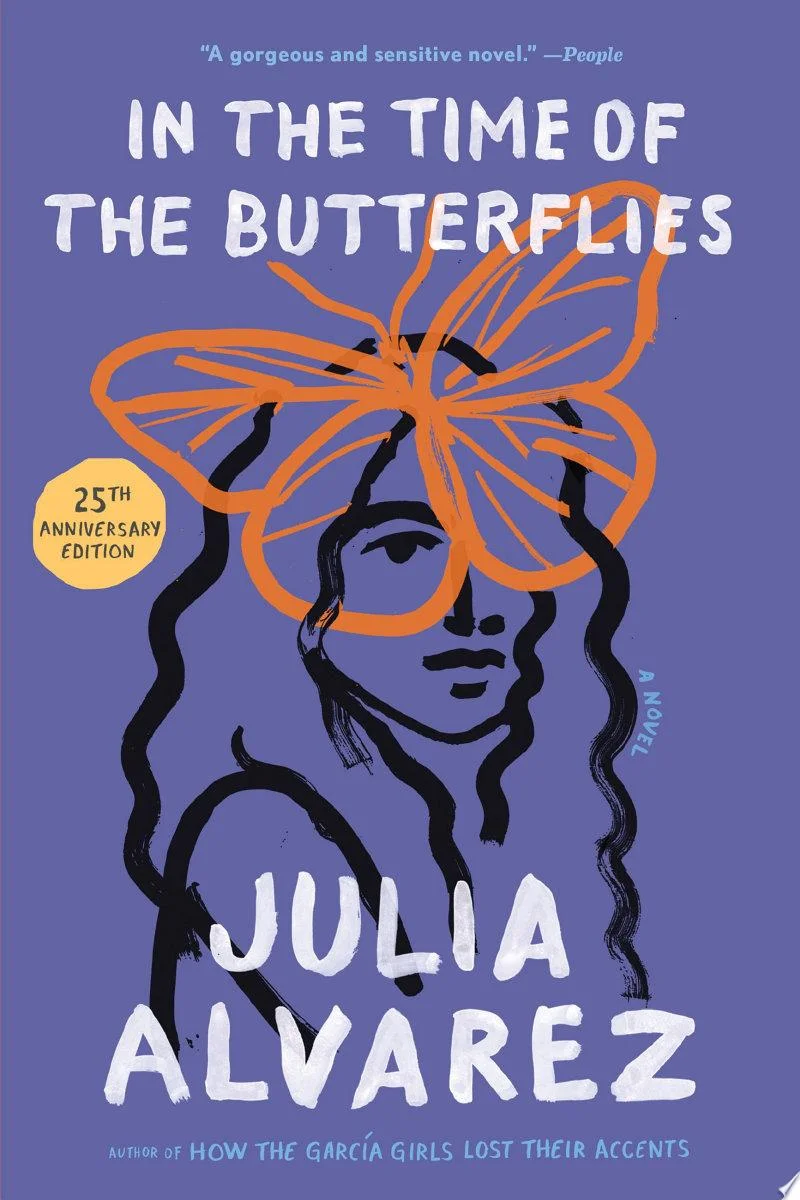
In the Time of the Butterflies
- Publication Date:
- January 12th, 2010
- Publisher:
- Algonquin Books
- ISBN-13:
- 9781616200992
- ISBN-10:
- 1616200995
- Pages:
- 353
Why In the Time of the Butterflies Has Been Challenged
Critics of the novel's classroom use have pointed less to its politics than to its content, arguing that its depictions of torture and sexual awakening are too graphic for the age group typically assigned the book. See more ↓
Challenged or banned in 1 state across 2 school districts.
Overview
Julia Alvarez's novel reconstructs the final decades in the lives of the Mirabal sisters, four young women whose opposition to Rafael Trujillo's rule in the Dominican Republic ended in tragedy on a mountain road in 1960. Alvarez builds the story from the inside out, giving each sister — Minerva, Patria, María Teresa, and Dedé, the one who survives to remember — her own voice and her own version of events.
The narrative moves fluidly between girlhood and the underground resistance the sisters eventually join, tracing how ordinary domestic concerns — romance, faith, motherhood — become entangled with clandestine organizing, surveillance, and fear. Dedé's perspective, looking back across the decades, gives the novel its retrospective ache: she is left to carry the family's history after her sisters become martyrs known nationally as Las Mariposas, the Butterflies.
By blending documented history with invented interior life, Alvarez turns a well-known political killing into an intimate family story, restoring individual personality and doubt to women who might otherwise be remembered only as symbols.
A Reckoning with Memory and Political Violence
Alvarez has described her own family's flight from the Dominican Republic during the Trujillo years, and that history informs the novel's central concern: how a dictatorship reaches into private life, and how survivors construct meaning afterward. The book is less interested in delivering a straightforward historical account than in dramatizing the uncertainty of memory itself — each sister's chapters reflect her particular temperament and blind spots, so the reader assembles a fuller picture than any single narrator possesses.
The novel also occupies a notable place in Latina literature, following Alvarez's earlier work in giving voice to Dominican-American experience and to women whose historical contributions had been flattened into martyrdom or omitted altogether. Its treatment of authoritarianism, resistance, and the cost exacted on families resonates well beyond its specific setting, which has helped keep it in classrooms and reading groups long after its original publication.
Why In the Time of the Butterflies Has Been Challenged
The novel does not soften the brutality of the Trujillo regime, and its account of state violence includes torture, imprisonment, and the sisters' assassination, rendered with enough specificity that some readers have found the material too disturbing for younger students. Scenes depicting the sisters' romantic and sexual awakenings, along with candid discussion of marriage and infidelity within the era's rigid social codes, have likewise drawn objections from those who consider the content inappropriate for school-age readers.
Some challenges have also centered on the book's frank political content — its unflinching portrayal of a dictatorship's cruelty and the moral case it makes for armed resistance — with objectors arguing the material is too intense or too politically charged for the classroom. This book has been challenged or banned in 1 state and 2 school districts tracked in this catalog, disputes that center on whether an accurate reckoning with historical atrocity can be presented to students without the violence and adult content that accompanied it.
Where to Buy



Affiliate links may generate a small commission at no extra cost to you, which helps support this site.
Banned in Schools
Banned or challenged in 1 state across 2 school districts.
Florida 2 districts
- Clay County School District Banned
- Escambia County Public Schools Banned pending investigation