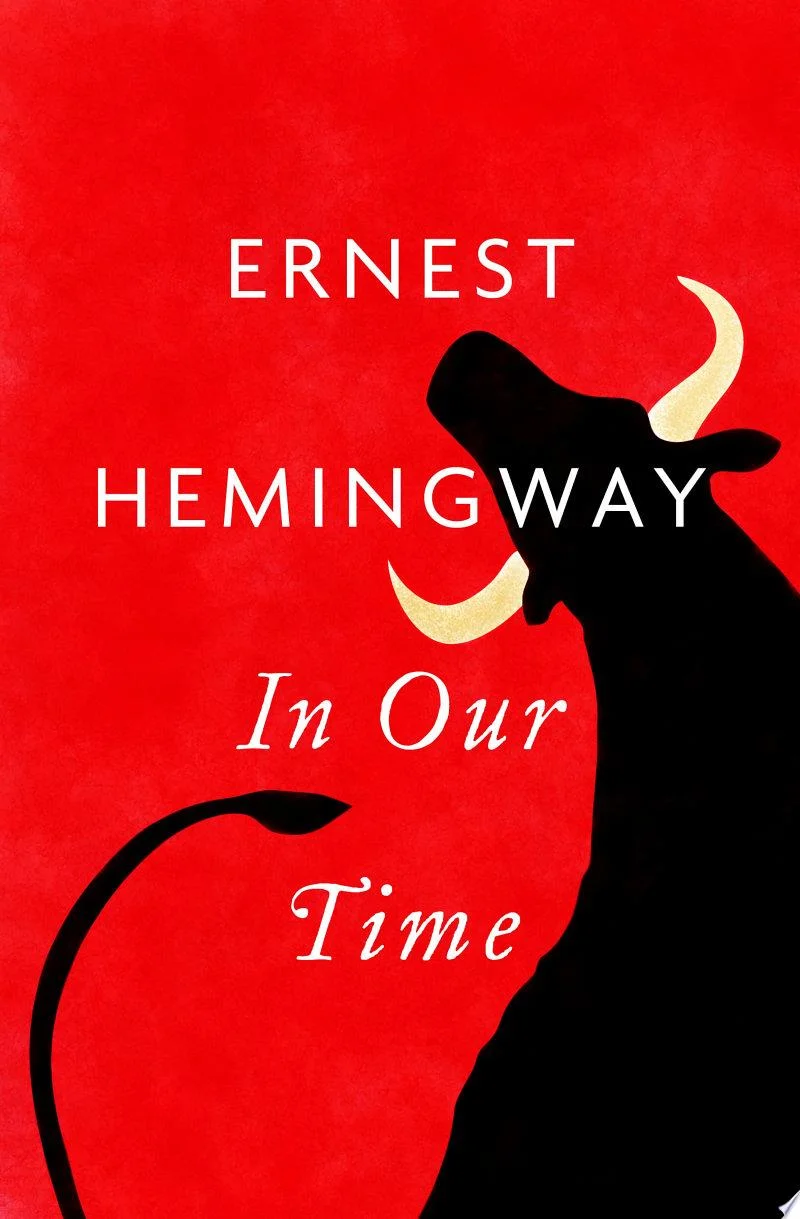
In Our Time
- Publication Date:
- April 7th, 2020
- Publisher:
- Open Road Media
- ISBN-13:
- 9781504061384
- ISBN-10:
- 1504061381
- Pages:
- 128
Why In Our Time Has Been Challenged
Readers have pushed back on this book primarily because its spare, unflinching prose presents death, war, and bodily harm without the cushioning of authorial judgment, leaving young readers to confront brutality unmediated. See more ↓
Challenged or banned in 1 state across 1 school district.
Overview
In Our Time gathers Ernest Hemingway's early short fiction into a single, spare volume that moves between interleaved prose vignettes and full stories, several of them following a young character named Nick Adams through childhood and early adulthood in the American Midwest and, later, the shattered landscapes of postwar Europe.
The Nick Adams stories form the book's emotional spine. In "Indian Camp," a boy accompanies his doctor father to a difficult birth and is confronted, within the space of a few pages, with both the arrival of life and the shock of a sudden death. Later pieces follow Nick through uneasy family tension, a bruising encounter with a punch-drunk ex-fighter, and a solitary fishing trip that reads as much as an exercise in control as it does a story about a river.
Interspersed among these narratives are short, almost clipped sketches of war and bullfighting that give the collection its title and its tension, juxtaposing the quiet rituals of rural life against the abruptness of violence encountered elsewhere in the world.
A Writer Finding His Method
In Our Time is best understood as a workshop rather than a finished statement: it shows Hemingway testing the compressed, understated style that would come to define his later novels. The vignettes, many only a paragraph long, strip away explanation and commentary, leaving the reader to infer meaning from action and dialogue alone. This restraint is not incidental; it reflects an emerging theory of fiction in which withheld detail carries as much weight as what appears on the page.
The collection also marks Hemingway's arrival within the expatriate literary circles of 1920s Paris, where his terse sentences stood apart from more ornate prevailing styles. Critics have long treated the book less as a conventional short-story collection than as a sustained experiment in form, one that anticipates the themes of trauma, masculinity, and the search for order after violence that would recur throughout his career.
Why In Our Time Has Been Challenged
Graphic depictions of violence and death are at the center of objections to In Our Time. "Indian Camp" pairs an unflinching description of a cesarean delivery performed without anesthesia with a sudden suicide witnessed by a child, and complainants have argued that the clinical detail is too disturbing for young readers encountering it without context. The interstitial sketches of wartime executions and bullfighting add to this concern, presenting brutality in brief, unadorned bursts rather than softening it through narrative distance.
Beyond individual scenes, some objections center on the book's broader tone: its refusal to moralize about the violence it depicts, which critics of the book in school settings have read as an endorsement rather than an observation. According to the challenge records compiled for this catalog, In Our Time has drawn a formal challenge in one state and one school district, reflecting a narrow but persistent concern about introducing its starkest scenes to adolescent readers.
Where to Buy




Affiliate links may generate a small commission at no extra cost to you, which helps support this site.
Banned in Schools
Banned or challenged in 1 state across 1 school district.