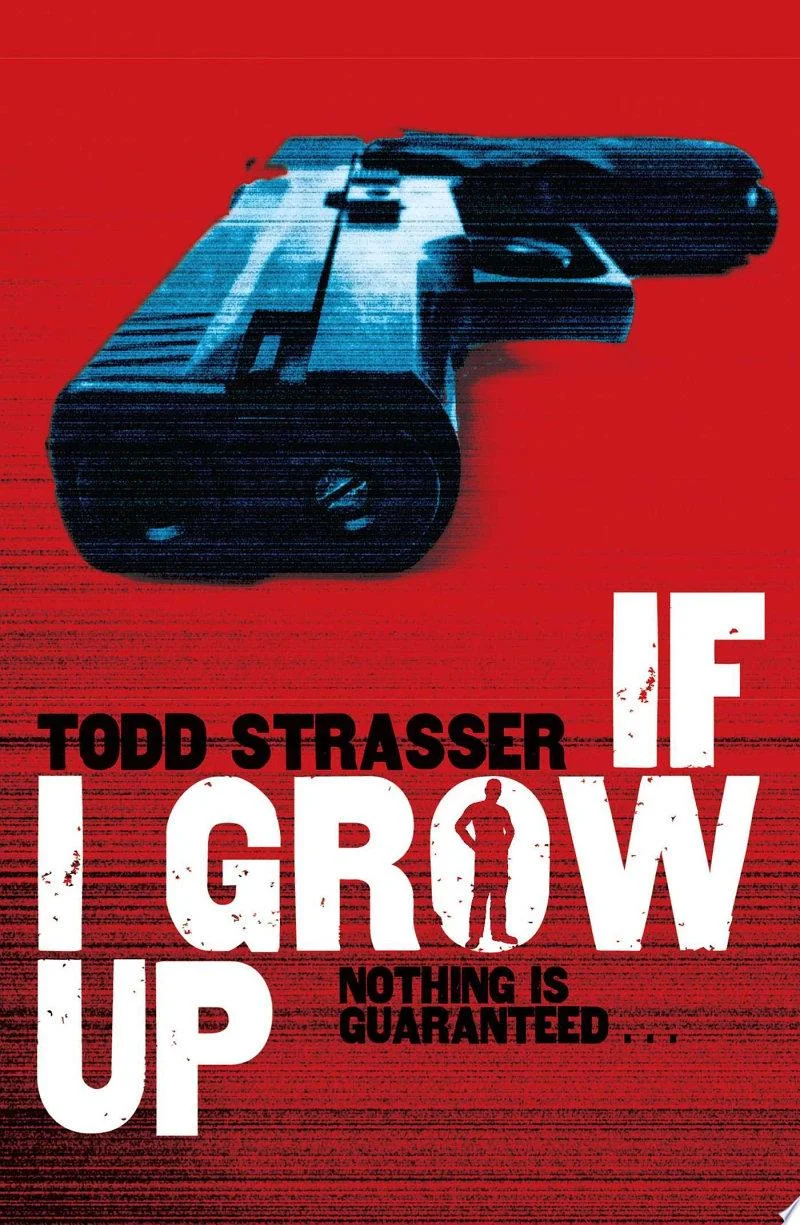
If I Grow Up
- Publication Date:
- March 4th, 2010
- Publisher:
- Simon and Schuster
- ISBN-13:
- 9780857070166
- ISBN-10:
- 0857070169
- Pages:
- 223
Why If I Grow Up Has Been Challenged
Some parents and administrators have argued the novel's frank depiction of gang life and drug dealing normalizes criminal behavior for young readers rather than warning them away from it. See more ↓
Challenged or banned in 1 state across 1 school district.
Overview
If I Grow Up follows DeShawn, a teenager living in a housing project named for Frederick Douglass, where the ordinary rhythms of childhood have been replaced by curfews set by gunfire and a shared, unspoken understanding that some friends won't live to adulthood. He is a boy who knows the difference between the choices that keep him safe and the ones that don't, but knowing is not the same as having options.
The pressure DeShawn faces isn't abstract. His classmates who've left school for gang life have cash, sneakers, and protection; his own household is stretched thin enough that keeping food on the table becomes a live, monthly question. Todd Strasser builds the novel's tension out of that gap between principle and necessity, letting DeShawn's resolve get tested not by a single dramatic temptation but by the slow accumulation of ordinary want.
Rather than resolving that tension with an easy moral, the story stays close to DeShawn's daily calculations, showing how quickly the line between right and wrong can blur when survival is at stake.
A Portrait of Constrained Choice
Strasser has built a career writing directly to teenage readers about circumstances that resist tidy resolution, and If I Grow Up fits that pattern by refusing to treat DeShawn's neighborhood as a backdrop for a redemption arc. The gangs, the poverty, and the violence are presented as a system that shapes decisions long before any individual makes one, and the novel is less interested in whether DeShawn is virtuous than in what virtue costs him.
That framing places the book within a broader tradition of social-realist fiction aimed at adolescents, work that trusts young readers to sit with discomfort rather than shielding them from it. The novel's value, for many educators and reviewers, lies precisely in its refusal to look away from how economic desperation narrows the range of choices available to a kid trying to do the right thing.
Why If I Grow Up Has Been Challenged
The novel spends much of its length inside the daily mechanics of gang recruitment, drug dealing, and the gunfire that punctuates DeShawn's neighborhood, rendering that world in enough specificity that some readers have found it more instructive than cautionary. The concern raised most often is that depicting the material rewards of gang involvement alongside its dangers risks making that path look understandable, even appealing, to impressionable readers, rather than functioning purely as a deterrent.
Related objections point to the book's unflinching treatment of violence and its matter-of-fact acknowledgment that death is a routine feature of DeShawn's world, content some parents and school boards have judged too bleak or too mature for the middle-grade and early teen readers who make up its intended audience. Others have countered that softening those realities would undercut the novel's honesty about the conditions it depicts. To date, the book has drawn a challenge in one state and one school district tracked in this catalog.
Where to Buy



Affiliate links may generate a small commission at no extra cost to you, which helps support this site.
Banned in Schools
Banned or challenged in 1 state across 1 school district.
Florida 1 district
- Escambia County Public Schools Banned pending investigation