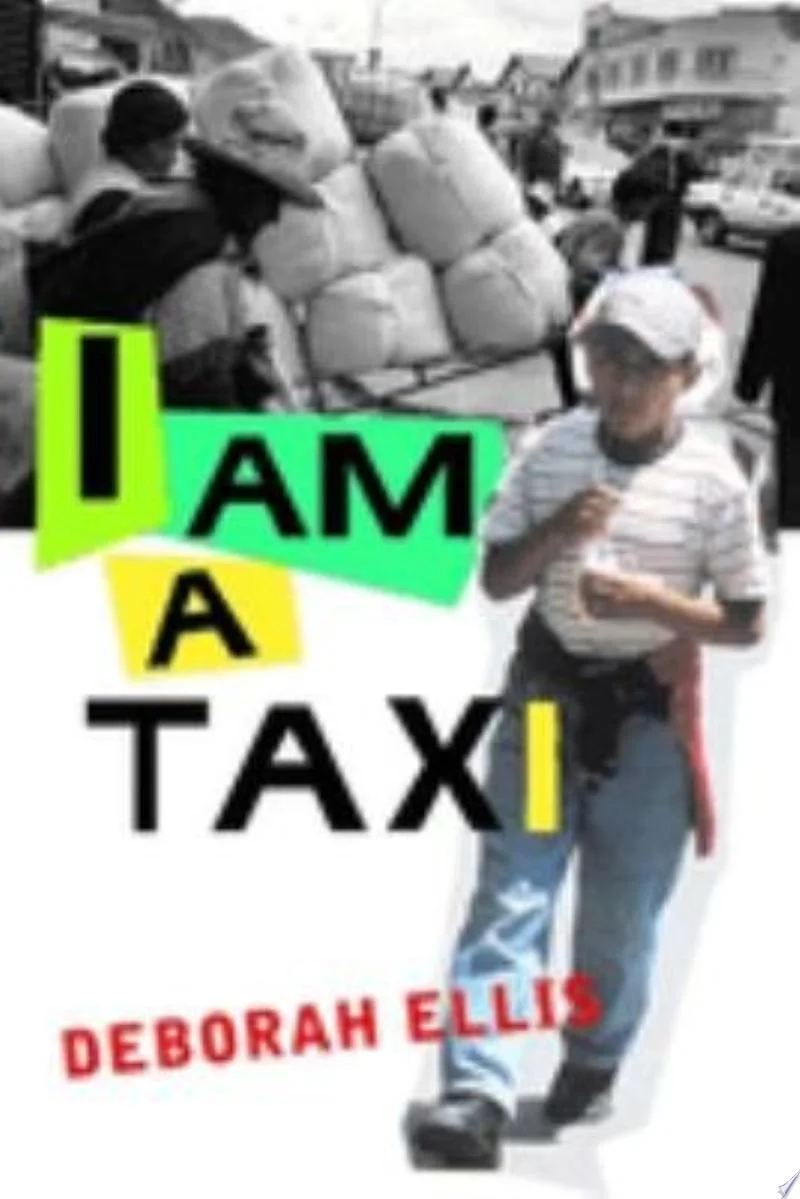
I Am a Taxi
- Publication Date:
- January 1st, 2006
- Publisher:
- Groundwood Books Ltd
- ISBN-13:
- 9780888997357
- ISBN-10:
- 0888997353
- Pages:
- 210
Why I Am a Taxi Has Been Challenged
Critics of this novel have pushed back on exposing children's readers to a preteen's entanglement in drug-related consequences and the perilous jobs he takes on to keep his family afloat. See more ↓
Challenged or banned in 1 state across 1 school district.
Overview
Deborah Ellis sets her novel inside a Bolivian prison, where children of incarcerated parents often live alongside them rather than being separated into foster care or orphanages. Diego, twelve, has spent much of his life in this environment because his mother and father were convicted of drug trafficking. Ellis uses his daily routine — errands, small jobs, the informal economy that springs up inside the walls — to sketch a world where the line between confinement and ordinary childhood has nearly disappeared.
The plot turns on a financial crisis: authorities levy an additional fine against Diego's mother, and the family's already precarious footing becomes untenable. Diego, feeling responsible for holding things together, begins taking on riskier work to raise money quickly, even though it means moving through dangerous parts of the city largely unsupervised.
Rather than building toward a conventional redemption arc, the novel stays close to Diego's practical, day-to-day reasoning: what needs to be paid, what can be sold or earned, and what he is willing to risk. The result is less a crime story than a portrait of a boy improvising survival within a system that has already failed his parents.
Childhood Inside the System
Ellis, known for grounding her fiction in real conditions faced by children in crisis, builds the novel around a documented but little-discussed practice: in parts of Bolivia, young children may live in prison with an incarcerated parent when no other caregiver is available. The book uses Diego's circumstances to explore how institutions designed for punishment end up shaping a child's entire frame of reference for normalcy, family, and risk.
The story also sits within Ellis's broader body of work examining children who take on adult burdens — earning income, navigating bureaucracy, protecting siblings — when the adults around them are constrained by poverty, incarceration, or conflict. Read alongside her other novels, "I Am a Taxi" continues an interest in showing resilience without softening the material hardship that makes it necessary.
Why I Am a Taxi Has Been Challenged
A recurring objection raised in review of this title centers on whether a book for young readers should place a child protagonist in direct proximity to drug trafficking and its consequences, arguing that the subject normalizes criminal activity by filtering it through a sympathetic narrator. Related concerns focus on scenes depicting Diego moving through unsafe areas of the city to earn money, with some reviewers contending that the material exposes young readers to depictions of exploitation and physical danger without sufficient framing or resolution. Others have questioned whether the incarceration setting itself, including the everyday presence of children inside a prison, is appropriate content for a middle-grade audience. This title has been formally challenged in one state and one school district within the districts tracked by this catalog, with objections generally rooted in the book's unflinching treatment of imprisonment, poverty, and the risks Diego takes rather than in language or explicit content.
Where to Buy




Affiliate links may generate a small commission at no extra cost to you, which helps support this site.
Banned in Schools
Banned or challenged in 1 state across 1 school district.
Florida 1 district
- Clay County School District Banned by restriction