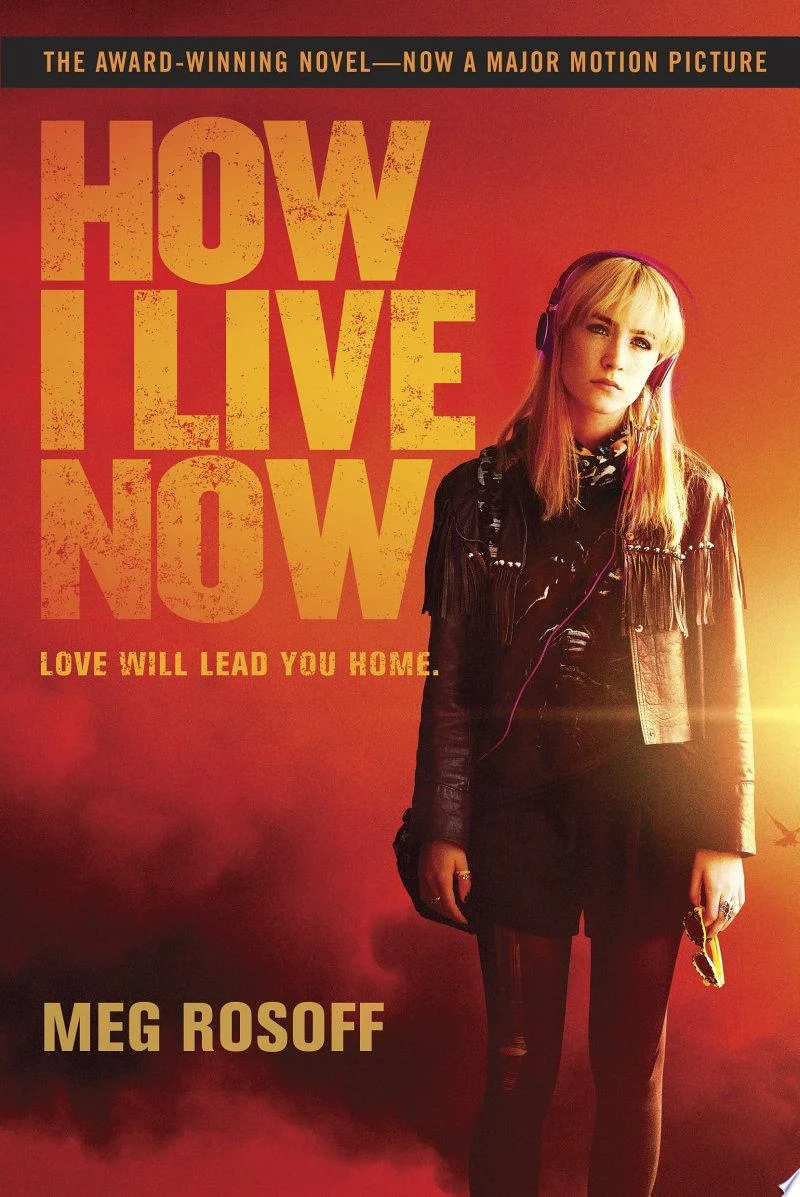
How I Live Now
by Meg Rosoff
- Publication Date:
- October 22nd, 2013
- Publisher:
- Ember
- ISBN-13:
- 9780449819609
- ISBN-10:
- 0449819604
- Pages:
- 175
Why How I Live Now Has Been Challenged
A teenager's wartime coming-of-age story has drawn scrutiny less for its depiction of invasion and collapse than for the taboo romance and unvarnished physicality at its center. See more ↓
Challenged or banned in 1 state across 1 school district.
Overview
Meg Rosoff's novel follows Daisy, a fifteen-year-old from New York sent across the Atlantic to stay with cousins she has never met, on a farm in the English countryside. Away from her father and a strained home life, she settles into an unfamiliar household that quickly feels less like exile than refuge—loosely supervised, improvised, and oddly free of the rules she's used to.
That freedom is upended when an unnamed enemy invades and occupies England. Communication collapses, infrastructure fails, and the adults who might have offered guidance are simply gone. Left to fend for themselves, the cousins turn the farm into something like a self-contained world, answerable to no one, until the conflict outside finally reaches their doorstep.
Rosoff tells the story entirely through Daisy's voice—sharp, sardonic, and unsentimental even as the events around her turn dire. The novel moves fluidly between a coming-of-age narrative, a wartime survival account, and a tentative love story, letting all three registers coexist within one teenager's restless, observant narration.
A Novel of Displacement and Fragile Autonomy
Much of the book's power comes from its refusal to name the war or its combatants. By keeping the conflict abstract, Rosoff shifts attention away from geopolitics and toward the texture of life under collapse: how quickly systems people take for granted can vanish, and how teenagers left without adult structure might build something both liberating and precarious in its place. The farm functions almost as an allegorical space—Edenic in its early freedom, then brutally exposed once the outside world intrudes.
The book arrived in the mid-2000s amid wider cultural anxiety about terrorism and homeland security, and its ambiguous, almost dreamlike treatment of invasion resonated with readers processing that unease without wanting a literal geopolitical thriller. It also sits within a tradition of displaced-child narratives, though Rosoff complicates the form by giving Daisy an interior life marked by appetite, irony, and desire rather than pure innocence. The novel's reputation rests largely on that voice: a teenage narrator who is funny and self-aware even while describing hunger, fear, and loss, which has made the book a frequently cited example of young adult fiction that treats adolescence as morally and emotionally complicated rather than simplified for its audience.
Why How I Live Now Has Been Challenged
Critics and award committees have praised the novel's voice and its unflinching portrait of adolescence under extreme pressure, but that same candor is precisely what has drawn objection from some parents and school boards—where reviewers see honesty, challengers have seen material unsuitable for younger readers. The book has been formally challenged in 1 state and 1 district tracked in this catalog, with concerns centered less on the war narrative itself than on the personal relationships and content woven through it.
Objections have focused on the romantic and sexual relationship that develops between Daisy and one of her cousins, which some readers find inappropriate both for its content and for the family connection between the characters. Additional concern has been raised over the book's frank treatment of a teenage narrator's physical and emotional appetites, including references to her own body and eating habits, as well as the wartime violence and psychological trauma she witnesses as the occupation closes in. Taken together, the challenges reflect discomfort with a novel that declines to soften adolescent experience—sexual, emotional, or violent—for the sake of its young audience.
Where to Buy




Affiliate links may generate a small commission at no extra cost to you, which helps support this site.
Banned in Schools
Banned or challenged in 1 state across 1 school district.
Florida 1 district
- Escambia County Public Schools Banned pending investigation