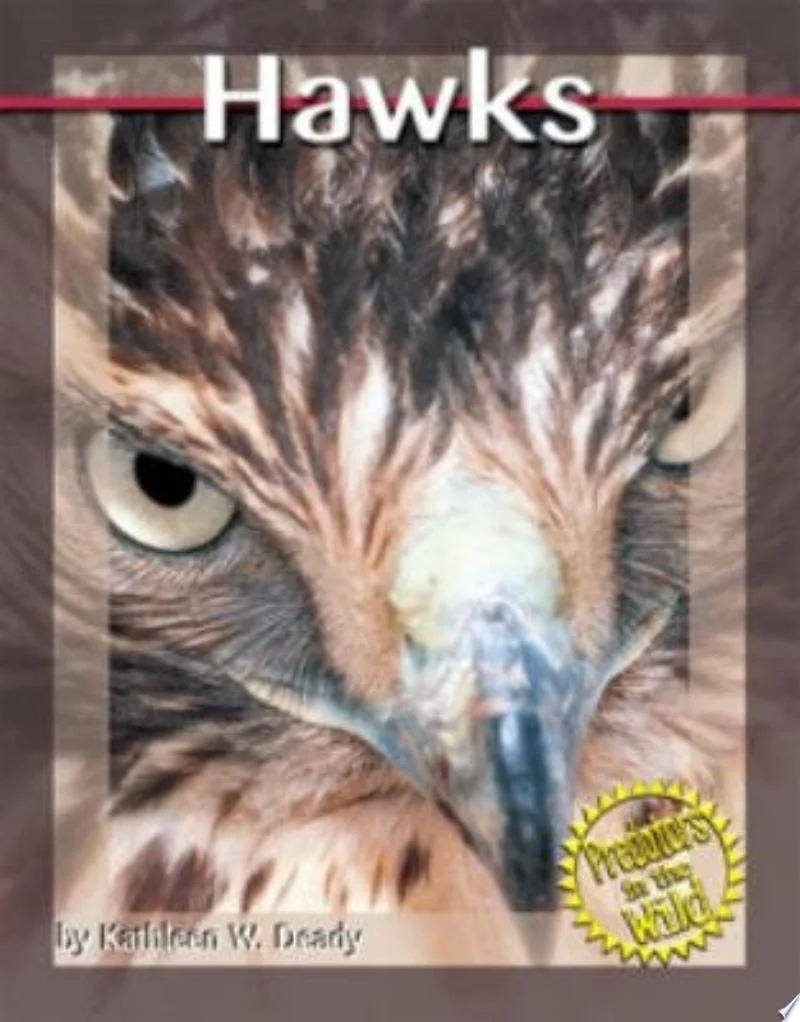
Hawks
- Publication Date:
- January 1st, 2002
- Publisher:
- Capstone
- ISBN-13:
- 9780736810647
- ISBN-10:
- 0736810641
- Pages:
- 40
Why Hawks Has Been Challenged
A parent's objection centered on whether a young audience should encounter plainly described predation at all, rather than any dispute over the book's accuracy. See more ↓
Challenged or banned in 1 state across 1 school district.
Overview
This entry in a nonfiction series for young readers introduces hawks as a family of birds, tracing where they roost and range across different landscapes. It walks through the physical traits that make them effective in the wild, from keen eyesight to sharp talons, and explains how these features connect to the way the birds actually live day to day.
A central portion of the book is devoted to hunting behavior, laying out the strategies hawks use to locate and capture prey. Rather than treating this as a single fact, the text builds it into a broader picture of the hawk's role within its environment, showing how feeding habits shape movement, territory, and seasonal patterns.
The book closes by turning toward people, noting the ways hawks and human communities intersect, whether through shared landscapes, sightings in populated areas, or the broader coexistence of wildlife and development. The effect is a short, fact-driven portrait meant to build basic animal literacy rather than tell a story.
A Small Window Into a Larger Genre
Books like this one sit within a long tradition of illustrated animal science titles aimed at elementary-age readers, a genre built around teaching life-cycle and habitat basics through a single, approachable subject. Hawks make a natural fit for the format: they are familiar enough to spot in many regions, visually distinctive, and positioned near the top of their food chain in a way that invites questions about how nature works.
What a title like this is really doing is introducing the idea that survival in the wild involves conflict and consequence, not just the softer imagery often associated with animal books for children. That tension, between presenting nature plainly and keeping material suited to a young audience, is part of what makes this kind of straightforward science writing occasionally controversial despite its modest scope. Its place in a school or library collection says less about the book standing out and more about how review processes sometimes catch even the most matter-of-fact nonfiction when broader concerns about a collection are raised.
Why Hawks Has Been Challenged
In the case tracked in this catalog, a reviewer objected to the book's description of hunting behavior, arguing that passages detailing how hawks capture and kill prey were too graphic for the age group expected to encounter the title in a school setting. The concern centered on predation itself: that depicting an animal's natural method of feeding, even in factual terms, could be unsettling or inappropriate for young children browsing a library shelf.
This reflects a recurring pattern in challenges to wildlife nonfiction, where the dispute is rarely about accuracy and almost always about tone and audience. Material that a middle grade or adult reader would consider routine natural history can read differently to a parent evaluating what a much younger child might absorb from it. In this catalog, the book has been challenged in 1 state and 1 district, a narrow but notable instance of this broader tension between presenting the natural world honestly and shielding early readers from its harsher realities.
Where to Buy




Affiliate links may generate a small commission at no extra cost to you, which helps support this site.
Banned in Schools
Banned or challenged in 1 state across 1 school district.