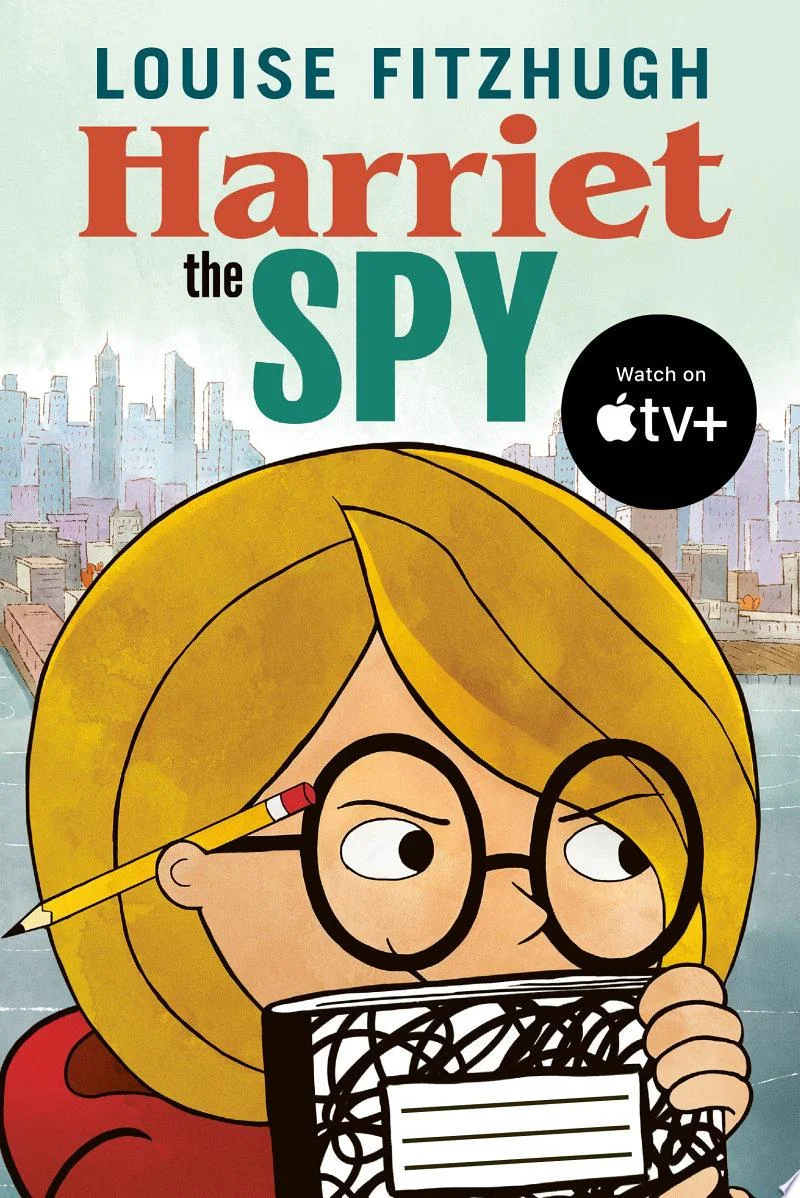
Harriet the Spy
- Publication Date:
- November 9th, 2021
- Publisher:
- Yearling
- ISBN-13:
- 9780593482322
- ISBN-10:
- 0593482328
- Pages:
- 321
Why Harriet the Spy Has Been Challenged
Critics have taken issue with a child protagonist who lies, snoops, and secretly judges the people closest to her without facing much adult-imposed correction for it. See more ↓
Challenged or banned in 1 state across 1 school district.
Overview
Louise Fitzhugh's novel follows Harriet M. Welsch, an eleven-year-old who fancies herself a spy-in-training. Armed with a notebook and a set list of surveillance stops around her neighborhood, Harriet records blunt, unvarnished notes on everyone in her orbit, including the friends and classmates she loves most.
Her carefully guarded observations were never meant for an audience. When the notebook slips out of her possession and into her classmates' hands, the private becomes painfully public, and Harriet is confronted with the fallout of her own candor.
What follows is less a mystery than a portrait of a child learning that honesty, wielded carelessly, has consequences. Harriet's path back to her friendships requires her to reckon with the difference between observing the world and being responsible for what she says about it.
A Notebook, a Voice, and a Genre
Published in 1964, Harriet the Spy is frequently credited with helping open children's literature to more psychologically complex, less sanitized child narrators. Harriet is watchful, opinionated, and often unkind on the page, a departure from the tidier, more agreeable protagonists common in earlier books for young readers. That rawness is part of why the book has endured: generations of readers have recognized in Harriet's notebook the same impulse to catalog and judge the people around them, and the same discomfort when those judgments are exposed.
The novel also sits at an early point in a tradition of stories about the ethics of writing itself, what it means to put people into words, and what happens when those words escape the control of the person who wrote them. That tension between the writer's private truth-telling and its public cost has kept the book in conversation with readers and critics long after its original publication.
Why Harriet the Spy Has Been Challenged
Most objections to the book have centered on its suitability for the elementary-age readers, roughly ages 8 to 12, who make up its primary audience. Critics in these cases have argued that Harriet's behavior, sneaking into homes and yards to spy, keeping secret written judgments of friends and adults, and lying to cover her tracks, models deceit and invasiveness rather than discouraging it, and that the book offers too little in the way of adult correction or consequence for a child reader to draw a clear moral lesson. Some challenges have also pointed to Harriet's sharp, sometimes cruel assessments of the people around her as an unflattering example of how children treat one another. The book has been the subject of one challenge tracked in this catalog, spanning one state and one school district.
Where to Buy



Affiliate links may generate a small commission at no extra cost to you, which helps support this site.
Banned in Schools
Banned or challenged in 1 state across 1 school district.