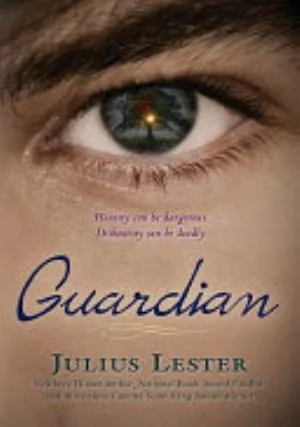
Guardian
- Publication Date:
- January 1st, 2020
- Publisher:
- HarperCollins
- ISBN-13:
- 9780061558924
- ISBN-10:
- 0061558923
Why Guardian Has Been Challenged
Critics have taken issue with the book's refusal to look away from racial violence, arguing its stark honesty is too disturbing for the classroom even as others defend it as essential historical reckoning. See more ↓
Challenged or banned in 1 state across 1 school district.
Overview
Set in a small Southern town in the years just after World War II, this slender novel builds toward a single, devastating act of mob violence. A storekeeper and his young son are drawn into the aftermath of an accusation against a Black man, and what unfolds exposes how an entire community can become complicit through fear, silence, and inherited custom.
Told with spare, controlled prose, the narrative moves quickly but lingers on the moral weight carried by its characters, particularly the boy, whose inherited assumptions are shattered by what he sees and fails to stop. The father's own choices, shaped by self-interest and social pressure, mirror the compromises that allowed such violence to persist unchecked.
Rather than offering easy resolution, the book leaves its characters, and its readers, to sit with the discomfort of bystanding: the ways ordinary people rationalize cruelty they did not commit but did nothing to prevent.
A Reckoning with Complicity
Julius Lester, known for both his fiction and his nonfiction writing on African American history, approached this short work as a kind of moral parable rather than a conventional coming-of-age story. Its brevity is deliberate: the book compresses an entire social order's failure into a single incident, asking what it means to be a "guardian" of a community's values when those values sanction murder.
The novel sits within a broader tradition of American literature that confronts lynching not through the perspective of its victims alone but through the eyes of those who benefited from, enabled, or simply watched such violence happen. By centering a white father and son, Lester forces readers to examine the mechanics of bystanding and the generational transmission of racial hierarchy, rather than treating the perpetrators and witnesses as distant or alien figures.
In the context of Lester's broader body of work, which often grapples directly with slavery, segregation, and historical memory, this book functions as a concentrated, unsparing distillation of themes he explored at greater length elsewhere.
Why Guardian Has Been Challenged
Graphic violence is the central concern raised by objectors, since the book depicts a lynching and the brutality surrounding it without softening the physical and psychological horror involved. Readers and reviewers who favor restricting the title have argued that the directness of this depiction is too intense for the age groups likely to encounter it in school settings.
Racial trauma and the book's unflinching treatment of white supremacy and mob violence have also drawn concern, with some objectors uneasy about the moral culpability assigned to white characters and the discomfort the narrative is designed to provoke in readers. Others have raised concerns about historical content they consider too bleak or despairing for younger readers, arguing that the absence of comfort or clear resolution makes the book unsuitable for classroom use.
These objections have resulted in the book being challenged in 1 state and 1 school district tracked in this catalog, reflecting a narrower but persistent pattern of concern over how American history's most violent chapters should be presented to young readers.
Where to Buy




Affiliate links may generate a small commission at no extra cost to you, which helps support this site.
Banned in Schools
Banned or challenged in 1 state across 1 school district.
Florida 1 district
- Escambia County Public Schools Banned pending investigation