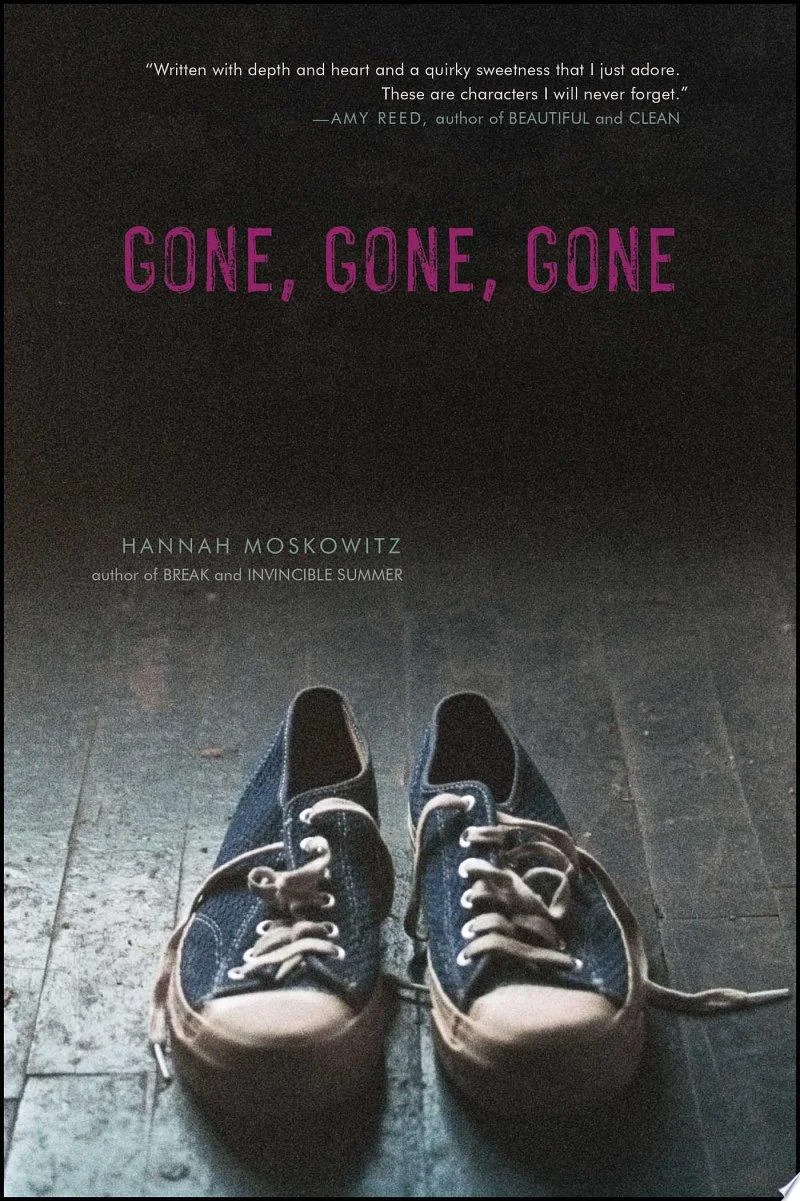
Gone, Gone, Gone
- Publication Date:
- April 17th, 2012
- Publisher:
- Simon and Schuster
- ISBN-13:
- 9781442407541
- ISBN-10:
- 1442407549
- Pages:
- 290
Why Gone, Gone, Gone Has Been Challenged
Objectors have taken less issue with the novel's backdrop of real-world violence than with its unflinching portrayal of two teenage boys falling for each other. See more ↓
Challenged or banned in 1 state across 1 school district.
Overview
Hannah Moskowitz sets her novel in the Washington, D.C. area in the year following the September 11 attacks, as a string of sniper shootings puts the region on edge. Against that backdrop of unpredictable danger, two teenage boys, Craig and Lio, are working through something much smaller and much harder to name: what they mean to each other.
Craig can't stop replaying a kiss from Lio, uncertain whether it will happen again and whether it might finally help him move past his ex-boyfriend, Cody. Lio, meanwhile, is quieter and more guarded, carrying the weight of a broken family and a brother he has lost. Being near Craig is the one place he feels unguarded.
The novel follows the two boys as their friendship edges toward something more, tracing how attraction, grief, and the instinct toward self-protection pull against each other in equal measure.
Intimacy Under Threat
Moskowitz, also the author of Break and Invincible Summer, has built a body of work centered on teenagers under pressure — physical, emotional, or circumstantial — and how they find footing anyway. Gone, Gone, Gone extends that interest by placing its central romance inside a specific, remembered moment of collective anxiety, using the sniper shootings less as plot machinery than as atmosphere: a reminder that the world outside the characters' control keeps intruding on the world they're trying to build together.
The novel is often read as an early example of YA fiction willing to sit with a same-sex relationship as its emotional center rather than its premise, treating Craig and Lio's uncertainty, jealousy, and tenderness with the same seriousness a straight romance would receive. Its interest in vulnerability runs in two directions at once: the vulnerability of loving someone when the news suggests the world isn't safe, and the vulnerability of letting someone see you when you've been raised to hide.
Why Gone, Gone, Gone Has Been Challenged
Readers and reviewers have generally praised the novel for its emotional candor — the way it lets two teenage boys be scared, jealous, and unsure of themselves without softening any of it for comfort. That same candor is what has drawn objection elsewhere. Challenges to the book have focused on its central same-sex relationship and the physical and emotional intimacy between Craig and Lio, with some objectors describing the content as too mature or too explicit for the intended teen readership.
Other concerns raised alongside those objections point to the novel's treatment of grief and death, including Lio's loss of his brother, and to its frank handling of a prior romantic relationship and the emotional fallout of a breakup. Taken together, the objections track less with any single scene than with the book's overall willingness to portray teenage same-sex attraction as ordinary and central rather than incidental — a stance that has made it a target for challenge in at least one state and one school district tracked in this catalog, even as it remains a touchstone for readers looking for early, unapologetic queer YA romance.
Where to Buy




Affiliate links may generate a small commission at no extra cost to you, which helps support this site.
Also by Hannah Moskowitz
Banned in Schools
Banned or challenged in 1 state across 1 school district.
Texas 1 district
- Nacogdoches Independent School District Banned by Restriction