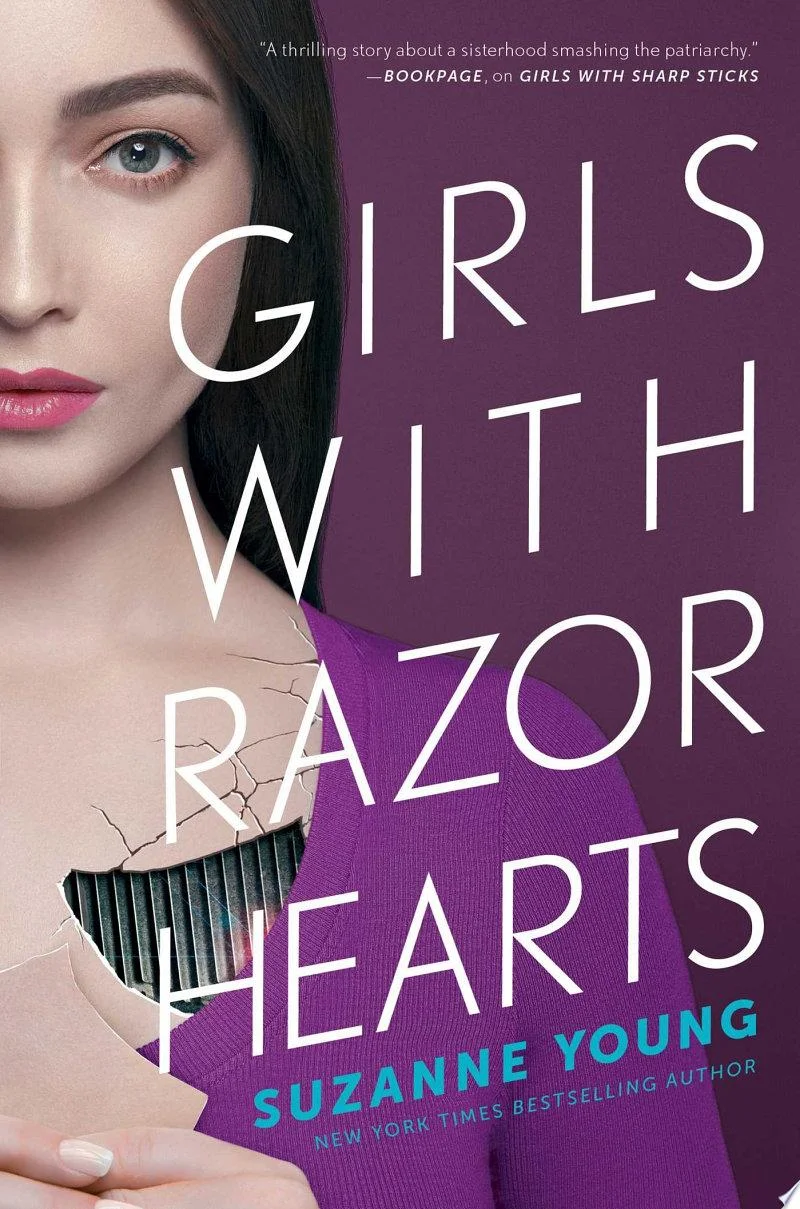
Girls with Razor Hearts
- Publication Date:
- March 17th, 2020
- Publisher:
- Simon and Schuster
- ISBN-13:
- 9781534426184
- ISBN-10:
- 1534426183
- Pages:
- 318
Why Girls with Razor Hearts Has Been Challenged
Readers and reviewers have clashed over whether this story's candid look at institutional abuse and its aftermath belongs in the hands of teenagers or crosses a line into material too disturbing for a school setting. See more ↓
Challenged or banned in 1 state across 1 school district.
Overview
Girls with Razor Hearts continues Suzanne Young's story of Mena and the other survivors of Innovations Academy, a boarding school that turned out to be a front for invasive experimentation on its students. Weeks removed from their escape, the girls discover that the world beyond the academy's gates offers little safety of its own, and that the people who once controlled them have not given up.
Rather than go into hiding, Mena and her friends enroll at Ridgeview Prep, a school tied to the same corporation that ran Innovations, in order to locate the son of a key investor and work toward bringing the organization down from within. The mission puts them back in proximity to the forces that hurt them, including a former handler who claims to have switched sides and an investor pursuing his own agenda against the company he helped build.
As the plan unfolds, Mena contends with a presence that seems to reach directly into her thoughts, offering ideas that are as unsettling as they are persuasive. The novel follows the girls as they try to free themselves and the students still trapped at Innovations, while questioning whether the alliances they've formed represent liberation or merely a different kind of captivity.
Control, Complicity, and the Cost of Escape
As a sequel, the novel is less interested in revealing the mechanics of a hidden conspiracy than in examining what happens after its victims walk free. Young uses the Ridgeview infiltration to ask whether institutions that claim to offer protection or opportunity to young women can be trusted once their true purpose is exposed, and whether resistance movements risk replicating the very systems they oppose. The girls' reliance on adults with their own agendas, Leandra and Winston Weeks among them, keeps the story circling a central tension: every offer of help arrives with strings attached.
The book also extends the series' interest in bodily autonomy and manipulation, this time through a voice that infiltrates Mena's mind rather than her body. That shift reframes the earlier novel's concerns about physical experimentation into a subtler question about psychological influence and consent. Within the broader landscape of recent speculative fiction aimed at teen readers, the series sits alongside other dystopian narratives that use institutional settings to dramatize anxieties about surveillance, grooming, and the erosion of girls' agency under the guise of their own improvement.
Why Girls with Razor Hearts Has Been Challenged
Much of the scrutiny directed at this series centers on its unflinching depiction of what was done to the girls at Innovations Academy and the lasting trauma that follows them into this sequel. The narrative does not soften the psychological and physical harm inflicted on its young characters, and objectors have argued that scenes referencing experimentation, coercion, and the girls' efforts to process that abuse are too intense or explicit for the intended teen audience. Critics of the book have also pointed to its frank treatment of sexuality and the manipulative dynamics between the girls and the adults who claim to be guiding them, viewing these elements as inappropriate for school library shelves.
Others have raised concerns about the series' dark tone more broadly, including its portrayal of institutional betrayal and violence against minors, arguing that such content normalizes distressing subject matter for younger readers. Defenders counter that the book's handling of trauma, autonomy, and resistance is precisely what makes it valuable to teens navigating questions of control and consent in their own lives. According to the records kept in this catalog, the title has drawn a challenge in one state and one school district.
Where to Buy



Affiliate links may generate a small commission at no extra cost to you, which helps support this site.
Also by Suzanne Young
Banned in Schools
Banned or challenged in 1 state across 1 school district.