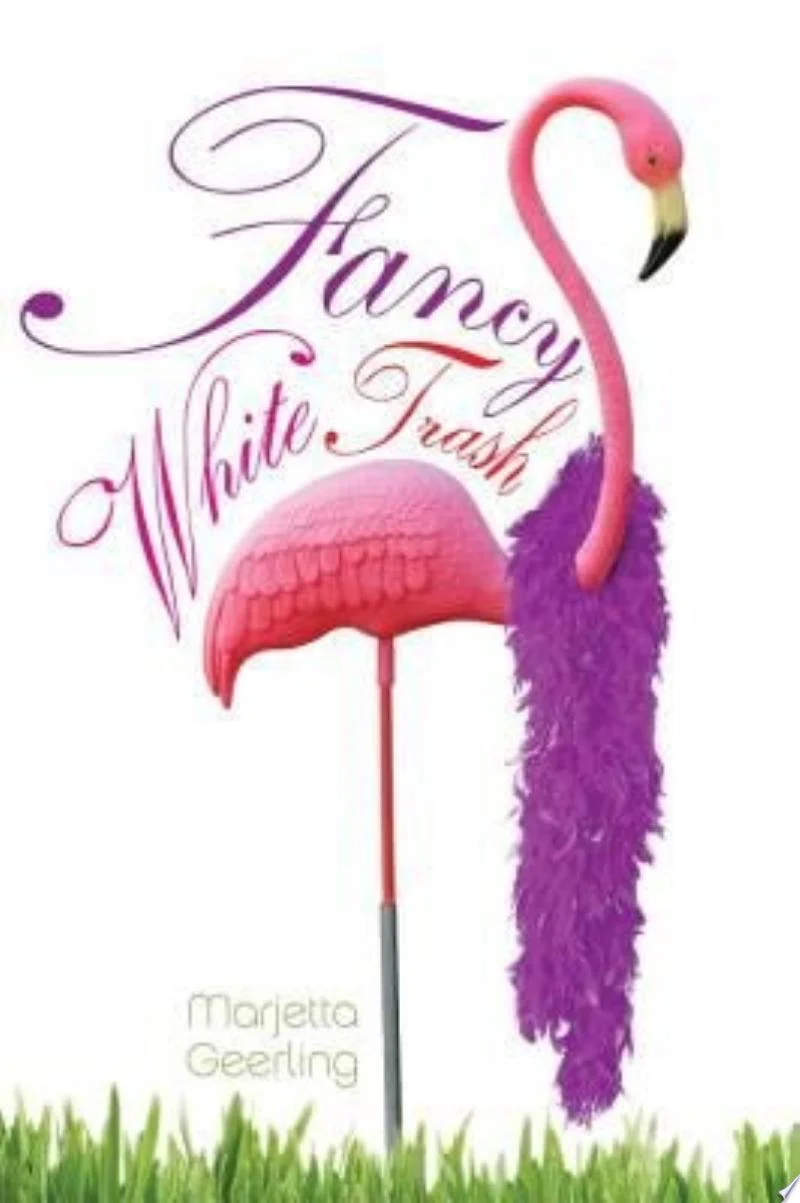
Fancy White Trash
- Publication Date:
- January 1st, 2008
- Publisher:
- Penguin
- ISBN-13:
- 9780670010820
- ISBN-10:
- 0670010820
- Pages:
- 276
Why Fancy White Trash Has Been Challenged
A teenager's self-imposed rules for safer dating collapse under the pull of real attraction, and it's that unguarded honesty about teen romance and its fallout that has made some adults want the book kept out of reach. See more ↓
Challenged or banned in 1 state across 2 school districts.
Overview
Marjetta Geerling's "Fancy White Trash" follows Abby, a teenager who has spent years watching the romantic fallout around her — her older sister Shelby's string of bad decisions and her best friend Kait's unplanned pregnancy — and concludes that love needs rules. She writes herself a list: date widely, stay guarded, don't get too attached to any one person too fast.
The plan unravels when Abby finds herself drawn to the boy who fathered Kait's baby. What begins as an attempt to keep her own life orderly turns into a quiet reckoning with contradiction: the person she's falling for is tangled up in exactly the kind of complicated, judgment-inviting situation her rules were designed to help her avoid.
As the relationship deepens, Abby has to weigh her feelings against the near-certainty that her friends, family, and community will react with suspicion or disapproval once the connection becomes known. The novel traces that private calculation — between following a plan and following an attraction that doesn't fit neatly into it.
Context and Reception
Geerling's novel belongs to a lineage of contemporary YA that treats teenage romance as a site of real consequence rather than simple wish-fulfillment. Rather than centering the pregnancy itself as the story's crisis, the book uses it as backdrop — a fact of the social world Abby and her peers already inhabit — and turns its attention instead to the more ordinary difficulty of wanting someone whose circumstances complicate things. That choice distinguishes it from issue-driven teen fiction built around a single cautionary event.
The book's title, borrowed from the kind of self-deprecating class humor its characters use about themselves, signals its interest in how teenagers narrate their own messiness — with irony, rule-making, and a certain defensive wit — rather than through the moralizing lens adults might apply. It sits comfortably alongside other coming-of-age novels that trust teenage readers to sit with ambiguity: attraction that complicates loyalty, family patterns that repeat despite best intentions, and the gap between the order a character wants to impose on her life and the disorder she actually lives in.
Why Fancy White Trash Has Been Challenged
Readers and reviewers have generally credited the novel with an unvarnished, often funny voice and a willingness to portray teenage romantic life without sanitizing it — qualities that are also precisely what has drawn scrutiny from those who would rather see the subject handled differently, or not at all, in school settings. The book has been formally challenged in 1 state and 2 districts tracked in this catalog, with objections centering on its frank treatment of teen sexuality and relationships, including a storyline built around a teenage pregnancy and the romantic entanglement that follows it.
Much of the concern reflects a broader discomfort with young-adult fiction that depicts teenagers making intimate decisions on their own terms, without an adult authority steering the narrative toward a clear lesson. Critics have also pointed to the novel's casual treatment of class and family dysfunction, arguing that its humor risks normalizing circumstances some would prefer to see presented as unambiguously cautionary. Defenders counter that the book's honesty about imperfect choices and messy consequences is exactly what gives it value for teen readers navigating similar territory, and that shielding them from its subject matter does less to protect them than engaging with it does.
Where to Buy




Affiliate links may generate a small commission at no extra cost to you, which helps support this site.
Banned in Schools
Banned or challenged in 1 state across 2 school districts.
Florida 2 districts
- Citrus County School District Banned
- Collier County Public Schools Banned