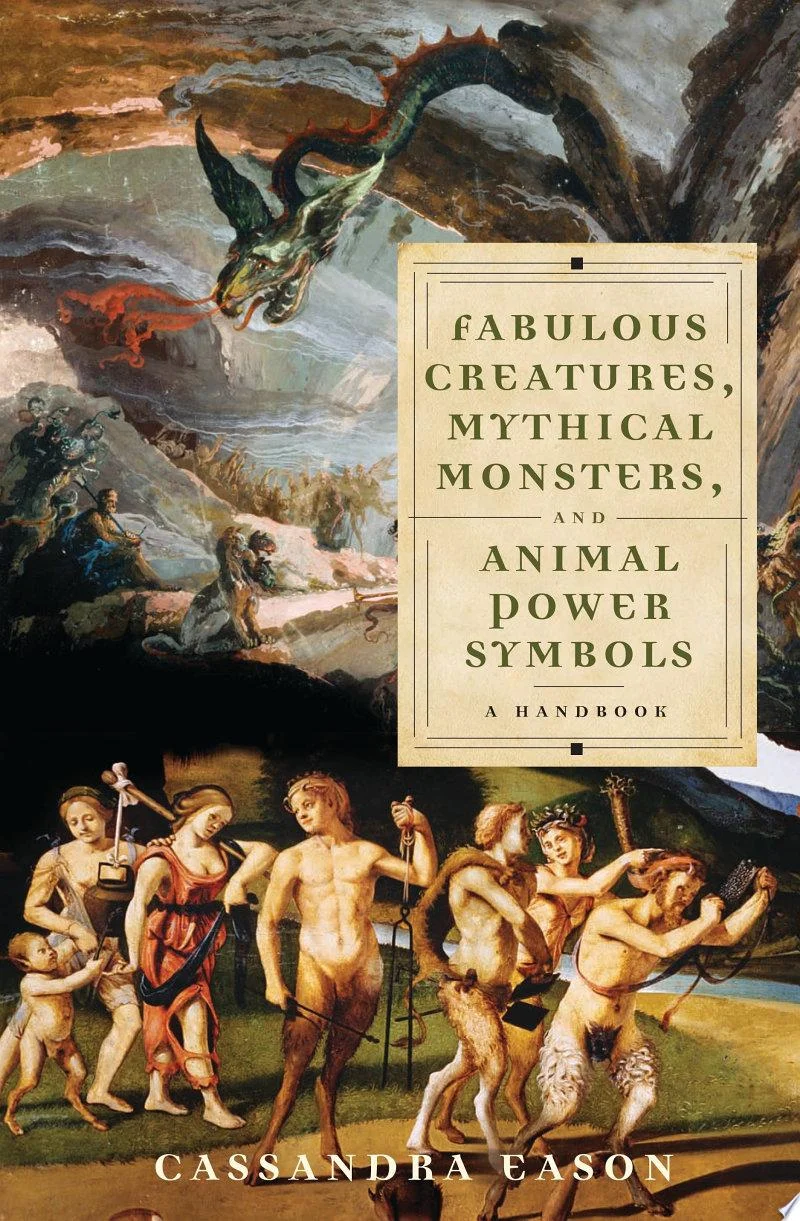
Fabulous Creatures, Mythical Monsters, and Animal Power Symbols
- Publication Date:
- December 30th, 2007
- Publisher:
- Bloomsbury Publishing USA
- ISBN-13:
- 9781567206623
- ISBN-10:
- 156720662X
- Pages:
- 201
Why Fabulous Creatures, Mythical Monsters, and Animal Power Symbols Has Been Challenged
Some readers have pushed back on a reference book that treats folk divination and animal-spirit ritual as living practice rather than historical curiosity, arguing that its evenhanded tone edges into endorsement of occult belief. See more ↓
Challenged or banned in 1 state across 1 school district.
Overview
Cassandra Eason's book gathers an enormous range of animal-centered myth and folklore under one roof, moving from the dragons of Chinese tradition to the thunderbird of Native North American story and the spectral hounds that stalk Celtic and Norse legend. Rather than treating these figures as isolated curiosities, Eason frames them as expressions of a recurring human habit: looking to animals, real and imagined, to understand strength, wisdom, and the unknown.
The book also turns to creatures much closer to everyday experience. Horses, cats, and ravens each receive their own treatment, with Eason setting familiar folk beliefs about them alongside lesser-known regional variants. A separate thread follows saints said to have transformed into deer, linking medieval hagiography to older shape-shifting traditions.
Eason extends her survey into the present day as well, considering Bigfoot, Mothman, and reported lake and sea monsters as modern continuations of the same impulse to populate the natural world with extraordinary beings. Throughout, she treats bird behavior and animal-headed gods as part of one continuous history of symbolic thought, rather than separate categories of folklore.
Reading Animals as Oracles and Archetypes
What distinguishes this book from a simple bestiary is its interest in function: why people turned to animals for guidance at all. Eason describes how birds were watched for omens in ancient Egypt and in the Celtic and Classical worlds, their flight patterns and calls read as messages from beyond ordinary perception. This practice, she suggests, reflects a broader pattern in which animal behavior stood in for forces too large or uncertain to grasp directly.
Alongside divination, the book traces a second thread: the idea that admired animal traits could be adopted as personal qualities. Wisdom, courage, cunning, and vigilance, attributed to particular creatures across cultures, became templates people used to think about their own character. Eason connects this symbolic borrowing to the more fearsome end of the spectrum as well, noting how Aztec, Egyptian, and Celtic peoples invoked animal-headed deities before going to war, treating these gods as embodiments of power rather than mere decoration. The book's range, spanning continents and centuries, situates these practices as part of a shared, recurring human vocabulary rather than scattered superstition.
Why Fabulous Creatures, Mythical Monsters, and Animal Power Symbols Has Been Challenged
The material most often drawing scrutiny is Eason's direct engagement with divination, animal-spirit symbolism, and the ritual uses ascribed to sacred creatures across these traditions. Because the book presents oracular bird-reading, shape-shifting legend, and the invocation of animal deities as functioning belief systems rather than purely historical artifacts, some readers have objected to its presence in school settings, viewing its treatment of folk magic and occult practice as inappropriate for younger audiences. The concern centers less on any single passage than on the book's overall stance: it describes these practices with the same even, descriptive tone used for the horse or raven folklore, without framing them as superstition to be dismissed.
Within the catalog tracked here, this title has drawn a challenge in 1 state and 1 district. The objection reflects a broader pattern seen with reference works on mythology and folk belief, where comprehensive, non-judgmental surveys of ritual and occult tradition are sometimes read as endorsement rather than documentation.
Where to Buy




Affiliate links may generate a small commission at no extra cost to you, which helps support this site.
Banned in Schools
Banned or challenged in 1 state across 1 school district.