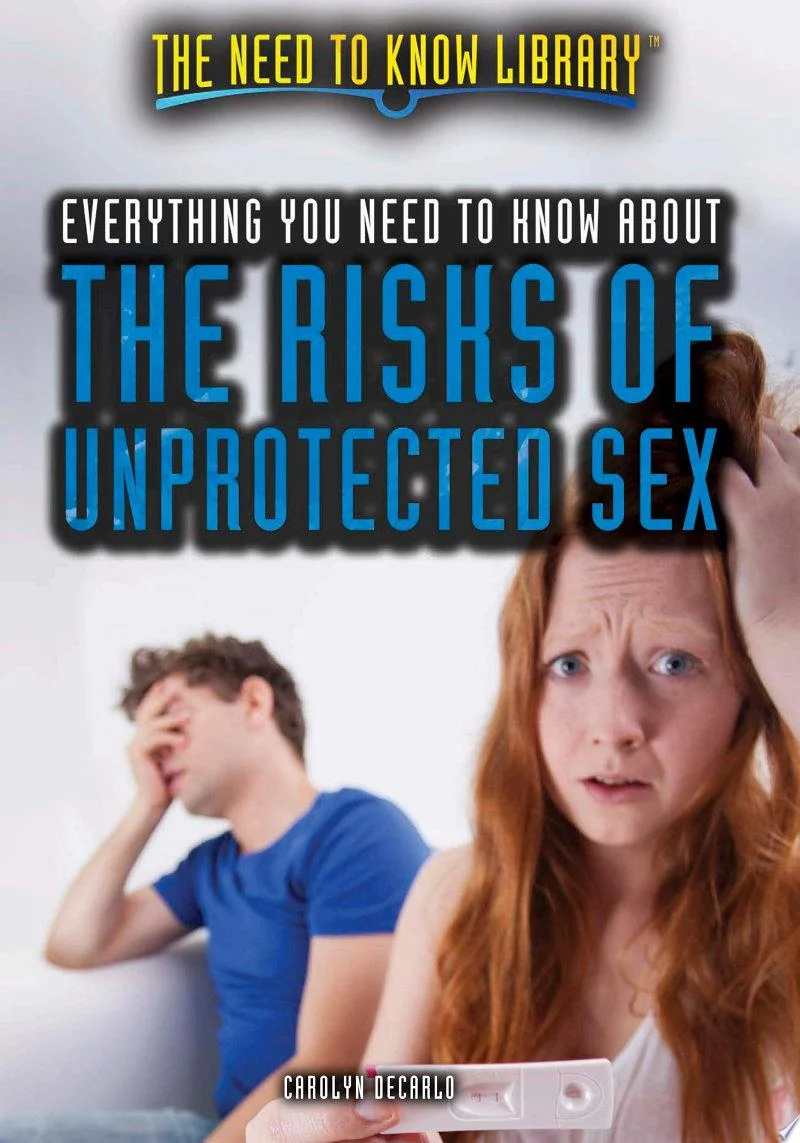
Everything You Need to Know About the Risks of Unprotected Sex
- Publication Date:
- December 15th, 2018
- Publisher:
- The Rosen Publishing Group, Inc
- ISBN-13:
- 9781508183617
- ISBN-10:
- 1508183619
- Pages:
- 66
Why Everything You Need to Know About the Risks of Unprotected Sex Has Been Challenged
Some parents and educators have questioned whether a resource this candid about sexual risk and treatment belongs in reach of younger readers without closer adult oversight. See more ↓
Challenged or banned in 1 state across 1 school district.
Overview
Carolyn DeCarlo's book is a straightforward health reference aimed at readers navigating questions about sexual risk. It walks through the major consequences of unprotected sex—sexually transmitted infections, HIV, and unintended pregnancy—and pairs that information with practical guidance on reducing those risks in the first place.
Much of the book is structured around anticipated reader needs: what warning signs might indicate an infection or pregnancy, and which kinds of clinics or providers offer confidential, non-stigmatizing help. Recurring features break up the factual material, including a segment devoted to separating common misconceptions from medical reality and another built around questions readers might otherwise be too embarrassed to ask a doctor directly.
The book is written to speak evenhandedly to readers regardless of gender or sexual orientation, favoring a clinical, reassuring register over a moralizing one. Its aim is less to persuade readers toward any particular choice and more to equip them with enough information to make decisions and seek care with confidence.
A Reference Book in a Genre Built on Discomfort
Teen health guides occupy an uneasy place in school and library collections: they are among the most consulted and most contested materials at once, prized by educators for filling gaps that classroom curricula often leave open, and flagged by critics as material that normalizes behavior they'd rather discourage. This title sits squarely in that tradition, alongside the broader wave of puberty and sexual-health references published for adolescent audiences over the past two decades.
What distinguishes this entry is its refusal to frame unprotected sex primarily as a behavior to be prevented through abstinence messaging. Instead, it treats risk reduction and informed self-advocacy as the primary goals, an approach more common in public-health literature than in school-library nonfacing shelves. The inclusion of sidebars addressing myths and offering scripted questions for medical visits signals an intent to function as a practical companion for someone already facing a health concern, not merely a cautionary overview for a general audience.
That orientation places the book in conversation with ongoing debates about the proper role of schools and libraries in adolescent sex education—whether such material belongs alongside curricular health instruction, should be left to parents and physicians, or serves a protective function precisely because it reaches teens who might not otherwise ask these questions aloud.
Why Everything You Need to Know About the Risks of Unprotected Sex Has Been Challenged
Disputes over this title have tended to center less on any single passage than on the question of where a book like this belongs at all—whether its subject matter is suited to the age range typically served by school and public library collections, and whether its candid, clinical approach to sex is something shelving decisions should accommodate without a parental gate in front of it. The book has been the subject of a challenge in one state and one district tracked in this catalog.
At the core of most objections is the book's direct, non-moralizing treatment of sexual activity among minors. Critics argue that detailed discussion of STI and pregnancy risk, paired with guidance on seeking treatment, implicitly treats teenage sexual activity as an assumed reality rather than a behavior to be discouraged, and that this framing undercuts messages some parents and educators prefer to convey at home or through abstinence-centered instruction. Others have taken issue with the book's even-handed address to readers of varying sexual orientations, viewing that inclusivity itself as an extension of the material beyond its intended purpose. Defenders counter that the same directness is what makes the book useful to teenagers who need accurate, immediate answers about their health and may not have another trusted source to turn to.
Where to Buy




Affiliate links may generate a small commission at no extra cost to you, which helps support this site.
Banned in Schools
Banned or challenged in 1 state across 1 school district.