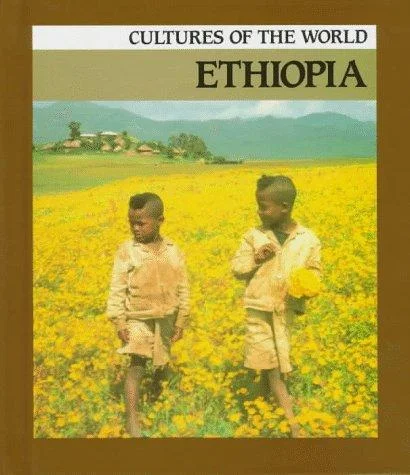
Ethiopia
by Steven Gish
- Publication Date:
- January 1st, 1996
- Publisher:
- Marshall Cavendish
- ISBN-13:
- 9780761402763
- ISBN-10:
- 0761402764
- Pages:
- 128
Why Ethiopia Has Been Challenged
Some reviewers have questioned whether a brief introductory survey can address a nation's political and economic hardships without leaving young readers with an incomplete or skewed impression. See more ↓
Challenged or banned in 1 state across 1 school district.
Overview
This volume belongs to a series of nonfiction country profiles aimed at young readers, and it treats Ethiopia as a subject worth understanding on its own terms rather than through the lens of famine or crisis that often dominates Western coverage of the Horn of Africa. Steven Gish moves methodically through the nation's physical geography, including the highland plateau that has earned it the nickname "the roof of Africa," before turning to the long arc of its history, from ancient kingdoms through imperial rule to the modern state.
The book also surveys how Ethiopia governs itself and sustains its economy, giving students a framework for thinking about political systems and agriculture outside of a purely American context. Chapters on culture and daily life round out the picture, touching on religious traditions, food, family structure, and the rhythms of both rural and urban living.
Taken together, the book functions as a reference text, organized for browsing or research rather than continuous narrative reading, and written to give young people a working vocabulary for discussing a country many will otherwise encounter only in passing headlines.
A Reference Point for Ethiopian Studies
Gish has built a career writing accessible nonfiction about African nations for student audiences, and this title fits that broader project of filling gaps in school libraries where single-country resources on the continent are often thin or outdated. The approach favors breadth over argument: rather than advancing a thesis about Ethiopia's politics or development, the book aims to equip a reader encountering the country for the first time with the basic facts needed to place it on a map, mentally and historically.
That descriptive stance situates the book within a familiar genre of library-reference nonfiction, one judged less on literary ambition than on accuracy, currency, and usefulness for report-writing. Its continued presence in school and public library collections reflects the ongoing demand for country studies that cover nations outside of Europe and North America, even as some of the specific political and economic details inevitably age as circumstances on the ground shift.
Why Ethiopia Has Been Challenged
Country-reference books covering African nations periodically draw scrutiny not for any single incendiary passage but for how they handle topics like governance, poverty, and historical conflict, where objectors sometimes argue that a brief, simplified treatment risks flattening a complex society into stereotype or presenting outdated political information as current fact. Discussions of famine, authoritarian rule, or ethnic tension in Ethiopia's past, even when presented factually and in an age-appropriate manner, have been enough to prompt a parent or reviewer to question whether the material paints an unbalanced picture of the country and its people. In some cases the concern has been less about specific content than about the broader practice of reviewing which international nonfiction belongs in a school collection at all. This particular title has been formally challenged in one state and one district tracked in this catalog, a modest record that reflects the relatively low profile of reference nonfiction compared to fiction, even as such books remain subject to the same review processes.
Where to Buy




Affiliate links may generate a small commission at no extra cost to you, which helps support this site.
Banned in Schools
Banned or challenged in 1 state across 1 school district.
Florida 1 district
- Escambia County Public Schools Banned pending investigation