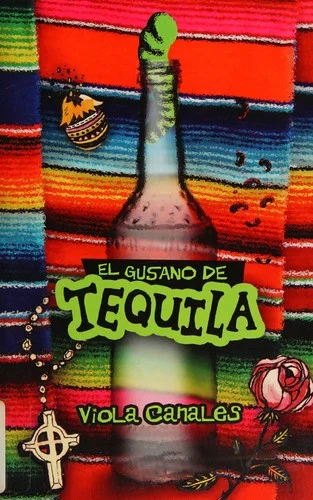
El gusano de tequila
- Publication Date:
- January 1st, 2012
- Publisher:
- KingCake Press
- ISBN-13:
- 9780982939505
- ISBN-10:
- 0982939507
- Pages:
- 301
Why El gusano de tequila Has Been Challenged
A coming-of-age story rooted in Mexican American tradition has drawn scrutiny from those who question whether its cultural and religious customs belong in school reading lists. See more ↓
Challenged or banned in 1 state across 1 school district.
Overview
Viola Canales's debut novel follows Sofía, a girl growing up in a tightly knit Mexican American neighborhood in McAllen, Texas, where storytelling runs in the family and daily life is shaped by ritual and memory. Through a series of linked episodes, readers encounter the customs that mark Sofía's childhood: decorating cascarones for Easter, honoring the dead each November, preparing for a quinceañera, and other observances that bind her family and community together.
The novel's turning point comes when Sofía earns a scholarship to an Episcopal boarding school in Austin, a world away from the barrio in both geography and culture. Eager to see what lies beyond her neighborhood, she leaves home to study alongside wealthy, privileged classmates, and must find her footing in an environment that operates by unfamiliar rules.
Rather than estranging her from her roots, the experience sharpens Sofía's appreciation for them. The customs and relationships she once viewed as simply part of life take on new weight once she is removed from them, becoming a source of identity and resilience as she navigates boarding school.
A Coming-of-Age Story Grounded in Culture and Class
The novel sits within a tradition of Latino coming-of-age literature that uses a child's eye view to render cultural specificity universal. Its structure, built from discrete, vivid memories rather than a single driving plot, mirrors the way oral storytelling passes down family history, reinforcing the book's own claim that Sofía comes from "a family of storytellers." This form lets the book dwell unhurriedly on ritual and community before shifting into the more conventional arc of a scholarship narrative.
That shift introduces a quieter theme: the friction between class mobility and cultural belonging. Boarding school offers Sofía access and opportunity, but it also asks her to translate herself for an audience unfamiliar with her traditions. The novel resists the easy assumption that advancement requires leaving one's culture behind, instead suggesting that the "comadre" network and family customs Sofía carries with her become tools for interpreting, and surviving, an unfamiliar social world. This has helped the book find a lasting place in classrooms and libraries as an accessible entry point into discussions of immigration, class, and bicultural identity.
Why El gusano de tequila Has Been Challenged
Most objections to this novel have centered on its use with middle-grade and early-high-school readers, with critics arguing that some of its content is too mature or culturally unfamiliar for students in that age range to engage with appropriately. Specific concerns raised include the book's candid depictions of religious and folk customs, such as Día de los Muertos observances and other traditions some readers have characterized as inappropriate for a school setting, as well as its frank treatment of family and community hardship. Some challenges have also reflected broader discomfort with curricular material centered on Mexican American culture and Spanish-language heritage. In the catalog tracked here, the novel has drawn a formal challenge in one state and one school district.
Where to Buy




Affiliate links may generate a small commission at no extra cost to you, which helps support this site.
Banned in Schools
Banned or challenged in 1 state across 1 school district.