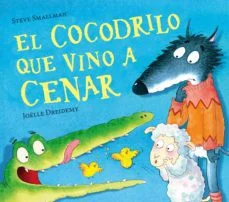
El cocodrilo que vino a cenar
- Publication Date:
- January 1st, 2020
- Publisher:
- Penguin Random House
- ISBN-13:
- 9788448856069
- ISBN-10:
- 8448856066
Why El cocodrilo que vino a cenar Has Been Challenged
A complaint rooted in how casually the story treats a dangerous animal as a welcome houseguest led to its removal from at least one shelf. See more ↓
Challenged or banned in 1 state across 1 school district.
Overview
"El cocodrilo que vino a cenar" is a Spanish-language picture book from author Steve Smallman, whose catalog is built on brightly illustrated, rhyme-forward stories for the earliest readers. The premise suggested by the title is simple and immediately visual: a crocodile arrives, uninvited or otherwise, to share a meal, and the household must contend with a guest whose presence carries an obvious undercurrent of danger.
Like much of Smallman's output, the book appears designed to be read aloud, leaning on repetition, rhythm, and comic timing rather than dense text. Picture books in this mode typically ask very little of a reader's vocabulary while asking a great deal of the illustrations to carry tone, pacing, and punchline.
As a Spanish translation, the title also serves a practical purpose on library and classroom shelves: supplying bilingual or Spanish-dominant young readers with the same lighthearted animal-antics fare available in English-language sections.
A Familiar Shape in Children's Storytelling
The scenario of a predator seated at the dinner table is a well-worn device in picture books, descending from older folk patterns in which a wolf, fox, or other toothy animal insinuates itself into domestic life. These stories typically resolve the tension through humor, cleverness, or a reversal that defangs the threat, letting young readers flirt with danger from a safe narrative distance.
Smallman's body of work generally favors exactly this kind of gentle menace: animals that look frightening on the cover but turn out to be clumsy, misunderstood, or ultimately harmless by the final page. Positioned within that pattern, a crocodile invited to dinner reads less as a cautionary tale and more as an exercise in comic anticipation, where the pleasure is in watching the adults and the reader wonder whether the guest's appetite will win out.
Why El Cocodrilo Que Vino a Cenar Has Been Challenged
A complaint brought before at least one school library committee centered on the book's basic setup: a creature capable of eating the other characters is welcomed to the table rather than turned away, and the objecting parent argued that this sends an inconsistent message to very young children about which animals, or by extension which strangers, are safe to let into the home. The concern was less about explicit content than about the implicit lesson embedded in the premise itself.
Related objections raised in review discussions have focused on tone rather than plot specifics: whether presenting a predator's presence as a source of comedy risks making genuine danger seem trivial to the pre-reading audience the book is aimed at, and whether the illustrations lean too far into suspense for children who startle easily. These are concerns about interpretive framing — how a very young reader is expected to process a frightening image softened by humor — rather than objections to any single scene or line of text.
The book's record in this catalog reflects a single state and a single district where such a challenge was formally logged, a narrow footprint that suggests the objection has been localized rather than part of a coordinated or widespread campaign.
Where to Buy




Affiliate links may generate a small commission at no extra cost to you, which helps support this site.
Banned in Schools
Banned or challenged in 1 state across 1 school district.