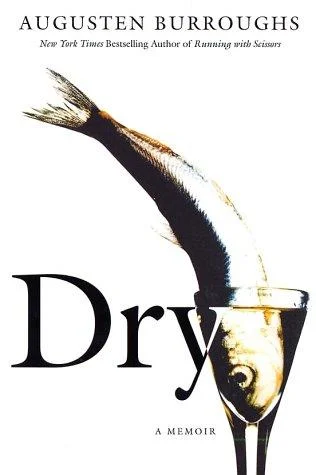
Dry
- Publication Date:
- January 1st, 2011
- Publisher:
- Atlantic Books, Limited
- ISBN-13:
- 9780857895172
- ISBN-10:
- 0857895176
- Pages:
- 300
Why Dry Has Been Challenged
Objectors have focused less on the book's honesty about addiction than on its graphic language and sexual content, which some argue has no place in a high school library. See more ↓
Challenged or banned in 1 state across 1 school district.
Overview
Dry picks up where Burroughs's earlier memoir of a chaotic childhood leaves off, following its narrator into adulthood as a successful advertising copywriter whose outward competence hides a daily life organized entirely around alcohol. He drinks through the workday, drinks through the night, and devises increasingly strained tricks to keep colleagues from noticing, including masking the smell of liquor on his breath before client meetings.
When his employer forces the issue, he enters a residential treatment program in Minnesota, an experience he renders with the same mixture of candor and gallows humor that marks his other work, down to the therapeutic exercises involving stuffed animals. Sobriety achieved inside a facility, though, proves far easier than sobriety maintained back in the city that built his drinking habits.
The second half of the book follows his unsteady return to Manhattan, where staying sober means dismantling an entire social and professional identity built around alcohol. That precariousness deepens when he enters a relationship with a man addicted to crack, a development that pulls the narrative further from any tidy redemption arc and into harder, more ambiguous territory.
A Memoir That Resists the Recovery Formula
What distinguishes Dry within the addiction-memoir genre is its refusal to follow the shape readers expect from such stories. Rather than building toward a single climactic relapse or a clean moment of triumph, Burroughs presents recovery as an ongoing, often undignified negotiation, full of backsliding, poor judgment, and self-deception that doesn't resolve on cue. The author treats his own worst behavior unflinchingly, declining to soften himself into a more sympathetic or heroic figure even as he invites readers to understand him.
The book's reliance on dark comedy is central to how it works as literature. Humor here isn't decoration; it's presented as a survival mechanism and a narrative strategy, a way of rendering intolerable experiences bearable to write and to read. That tonal balancing act, finding wit in detox wards and crack houses alike, has made the memoir a touchstone in discussions of how addiction can be written about honestly without either moralizing or glamorizing, and it extends the voice readers first encountered in Running with Scissors into more self-aware, consequence-laden adult territory.
Why Dry Has Been Challenged
Most objections to Dry center on its appropriateness for high school readers, with critics arguing that the memoir's frank depictions of substance abuse, sexuality, and self-destructive adult relationships make it unsuitable material for a school setting. Specific concerns raised include the book's explicit descriptions of alcohol and drug use, its depiction of a same-sex relationship with a drug-addicted partner, and strong language used throughout in dialogue and narration. Some challengers have also objected to the memoir's unvarnished treatment of its narrator's sexual encounters during active addiction, arguing the content is more appropriate for adult readers than for a school library collection. Within the catalog tracked here, Dry has drawn a challenge in 1 state and 1 school district, reflecting these concerns about content rather than any dispute over the book's literary merit or the truthfulness of its account.
Where to Buy




Affiliate links may generate a small commission at no extra cost to you, which helps support this site.
About Augusten Burroughs

Augusten Burroughs is an American writer best known for his memoir Running with Scissors, a New York Times bestseller. His other books include the memoir Dry, about treatment for alcoholism. This catalog lists two titles with seven recorded bans across Florida, Iowa, and Texas.
Banned in Schools
Banned or challenged in 1 state across 1 school district.
Florida 1 district
- Escambia County Public Schools Banned pending investigation