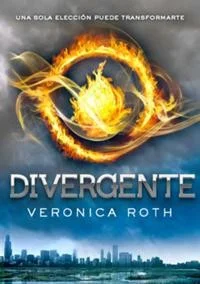
Divergent
- Publication Date:
- January 1st, 2014
- Publisher:
- RBA
- ISBN-13:
- 9788427201187
- ISBN-10:
- 8427201184
Why Divergent Has Been Challenged
Most objections to this book trace back to its willingness to show teenagers hurting one another in ways meant to feel real rather than symbolic. See more ↓
Challenged or banned in 2 states across 2 school districts.
Overview
Veronica Roth's debut novel opens a trilogy set in a future Chicago divided into five factions, each built around a single virtue. Told entirely from Tris Prior's perspective, the story follows her decision to leave her birth faction and join the Dauntless, whose initiation tests push recruits through escalating physical and psychological trials.
The narrative moves quickly through short chapters, alternating moments of humor and budding romance with sequences of genuine brutality as Tris competes to secure her place among her new peers. Interspersed with the action are quieter passages that press on larger questions about identity, conformity, and what it costs to choose who you become.
Tris herself is drawn with visible flaws, prone to self-doubt and impulsiveness, which makes her eventual growth into a determined and resilient figure feel earned rather than automatic. The book's vivid, detail-oriented staging of its world and set-pieces has helped make it a durable entry point for readers new to YA dystopian fiction, and its combination of pace and emotional stakes carries through to a conclusion that sets up the rest of the trilogy.
Identity, Conformity, and the Cost of Belonging
Divergent arrived in print during a surge of young-adult dystopias following in the wake of The Hunger Games, and it helped cement several conventions of that moment: a faction- or caste-based society, a female narrator forced to choose her own path, and a love interest who complicates that choice. What distinguishes Roth's take is its focus on initiation as a crucible, using the Dauntless trials as a literal staging ground for the novel's underlying argument that identity cannot be reduced to a single assigned trait. Tris's status as "divergent," unable to fit neatly into one faction, becomes the book's central metaphor for resisting a system that demands people be sorted and simplified.
The novel also sits at an interesting point in Roth's own trajectory; written while she was still a college student, it became a bestseller and the basis for a 2014 film adaptation, which brought the series to a much wider audience even as readers noted that the adaptation trimmed away character and plot threads present in the source material. Within the broader landscape of YA fiction, Divergent is often discussed alongside other dystopian series as part of a cycle of books that used speculative societies to dramatize adolescent anxieties about conformity, choice, and violence.
Why Divergent Has Been Challenged
Complaints lodged against Divergent have typically centered on a specific set of initiation scenes, with parents and board members arguing that the extended depictions of hazing-like combat, injury, and psychological manipulation among teenage characters go beyond what is necessary to convey danger and instead linger on violence for its own sake. Some objections have focused narrowly on a handful of passages depicting physical fights and simulated fear trials, asserting that the intensity and detail are inappropriate for the middle-school and early high-school readers who often encounter the book. Others have raised concerns about the romantic relationship between Tris and an older instructor figure, questioning the power dynamic the novel depicts. Across the catalog, this title has been the subject of challenges in 2 states and 2 districts, nearly all of them returning to the same underlying argument: that the book's violence, even when narratively purposeful, outpaces the maturity of its intended audience.
Where to Buy




Affiliate links may generate a small commission at no extra cost to you, which helps support this site.
Banned in Schools
Banned or challenged in 2 states across 2 school districts.
Florida 1 district
- Escambia County Public Schools Banned pending investigation
Tennessee 1 district
- Monroe County Schools Banned