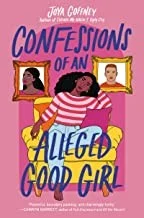
Confessions of an Alleged Good Girl
by Joya Goffney
- Publication Date:
- January 1st, 2023
- Publisher:
- HarperCollins Publishers
- ISBN-13:
- 9780063024854
- ISBN-10:
- 0063024853
Why Confessions of an Alleged Good Girl Has Been Challenged
Challenged or banned in 1 state across 1 school district.
Overview
The title of Joya Goffney's Confessions of an Alleged Good Girl does much of its own work: it frames its narrator not as a good girl outright, but as one accused of the label, and asks readers to sit with the gap between the two. That gap — between a reputation assigned from outside and a self experienced from within — is the engine of the story, filtered through the everyday pressures of high school: friendship, romantic curiosity, family expectation, and the constant low hum of being watched and judged.
Goffney writes within contemporary YA's confessional register, using close first-person narration to let a teenage protagonist question the roles she's been handed rather than simply perform them. The novel's interest lies less in plot mechanics than in voice: the humor and anxiety of a narrator working out, in real time, which parts of her "good girl" image are true, which are convenient, and which she's simply tired of maintaining.
As with the author's other work, the book is grounded specifically in Black girlhood, treating its narrator's interior life as worth this much page space and detail — a choice that situates the novel within a broader wave of YA fiction centering characters and experiences long underrepresented in the genre.
Girlhood, Reputation, and the "Good Girl" Script
The "good girl" is one of the most durable scripts handed to teenage girls: a set of behavioral expectations around obedience, modesty, and sexual restraint that functions less as a description than as a form of social control. Fiction that puts "alleged" in front of that label is doing something pointed — it's naming the label as a construction rather than a fact, and inviting scrutiny of who benefits when a girl is sorted into "good" or "not good" in the first place.
That framing places Goffney's novel in conversation with a long lineage of YA that treats reputation, gossip, and self-image as serious subject matter rather than incidental teen drama. For Black teenage protagonists in particular, the stakes of that sorting are often higher, since "good girl" expectations frequently carry extra weight around respectability. A story that lets its narrator push back against that sorting — messily, honestly, without resolving into a tidy moral — is doing thematic work that outlasts its immediate plot.
Why Confessions of an Alleged Good Girl Has Been Challenged
In this catalog, the novel has drawn one challenge in one state and one school district — a modest but real footprint. Objections to books in this vein typically cluster around a few recurring categories: frank treatment of teenage sexuality and desire, informal or crude language, and depictions of romantic or physical intimacy presented without heavy moralizing. Because the book's premise explicitly interrogates the "good girl" expectation of sexual restraint, it invites exactly the kind of content — a teenage narrator thinking honestly about attraction and her own body — that has made similar contemporary YA titles targets for removal from school shelves and classrooms. Challenges of this kind are generally framed around age-appropriateness rather than any single passage, reflecting broader disagreements over how candidly YA fiction should be allowed to depict adolescent sexuality and self-discovery.
Where to Buy




Affiliate links may generate a small commission at no extra cost to you, which helps support this site.
Also by Joya Goffney
Banned in Schools
Banned or challenged in 1 state across 1 school district.