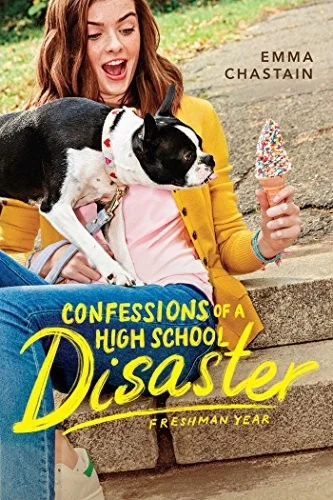
Confessions of a High School Disaster
- Publication Date:
- July 10th, 2018
- Publisher:
- Simon & Schuster Books for Young Readers
- ISBN-13:
- 9781481488761
- ISBN-10:
- 1481488767
- Pages:
- 368
Why Confessions of a High School Disaster Has Been Challenged
Objections to the novel, which the catalog tracks across 1 state and 2 districts, generally center on its candid treatment of teenage life. See more ↓
Challenged or banned in 1 state across 2 school districts.
Overview
"Confessions of a High School Disaster" by Emma Chastain takes the form of a teenage narrator's unguarded, first-person account of her freshman year, rendered with the diary-like intimacy its title promises. The novel leans into the awkward, self-deprecating humor of adolescence, framing its protagonist's missteps not as failures but as the ordinary texture of growing up.
Chastain's approach favors voice over plot mechanics: the narrator's wit and anxiety come through in observations about classmates, crushes, and the general unpredictability of high school social life. The "disaster" of the title is less a single catastrophic event than an accumulation of small, relatable embarrassments.
As a coming-of-age story, the book sits comfortably within the confessional YA tradition, where a narrator's candor about her own shortcomings becomes the source of both comedy and emotional insight.
A Confessional Voice in Contemporary YA
The confessional mode Chastain adopts has deep roots in young adult fiction, where diary and first-person narration let readers sit directly inside a character's anxious, often unreliable self-assessment. This structure invites empathy precisely because it withholds polish: the narrator is not presented as admirable or wise, but as someone still figuring out how to interpret her own feelings and mistakes.
That style also positions the book within a broader wave of YA novels that treat teenage interiority—body image, social anxiety, family friction, romantic uncertainty—as worthy of sustained, serious attention even when the tone is comic. The humor functions as a coping mechanism for the narrator as much as an entertainment device for the reader, a common feature of the genre that distinguishes it from lighter, plot-driven teen fiction.
Why Confessions of a High School Disaster Has Been Challenged
Objections to the novel, which the catalog tracks across 1 state and 2 districts, generally center on its candid treatment of teenage life. Confessional narrators in this genre often discuss subjects such as sexuality, romantic relationships, and body image with a frankness that some parents and administrators consider inappropriate for the age group most likely to encounter the book in school libraries.
Complaints of this kind typically also cite the presence of coarse language or references to alcohol and other behaviors associated with teenage social life, arguing that such content normalizes conduct they would prefer schools not implicitly endorse. Others object less to any single passage than to the book's overall tone, contending that its comic framing of a teenager's struggles undercuts the seriousness those struggles deserve. Defenders counter that the same unflinching honesty is what makes the narrator's voice recognizable and reassuring to teenage readers navigating similar experiences.
Where to Buy



Affiliate links may generate a small commission at no extra cost to you, which helps support this site.
Banned in Schools
Banned or challenged in 1 state across 2 school districts.
Florida 2 districts
- Clay County School District Banned
- Escambia County Public Schools Banned pending investigation