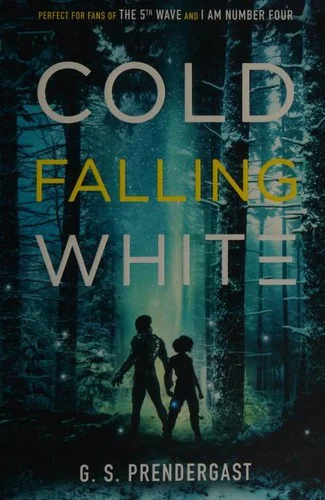
Cold Falling White
- Publication Date:
- January 1st, 2019
- Publisher:
- Simon & Schuster
- ISBN-13:
- 9781501147166
- ISBN-10:
- 1501147161
- Pages:
- 368
Why Cold Falling White Has Been Challenged
Some readers and parents have questioned whether a story that places teenagers so directly inside a character's emotional breakdown belongs on shelves meant for younger adolescent readers. See more ↓
Challenged or banned in 1 state across 1 school district.
Overview
Cold Falling White is a young adult novel by Gabrielle Prendergast, written in the spare, verse-driven style the author has used across her body of work for teen readers. The title itself sets a tone of quiet unraveling, conjuring images of winter, descent, and things coming undone, and that atmosphere carries through a story centered on the interior life of a teenage protagonist navigating a period of personal crisis.
True to the conventions of verse fiction, the book favors compressed, image-driven language over conventional prose exposition, letting white space and line breaks do as much work as narration. This formal choice mirrors the fragmented, sometimes overwhelming experience of adolescence that the novel takes as its subject, inviting readers to sit inside moments of confusion and fear rather than observe them from a distance.
The result is a short, emotionally intense reading experience more concerned with feeling than plot mechanics, aimed at teen readers drawn to candid, unsentimental treatments of difficult experiences.
A Story Told in Fragments
Prendergast has built a body of young adult work that returns repeatedly to teenagers under pressure, whether from first love, family expectation, or their own unstable sense of self, and Cold Falling White extends that preoccupation into darker territory. The verse format she favors is not merely stylistic; it is suited to characters whose thoughts arrive in bursts rather than tidy paragraphs, and it has made her novels a frequent recommendation for readers who find dense prose fiction difficult to enter but still want serious emotional content.
Within the wider landscape of YA verse fiction, a genre that has grown steadily since the early 2000s as a vehicle for stories about trauma and mental health, the book sits alongside other titles that use fragmentation and white space to represent psychological distress formally rather than just describe it. Its reception among readers and educators has tended to track with that of the genre more broadly: praised by some for its honesty and accessibility, and treated warily by others precisely because that honesty leaves little buffer between the reader and the character's unfiltered experience.
Why Cold Falling White Has Been Challenged
Depictions of psychological crisis and emotional distress are the primary source of objection to Cold Falling White, which has been challenged in one state and one district tracked in this catalog. Critics of the book have generally argued that its unflinching, first-person rendering of a teenager in acute mental or emotional turmoil risks disturbing or destabilizing young readers rather than simply informing them, a concern common to verse novels that place readers directly inside a character's breakdown with little narrative distance.
A secondary line of objection concerns the novel's suitability for school library shelves generally, with some challengers questioning whether its intensity and subject matter are appropriate for the age range typically served by middle and early high school collections, as opposed to older teen or young adult readers specifically seeking out difficult material. These objections tend to center less on any single scene than on the cumulative emotional weight of a story that offers readers few moments of relief from its central character's distress.
Where to Buy




Affiliate links may generate a small commission at no extra cost to you, which helps support this site.
Also by Gabrielle Prendergast
Banned in Schools
Banned or challenged in 1 state across 1 school district.
Texas 1 district
- Katy Independent School District Banned by Restriction