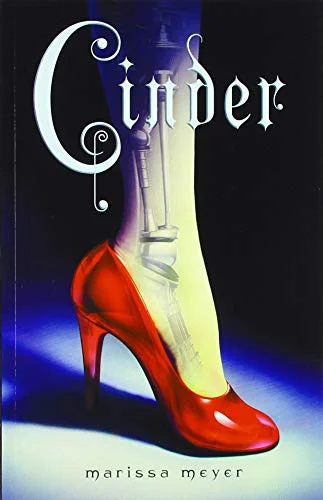
Cinder
- Publication Date:
- March 11th, 2020
- Publisher:
- Thorndike Striving Reader
- ISBN-13:
- 9781432875862
- ISBN-10:
- 1432875868
- Pages:
- 495
Why Cinder Has Been Challenged
Some parents and educators have argued this futuristic Cinderella retelling, with its disease outbreak, concealed identity, and budding romance, belongs with older readers than the middle-grade audience it has reached. See more ↓
Challenged or banned in 1 state across 1 school district.
Overview
Marissa Meyer's "Cinder" reimagines the Cinderella story inside a futuristic New Beijing, where humans and android laborers share crowded streets and an unexplained epidemic is quietly decimating the population. The title character is a talented mechanic with cybernetic limbs, a status that makes her legally subordinate and socially suspect in the eyes of the people around her, including the stepmother who resents her and blames her for a stepsister's illness.
Cinder's ordinary, difficult life shifts when a chance encounter with Prince Kai pulls her into matters well beyond her repair shop. Political pressure from the Lunar people, an advanced society watching Earth from space, begins to bear down on the city just as Cinder's own history, one she has never had reason to question, starts to unravel.
What follows blends court intrigue, a widening epidemic, and an attraction Cinder has no right to pursue, as she is pressed to choose between the safety of obedience and the risks of acting on what she is beginning to suspect about herself and her world.
A Fairy Tale Rebuilt on New Terrain
"Cinder" belongs to the long tradition of fairy-tale retellings, but it resists treating that frame as decoration. By making its Cinderella figure a cyborg, Meyer turns a story about domestic cruelty into one about bodily difference and the legal second-class status assigned to augmented people. The novel's futuristic setting, plague, android labor, interplanetary politics, gives the familiar plot new stakes without discarding its emotional backbone: an overlooked young woman undervalued by her family, holding a secret that will eventually matter to everyone around her.
The book also sits at the start of a larger series, and its ambitions extend past a single romance or mystery. Questions of citizenship, who counts as fully human, and how societies treat people marked as "other" run underneath the court politics and the Lunar threat, giving the story a layer of social commentary that has helped it resonate with readers beyond its central fairy-tale hook.
Why Cinder Has Been Challenged
Most objections to "Cinder" have centered on its suitability for middle school readers, the age group most commonly cited in challenges to the series. Critics in these cases have argued that the book's content, including its romantic storyline between Cinder and Prince Kai, is more appropriate for an older teen audience than for younger adolescents just entering the series' intended readership. The novel's blend of political intrigue, a lethal pandemic, and a disfigured protagonist concealing her true nature from those around her has similarly drawn concern from adults who consider its themes too mature or unsettling for pre-teen readers.
According to records maintained in this catalog, "Cinder" has been formally challenged in 1 state and 1 school district. The objections reflect a broader, recurring debate over how school and library collections should calibrate young adult science fiction, balancing age-grading expectations against the genre's traditional willingness to explore disease, inequality, and romance as serious narrative material rather than content requiring restriction.
Where to Buy




Affiliate links may generate a small commission at no extra cost to you, which helps support this site.
Also by Marissa Meyer
Banned in Schools
Banned or challenged in 1 state across 1 school district.
Florida 1 district
- Escambia County Public Schools Banned by restriction