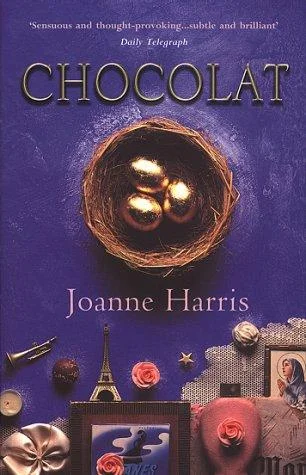
Chocolat
- Publication Date:
- January 1st, 2000
- Publisher:
- Tandem Library
- ISBN-13:
- 9781417756537
- ISBN-10:
- 1417756535
- Pages:
- 306
Why Chocolat Has Been Challenged
Objections to Chocolat have centered on its treatment of religion and the clergy. See more ↓
Challenged or banned in 1 state across 1 school district.
Overview
Joanne Harris's novel opens with an arrival: Vianne Rocher and her young daughter drift into the fictional village of Lansquenet-sous-Tannes on a gust of wind, carrying little more than a knack for reading people's cravings. She sets up a chocolaterie facing the parish church, timing her opening, deliberately or not, to the start of Lent.
The shop becomes a magnet for the town's quieter dissatisfactions. Neighbors who rarely speak to one another find themselves drawn in by the smell of warm cocoa and the sense that Vianne will listen without judgment. Father Reynaud, the village priest, reads her presence differently: as an indulgence dressed up as commerce, arriving at the exact moment his congregation is meant to be practicing restraint.
What follows is less a plot of dramatic incident than a slow contest of values, culminating in Vianne's plan for an Easter chocolate festival that forces the whole village to choose a side. Harris uses the confection at the center of her story as a stand-in for larger questions about denial, community, and who gets to define virtue.
Sensuality, Faith, and the Politics of Small Towns
Chocolat arrived in the late 1990s and found a wide readership, later reaching an even larger audience through its film adaptation, in part because it dramatizes a tension many readers recognize: the friction between institutional religious authority and individual pleasure-seeking. Harris does not write Father Reynaud as a simple villain; his austerity has its own internal logic, rooted in genuine fear of disorder and appetite. Vianne, in turn, is not a straightforward liberator, she has her own past she's running from, and her gifts for reading people edge close to something like folk magic.
The novel sits within a broader tradition of fiction that treats food, and specifically female-coded domestic craft, as a vehicle for female autonomy and social disruption. Its interest in ritual, seasonal observance, and the moral weight assigned to appetite has made it a recurring reference point in discussions of how literature portrays organized religion, particularly Catholicism, when it is depicted as an instrument of control rather than solely of comfort.
Why Chocolat Has Been Challenged
Objections to Chocolat have centered on its treatment of religion and the clergy. Father Reynaud's rigidity and the village's Lenten customs are portrayed with a critical edge, and some readers have viewed the novel's framing of Catholic practice, self-denial, confession, and priestly authority among them, as mocking or disrespectful of religious observance. The book's frank handling of adult relationships and its sympathetic view of characters who operate outside conventional moral or religious boundaries have also drawn concern from readers who felt the material was inappropriate for younger or school-aged audiences.
Within the catalog tracked here, Chocolat has been challenged in 1 state and 1 school district, reflecting these same concerns about how the novel depicts faith, authority, and personal indulgence rather than any single isolated complaint.
Where to Buy




Affiliate links may generate a small commission at no extra cost to you, which helps support this site.
Banned in Schools
Banned or challenged in 1 state across 1 school district.
Florida 1 district
- Orange County Public Schools Banned by restriction